







Not One, But Two Drastically Different Ideas
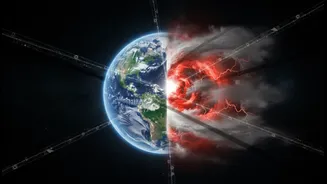
The first and most critical point often lost in simplistic explainers is that geoengineering is not a single concept. It's a catch-all term for two fundamentally different approaches to intervening in the Earth's climate systems. Lumping them together
is like saying a diet and a gastric bypass are the same thing because they both address weight. The first category is Carbon Dioxide Removal (CDR). These are methods designed to pull existing CO2—the primary driver of climate change—out of the atmosphere. Think of it as cleaning up the mess we've already made. The second category is Solar Radiation Management (SRM), which aims to treat a symptom, not the cause. SRM technologies are designed to reflect a small fraction of sunlight back into space to artificially cool the planet. These two paths have vastly different risks, timelines, and ethical dilemmas, and treating them as one is the beginning of a flawed conversation.
Carbon Removal: The Slow, Expensive Clean-up
Carbon Dioxide Removal (CDR) is the approach many scientists agree will be necessary to meet our climate goals. It tackles the root of the problem: too much carbon in the air. Methods range from the natural—like massive-scale afforestation (planting trees)—to the highly technological, such as Direct Air Capture (DAC) facilities that act like giant purifiers, sucking in air and chemically stripping out the CO2 for underground storage. The main advantage of CDR is that it directly reduces the total concentration of greenhouse gases. The downsides, however, are significant. CDR is currently incredibly expensive, energy-intensive, and works on a very slow timescale. To make a meaningful impact, these technologies would need to be deployed on a planetary scale, potentially competing for land needed for agriculture and biodiversity.
Solar Radiation Management: The Fast, Terrifying Gamble
Solar Radiation Management (SRM) is the more controversial and headline-grabbing side of geoengineering. The most-discussed method involves injecting tiny reflective particles, like sulfur aerosols, into the stratosphere to mimic the cooling effect of a large volcanic eruption. Proponents argue SRM is fast-acting and relatively cheap—potentially able to lower global temperatures within months or years, not decades. This could, in theory, buy humanity precious time to decarbonise. However, the risks are colossal and poorly understood. It does nothing to stop ocean acidification, which is caused by CO2 dissolving in seawater. More frighteningly, models suggest it could drastically alter global weather patterns. For a country like India, which depends on the predictable arrival of the summer monsoon, the consequences could be catastrophic. Some studies suggest SRM could weaken or shift the monsoon, leading to severe droughts and threatening the food supply for billions. There's also the risk of "termination shock": if an SRM program were ever suddenly stopped, global temperatures could rebound with terrifying speed.
A Geopolitical Powder Keg
Beyond the scientific uncertainties lies a governance nightmare. Who gets to control the global thermostat? What happens if one nation's deployment of SRM causes a drought in another? There are currently no international treaties or governance frameworks to manage such a technology. This raises the spectre of unilateral action, where a single country or even a wealthy corporation could decide to alter the planet's climate, with global consequences. Recent moves by startups to become 'deployment-ready' within the decade highlight the urgency of this governance gap. The potential for conflict is immense, as the 'ideal' climate for one nation might be disastrous for its neighbours. Ethicists warn that the greatest challenges of geoengineering may not be technical, but social, political, and legal.