







The Kitchen Heroes: Where Vinegar and Baking Soda Shine
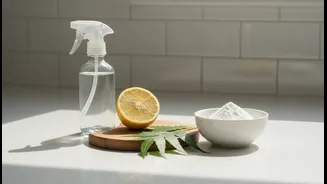
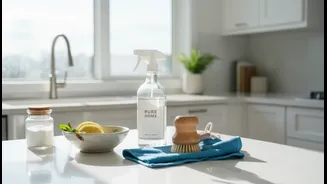
Vinegar and baking soda have earned their place in a low-chemical cleaning kit, but for specific jobs. White vinegar, being acidic, is excellent at cutting through grease and dissolving mineral deposits. A simple spray of one part vinegar to one part water
can leave kitchen counters (except natural stone), stovetops, and glass surfaces sparkling and streak-free. It’s also effective for deodorising and cleaning the inside of your microwave. Baking soda, a mild alkali, is a gentle abrasive and a champion deodoriser. A paste of baking soda and water can scrub sinks and non-delicate cookware without scratching. Sprinkling it in the bottom of your dustbin or leaving an open box in the fridge effectively tackles odours. Use them for these targeted tasks, and they perform beautifully.
The Reality Check: Know Their Limits
Here’s where the story gets complicated. Vinegar is not an all-powerful mould killer; it is effective against some species on non-porous surfaces but is not a registered disinfectant for tackling serious mould. Furthermore, its acidity can permanently damage surfaces like marble, granite, and unsealed grout. And that satisfying fizz when you mix vinegar and baking soda? It’s mostly just a show. The chemical reaction neutralises both the acid (vinegar) and the base (baking soda), leaving you with little more than salty water. For cleaning, it's far more effective to use them separately—for example, scrubbing with a baking soda paste first, then spraying with vinegar to disinfect and rinse.
Neem: Nature’s Pest Manager (with Caveats)
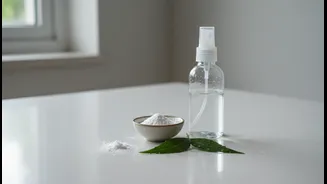
Monsoon is peak season for insects, and neem oil is a fantastic natural tool for managing them. It works not as an instant killer, but by disrupting the life cycle of pests like mosquitoes, flies, ants, and cockroaches. To make a general-purpose repellent spray for surfaces, mix about 5 ml of neem oil and a few drops of mild liquid soap (as an emulsifier) into one litre of water. Spray this solution around window sills, drains, and entry points. The key with neem is consistency. It’s a repellent and deterrent, not a one-time extermination solution. Its antifungal properties also help in preventing mould, making it a valuable multitasker during the damp season.
Beyond the Big Three: Other Low-Tox Helpers
When the popular trio isn't enough, other low-chemical options can step in. For stubborn mould, a 3% solution of hydrogen peroxide is often more effective than vinegar, especially on porous surfaces, as it breaks down into just water and oxygen. Essential oils with antifungal properties, such as tea tree oil or clove oil, can also be a great help. Adding 15-20 drops to a water spray bottle can help inhibit mould growth on tiles and in damp corners. Lemon juice, with its citric acid, is another natural disinfectant that cuts through grime and leaves a fresh scent. These alternatives provide more tools for your cleaning arsenal, allowing you to choose the right one for the job.
The Unbeatable Strategy: Prevention and Ventilation
The most effective low-chemical approach to monsoon cleaning is preventing problems before they start. Dampness is the root cause of mould, mildew, and musty smells. The number one rule is to improve ventilation. Use exhaust fans in kitchens and bathrooms. Whenever it isn't raining, open windows on opposite sides of your home to create cross-breezes. Pull furniture a few inches away from walls to allow air to circulate. On the rare sunny day, seize the opportunity to air out clothes, rugs, and bedding in direct sunlight, which is a powerful natural disinfectant. Wiping down damp surfaces and fixing any leaks promptly will do more to keep your home fresh than any cleaning spray.