




A Symphony of Simplicity
There are more complex dishes, certainly. More decadent and technically demanding meals exist in the vast universe of Indian cuisine. But when the pitter-patter of rain becomes the day’s soundtrack, our palates don't yearn for complexity. They yearn for comfort.
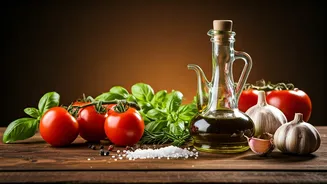
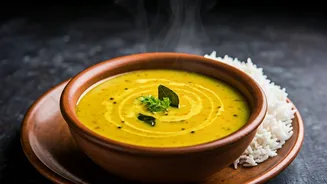
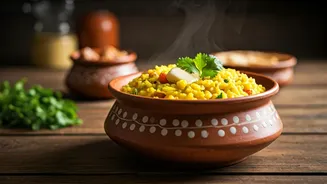
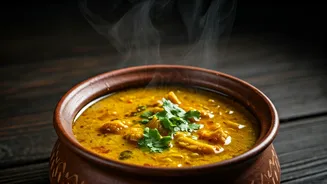
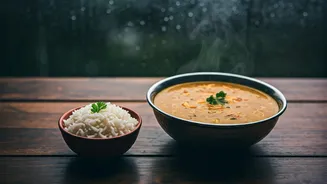
This is where Kadhi Chawal enters, not with a bang, but with a warm, reassuring hum. It’s a dish built on the most humble of ingredients: sour yoghurt (dahi) or buttermilk, gram flour (besan), and a handful of everyday spices. Yet, from this simplicity, a culinary masterpiece is born. The slow-simmering process transforms the thin mixture into a velvety, thick gravy, tangy and deeply savoury, that coats the back of a spoon and promises pure satisfaction.
A Hug in a Bowl
To call Kadhi Chawal 'food' is to undersell it. It is a feeling. It’s the culinary equivalent of a warm blanket and a good book on a gloomy afternoon. The warmth of the meal provides an immediate, physical comfort against the damp chill of the monsoon. The flavour profile, a delicate balance of sour, spicy, and savoury, jolts the senses awake in the most pleasant way. For so many of us, it is inextricably linked to childhood. It’s the smell that wafted from our grandmother's kitchen, the meal our mothers made to chase away the rainy-day blues. Each spoonful is less about tasting and more about remembering. It’s a direct line to a time of safety, love, and uncomplicated joy, making it the ultimate soul food.
The Pan-Indian Unifier
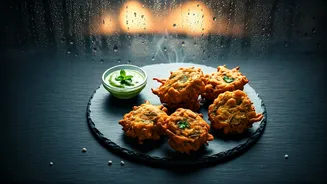
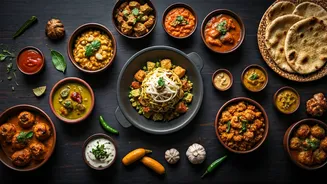
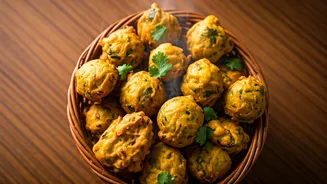
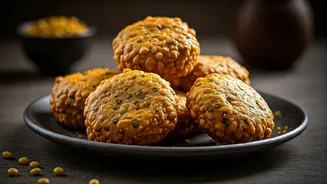
Part of Kadhi Chawal’s championship claim lies in its brilliant adaptability, making it a beloved staple across the length and breadth of India. While the core concept remains the same, each region has its own signature spin. The robust Punjabi Kadhi is thick and creamy, generously studded with fluffy besan pakodas (fritters) that soak up the gravy. Head west, and the Gujarati Kadhi offers a completely different experience—it’s thin, sweet, and tangy, often eschewing pakodas for a lighter touch. In Rajasthan, the kadhi is fiery and sharp, a piquant response to the arid climate, while the Maharashtrian version brings its own unique spice blend to the fore. This diversity doesn’t weaken its claim; it strengthens it. It proves that the fundamental magic of kadhi is so powerful that it can be translated into countless local dialects of flavour, uniting the country in a shared love for this rainy-day staple.
The Perfect Pairing
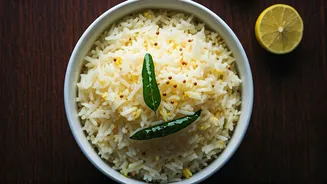
Let us not forget the other half of this winning duo: chawal. The kadhi, for all its glory, needs a partner. And steamed rice is its perfect soulmate. The plain, fluffy grains of rice are a neutral canvas, designed to do one job perfectly: to absorb the glorious kadhi. The magic is in the contrast. The soft, yielding texture of the rice against the smooth, flowing gravy. The blandness of the rice taming the assertive tang and spice of the kadhi, creating a perfectly balanced bite, every single time. It’s a partnership so iconic that mentioning one without the other feels incomplete. It isn't just kadhi; it's *Kadhi Chawal*. The combination is a masterclass in textural and flavour harmony, a testament to the quiet genius of home cooking.
More Than a Meal, It's a Ritual
Ultimately, Kadhi Chawal reigns supreme on a rainy day because it’s not just about consumption, but about the ritual. The rain forces a pause, a slowing down of the world outside. And making kadhi mirrors this. It cannot be rushed. It requires patient stirring to prevent lumps, a gentle simmer to develop flavour. It’s a process that encourages you to stay indoors, to focus on the simple, satisfying task at hand. The final flourish—the sizzling tadka of ghee, mustard seeds, cumin, and dried red chillies—is a multi-sensory celebration, its sharp hiss and fragrant smoke a declaration that comfort is ready to be served.