





The Era of the Solo Pioneer
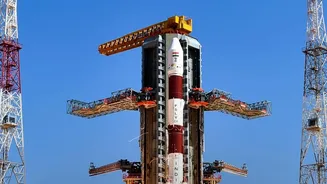
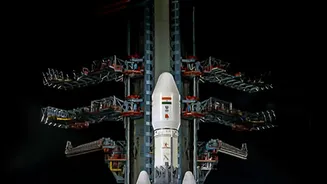
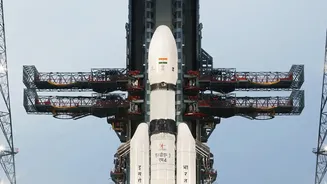
For decades, the Indian Space Research Organisation (ISRO) was the sole custodian of India’s space ambitions. From building rockets to launching satellites, every aspect of the space programme was a government-led endeavour. This model was born of necessity,
focusing on strategic national goals, scientific exploration, and developing applications for public good, such as weather forecasting and telecommunications. Private companies existed, but primarily as suppliers and vendors within ISRO's vast supply chain, contributing components and services rather than driving their own missions. There was no ecosystem for a private entity to design, build, and launch its own space hardware. The final frontier, for all commercial purposes, was closed.
A 'Big Bang' of Policy Reform
The landscape shifted dramatically in June 2020, when the Indian government announced it was opening the space sector to private enterprise. This wasn't just a minor tweak; it was a foundational change in philosophy. The Indian Space Policy, approved in 2023, codified this new vision. It created two critical new bodies: the Indian National Space Promotion and Authorisation Centre (IN-SPACe) and expanded the role of NewSpace India Limited (NSIL). IN-SPACe was designed as a single-window agency to regulate, promote, and authorise the activities of private space companies, effectively acting as a bridge between the private sector and ISRO. NSIL, ISRO's commercial arm, was tasked with transferring mature technologies to industry and marketing India's space capabilities globally. This new framework directed ISRO to focus on advanced research and development, leaving the business of operational launches and satellite services to the burgeoning private market.
The New Constellation of Innovators
With the regulatory doors thrown open, a new generation of entrepreneurs rushed in. The number of space-tech startups surged from a handful to over 440 by mid-2026. These companies aren't just ISRO clones; they are innovating across the entire space value chain. Hyderabad-based Skyroot Aerospace made history by launching Vikram-S in 2022, India's first privately developed rocket, and followed up with the successful orbital launch of Vikram-1 in 2026. Chennai's Agnikul Cosmos is pioneering 3D-printed rocket engines, while Pixxel is deploying a constellation of the world's highest-resolution hyperspectral imaging satellites. Others like Dhruva Space are building satellite platforms and orbital deployers. These startups are bringing agility, cost-efficiency, and specialised focus to the industry.
Following the Investment Fuel
This boom is being powered by a massive influx of capital. Private investment in the sector has skyrocketed. From just over $100 million in fiscal year 2021-22, the figure climbed to $618.5 million by March 2026. By mid-2026, cumulative investments since 2021 were approaching $900 million. The success of companies like Skyroot, which became the sector's first unicorn, proved to investors that Indian space-tech was not just about prototypes but capable of delivering world-class hardware. Venture capital firms, once cautious, are now funding later-stage rounds, signalling that many startups are moving from the drawing board to commercial scale. Bengaluru has emerged as the country's space-tech hub, attracting the lion's share of this funding.
Beyond Launch: The Downstream Gold Rush
While rockets and satellites grab headlines, much of the industry's growth is in downstream applications. This involves using data from space to provide services on Earth. Startups are leveraging satellite imagery and analytics for sectors as diverse as agriculture, urban planning, disaster management, and climate monitoring. The demand for high-resolution imagery and real-time data is creating vast opportunities. This part of the ecosystem is less capital-intensive than building rockets, lowering the barrier to entry and fostering a wider range of business models. The Indian Space Policy 2023 explicitly supports this by making certain satellite data freely and openly accessible, further catalysing innovation in value-added services.