





A Floral Paradise Awakens
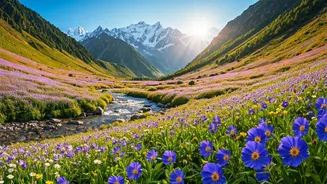
Nestled high in the Garhwal Himalayas, the Valley of Flowers is a place of legend and staggering beauty. For most of the year, it lies dormant under a thick layer of snow. But from June to October, it transforms into a breathtaking canvas of colour. With
the official opening on June 1st, the park invites visitors to witness this spectacular natural phenomenon. Spanning an area of 87 square kilometres, the valley is a unique ecosystem, home to hundreds of species of alpine flowers, many of which are found nowhere else on Earth. This is not just a trek; it's an immersion into a floral sanctuary that has captivated botanists, photographers, and spiritual seekers for generations.
Planning Your Journey
The trek to the Valley of Flowers is as much a part of the experience as the destination itself. The journey typically begins from Govindghat, near Joshimath. From here, a motorable road takes you to Pulna village. The real trek starts from Pulna—a scenic 9-kilometre trail along the Pushpawati River to the base camp village of Ghangaria. This trek is moderately challenging and usually takes about 4-6 hours. Ghangaria is the only place with accommodation (basic guesthouses and a government-run tourist rest house), as camping is not permitted inside the Valley. It is essential to book your stay in advance, especially during the peak season of July and August.
Entering the Valley
From Ghangaria, the entrance to the Valley of Flowers is a 3-kilometre trek. You'll need to purchase an entry permit at the forest check post. The valley is open from 7 AM to 5 PM, and visitors are required to start their return journey by early afternoon to be back in Ghangaria before dusk. Once inside, you are free to explore the marked trails that meander through meadows carpeted with flowers like the Blue Poppy, Brahmakamal, Cobra Lily, and countless others. The landscape is dramatic, with flower-filled slopes set against a backdrop of snow-capped peaks and cascading waterfalls. Remember to tread lightly and stick to the paths to preserve this fragile ecosystem.
When to See the Blooms
While the valley is open from June, the peak blooming season is from mid-July to mid-August. This is when the valley is at its most vibrant, with the maximum number of species in full flower. June offers a different kind of beauty, with fewer crowds and the lingering presence of melting glaciers feeding the streams. The landscape is lush and green, with early bloomers starting to show. By September, the colours begin to change, with autumn hues taking over as the flowers start to seed. This is also a great time for clear mountain views and quieter trails. Each part of the season offers a unique experience, so choose the one that best suits your preferences.
Essential Tips for Your Trip
Proper preparation is key to enjoying this high-altitude trek. Acclimatise properly; consider spending a day in Joshimath or Ghangaria before undertaking strenuous activity. Pack essentials: sturdy trekking shoes, waterproof layers (rain is common), a first-aid kit, sunscreen, and a hat. Carry enough water and snacks for your day trek into the valley. Mobile connectivity is sparse to non-existent, so inform your family of your itinerary. Finally, embrace the 'leave no trace' principle. Do not pluck flowers or leave any litter behind. This ensures the valley remains pristine for future generations.