





What is the 2026 Solar Eclipse?
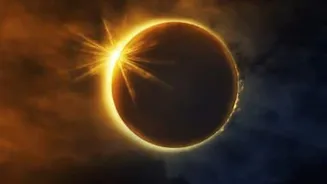
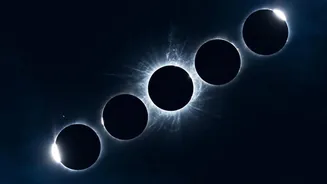
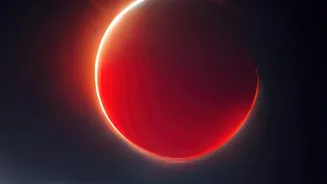
A total solar eclipse occurs when the Moon passes directly between the Sun and Earth, completely blocking the face of the Sun. On August 12, 2026, this precise alignment will cause the Moon's shadow to fall upon our planet, creating a breathtaking celestial
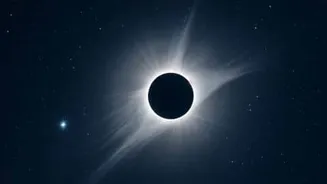
event. For those within the narrow path of this shadow, known as the path of totality, daytime will turn into a deep twilight, and the Sun's ethereal outer atmosphere, the corona, will become visible to the naked eye for a few minutes. This will be the first total solar eclipse to grace mainland Europe since 1999, making it a highly anticipated spectacle.
The Path of Totality
The main event of a total solar eclipse is only visible from within a relatively narrow band on Earth's surface. For the 2026 eclipse, this path begins over remote northern Russia, sweeps across the Arctic, Greenland, and the western tip of Iceland. It then crosses the Atlantic Ocean before making landfall in northern Spain, traversing cities like Bilbao and Valencia, and ending over the Balearic Islands in the Mediterranean. The maximum duration of totality, lasting 2 minutes and 18 seconds, will occur just off the coast of Iceland. While the total eclipse is confined to this path, a partial eclipse will be visible across a much wider area, including most of Europe, northwestern Africa, and parts of North America.
Will It Be Visible from India?
Unfortunately, the August 12, 2026, total solar eclipse will not be visible from India. The entire event will take place after sunset in the Indian subcontinent. According to Indian Standard Time (IST), the partial phase of the eclipse begins late in the evening on August 12 and ends in the early hours of August 13. However, astronomy enthusiasts in India will not be left out entirely. Both NASA and the European Space Agency (ESA) will be hosting live online broadcasts of the eclipse, providing high-quality views from telescopes stationed along the path of totality. This allows anyone, anywhere in the world, to witness the spectacle virtually.
A Unique Celestial Alignment
What makes this event even more special is its timing and location. For observers in Spain, totality will occur late in the evening, just before sunset. This creates the potential for a stunning and rare photographic opportunity: a totally eclipsed sun hanging low over the western horizon. Furthermore, the eclipse coincides with the peak of the annual Perseid meteor shower, which is expected on the night of August 12-13. With the New Moon creating ideal dark-sky conditions, it promises a spectacular night for sky-watching after the main solar event concludes.
How to Watch Any Eclipse Safely
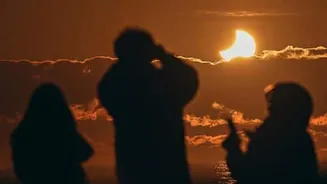
It is crucial to remember that looking directly at the Sun, even when it is partially covered, can cause severe and permanent eye damage. Regular sunglasses are not sufficient. To view the partial phases of any solar eclipse, you must use certified solar viewing glasses (often called 'eclipse glasses') or a handheld solar viewer that complies with the ISO 12312-2 international standard. The only time it is safe to look at a total solar eclipse without protection is during the brief period of totality itself, when the Sun's bright face is completely hidden. Before and after totality, proper eye protection is mandatory.