

An Ideal Time for Clear Skies
September marks the beginning of the post-monsoon observing season for much of India. As the rains subside, the atmosphere is washed clean of dust and haze, leading to enhanced transparency and clearer views of the cosmos. While the absolute best conditions
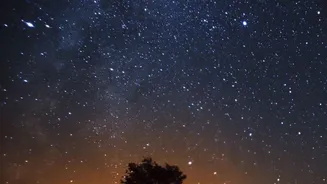
often arrive in October and November, September provides an excellent window to get outside before the winter chill sets in, especially in northern India. This month is perfect for anyone looking to dip their toes into stargazing without needing professional equipment. To make the most of these events, find a location away from city lights, give your eyes about 20 minutes to adjust to the darkness, and look up.
September Epsilon Perseid Meteor Shower
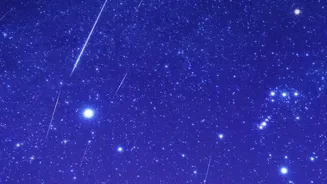
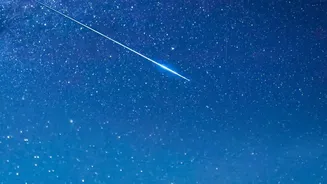
While not as famous as the August Perseids, the September Epsilon Perseids offer a wonderful chance to spot some shooting stars. This minor meteor shower is active from early to mid-September, with its peak expected around September 9. The best part for 2026 is that the peak occurs just before the New Moon, meaning the sky will be dark and free from lunar glare, creating excellent viewing conditions. While you might only see about five to eight meteors per hour, the lack of moonlight greatly increases your chances of spotting them. For viewers in India, the radiant point in the constellation Perseus rises in the east later in the evening. Look for these meteors in the hours before dawn for the best display.
The Double Feature: Neptune at Opposition and the Harvest Moon
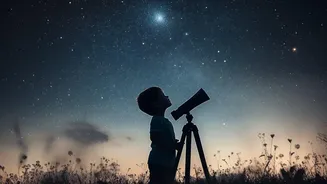
September 26 presents a unique dual event for sky-watchers. The most distant planet in our solar system, Neptune, reaches opposition on this date. Opposition is when Earth passes directly between the Sun and an outer planet, making that planet appear at its brightest and placing it in the sky for the entire night. While Neptune is too faint to be seen with the naked eye, this is the best time of year to hunt for it with a good pair of binoculars or a small telescope, where it will appear as a tiny, star-like blue-grey dot in the constellation Pisces. Coincidentally, the same night hosts the full Harvest Moon. This is the full moon that falls closest to the autumnal equinox (September 22), and it’s known for rising at nearly the same time for several evenings in a row.
A Parade of Bright Planets
Throughout September, several bright planets will be on display. Venus, often called the 'Evening Star', will be unmissably bright in the evening sky, reaching its peak brilliance on September 22. You can also spot Saturn, which will be visible for much of the night. In early October, Saturn will have its own opposition, so it will already be large and bright throughout September. Watching the Moon make close approaches to planets is another highlight. From September 10 to 14, you can track the Moon as it appears to pass by Mars, Jupiter, Mercury, and Venus, offering a beautiful and easy-to-observe celestial dance.
Best Places to Watch From
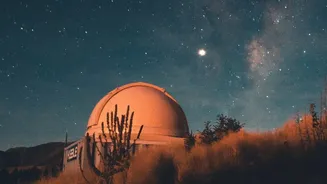
While these events are visible across India, your experience will be significantly better if you can escape the light pollution of major cities. For those seeking the darkest skies, dedicated reserves and remote locations offer the ultimate stargazing experience. Hanle in Ladakh, India's first official Dark Sky Reserve, provides some of the clearest skies in the world. Other excellent locations include Spiti Valley in Himachal Pradesh, the Rann of Kutch in Gujarat (especially as it dries post-monsoon), and hill stations like Kausani in Uttarakhand or Coorg in Karnataka. Even a short drive an hour or two away from city limits can dramatically increase the number of stars you can see.