




The Sun’s Unseen Fury
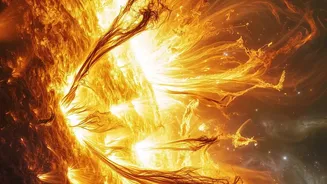
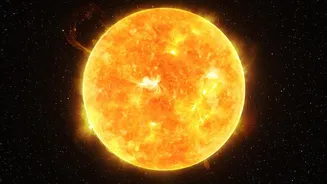
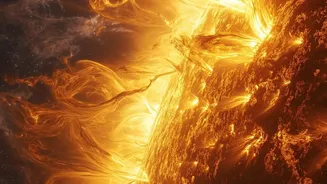
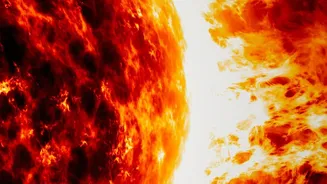
Space weather is a real phenomenon driven by our own sun. At the heart of it are two major events: solar flares and coronal mass ejections (CMEs). A solar flare is an intense burst of radiation from the sun's surface, like a giant explosion, releasing
energy that travels at the speed of light. These can reach Earth in just eight minutes, primarily disrupting radio communications on the sunlit side of the planet. CMEs are even more significant. These are colossal bubbles of plasma and magnetic fields hurled from the sun, carrying billions of tons of particles. While slower, taking one to three days to reach Earth, their impact can be far greater. When a CME collides with Earth's magnetic field, it can trigger a geomagnetic storm, the primary cause of widespread disruption to our technological backbone.
A World Wired for Disruption
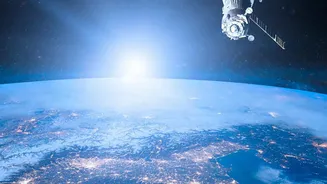
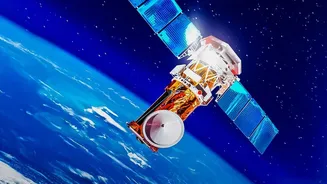
Our modern world is highly dependent on technologies that are vulnerable to geomagnetic storms. Power grids are a major concern. Geomagnetically induced currents can flow through long transmission lines, potentially overheating and damaging critical transformers—expensive equipment that can take months to replace. This could lead to widespread and long-lasting blackouts, as seen in Quebec in 1989. Beyond the grid, satellites are on the front line. The radiation can damage their electronics, degrade solar panels, and increased atmospheric drag from a storm can even cause low-orbiting satellites to lose altitude and fall out of orbit. This directly threatens GPS navigation, communication systems, and weather forecasting. Even undersea internet cables, which carry the vast majority of global data, are not entirely safe, as the electronic repeaters that boost the signal are vulnerable to induced currents.
Our Eyes on the Sky
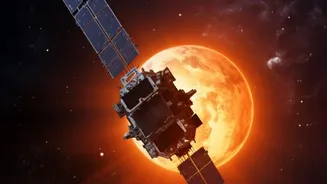
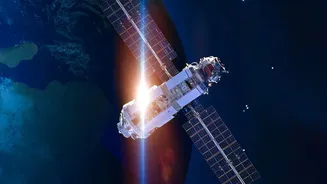
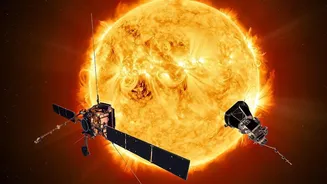
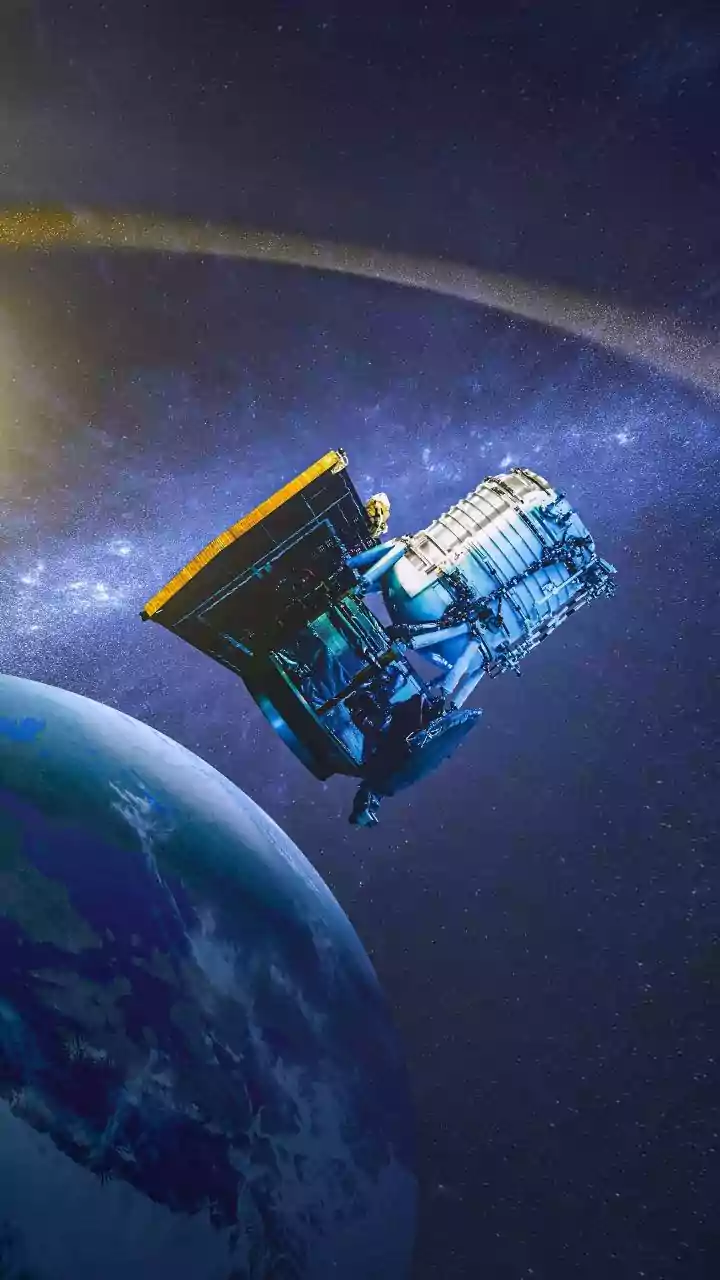
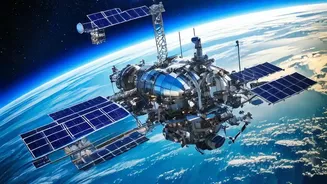
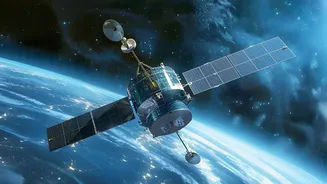
Protecting our infrastructure starts with constant observation. This isn't the work of one country, but a global cooperative effort. Key to this is a network of space- and ground-based observatories. Satellites like the Geostationary Operational Environmental Satellites (GOES) and the Deep Space Climate Observatory (DSCOVR) act as our sentinels. GOES continuously monitors the sun's activity, providing real-time images of flares and CMEs. DSCOVR is positioned about 1.5 million kilometers from Earth, directly in the path of the solar wind. It measures the speed, density, and magnetic field of the particles heading our way, providing a crucial early warning. On the ground, a worldwide network of observatories tracks changes in Earth’s magnetic field and observes sunspots, which are often precursors to flares.
From Detection to Alert
Data from this vast network flows to forecasting centers like NOAA's Space Weather Prediction Center (SWPC) in the United States, which operates 24/7. Forecasters analyze this constant stream of information to issue a tiered system of notifications: watches, warnings, and alerts. A 'Watch' is issued when the risk of a hazardous event increases, often one to three days in advance, giving operators time to prepare. A 'Warning' indicates that a storm is imminent, with a lead time of minutes to hours. Finally, an 'Alert' means that a storm is in progress and observed conditions have crossed a critical threshold. These alerts are not just for scientists; they are sent to power grid operators, satellite controllers, airlines, and other critical industries so they can take protective action.
Bracing for Impact
An early warning is only useful if it leads to action. With hours or days of notice, infrastructure operators can take steps to mitigate damage. Power grid operators can reduce loads on the system, postpone maintenance, and protect vulnerable transformers to prevent cascading failures. Satellite operators can put their spacecraft into a protective 'safe mode' or adjust their orbits to reduce drag. Airlines can reroute flights away from polar regions, where the effects of radiation and communication blackouts are strongest. These proactive measures, all made possible by the solar storm warning network, are essential for preventing a space weather event from becoming a large-scale disaster on the ground. The system is a testament to how international scientific cooperation can build resilience against natural threats, even those originating from far beyond our own atmosphere.