





A Core Sample of History
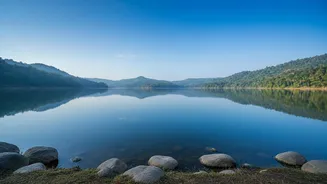
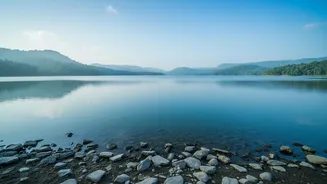
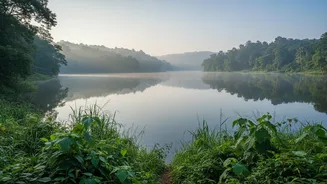
In the Korba district of Chhattisgarh, scientists from the Birbal Sahni Institute of Palaeosciences (BSIP) in Lucknow took a closer look at the Raja Rani Lake. It wasn’t the water they were interested in, but what lay beneath it. By extracting a 40-centimetre-long
sediment core from the lakebed, they acquired a vertical timeline of the local environment stretching back about 2,500 years. Lakebeds are remarkable historical archives; year after year, sediment, dust, and organic matter settle in layers, trapping clues about the world above. For palaeoscientists—experts in ancient life and environments—these layers are like pages in a history book waiting to be read. Deep within this particular core, they found a treasure trove of microscopic pollen grains, the key to unlocking the region's climatic secrets.
The Science of Palynology
The study of ancient pollen and spores is called palynology. Pollen grains may be tiny, but they are incredibly tough. Their outer shell is one of the most durable organic materials known, allowing them to survive for thousands, or even millions, of years when preserved in environments like lake sediments. Each plant species produces pollen with a unique shape and size. By identifying and counting the types of pollen in each sediment layer, scientists can reconstruct what the vegetation was like at that specific time. For example, a layer rich in pollen from grasses and herbs suggests a drier, more open savannah. Conversely, a layer dominated by pollen from forest-loving trees points to a warmer, wetter climate capable of supporting dense woodland. This technique allows researchers to paint a detailed picture of past landscapes and, by extension, the climate that sustained them.
A Stronger, Wetter Past
The analysis of the Raja Rani Lake pollen delivered a significant surprise. The study revealed that between roughly 1060 and 1725 CE, the region experienced a much more intense Indian Summer Monsoon (ISM) than previously believed. This period corresponds with a global climate phase known as the Medieval Climate Anomaly (MCA), a time when some parts of the world were warmer than average. The pollen from this era was dominated by species found in moist, tropical deciduous forests, indicating a warm and humid climate with heavy rainfall. This finding challenges earlier assumptions and provides strong evidence that central India, which lies in the country's Core Monsoon Zone, was not dry but was actually very wet during this medieval period.
Why This Ancient Weather Report Matters Today
Reconstructing ancient climate patterns isn't just an academic exercise. Understanding the natural variability of the monsoon system is crucial for India today. The Core Monsoon Zone receives up to 90% of the country's rainfall, making it vital for agriculture and the economy. This study provides a more detailed baseline of how the monsoon has behaved in the past, which can help scientists refine their climate models for the future. By knowing the natural extremes—like the intensified monsoon during the MCA—researchers can better understand the potential impacts of modern climate change. Scientists suggest the stronger medieval monsoon may have been linked to factors like La Niña-like conditions and increased solar activity. Studying these past events provides invaluable data for discerning long-term trends and making more accurate projections in an era of global environmental change.