




The Cosmic Shadow Play
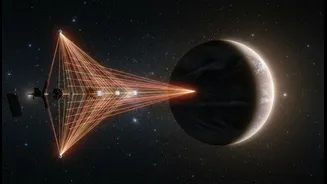
The primary method scientists use is called transmission spectroscopy. Imagine an exoplanet passing, or transiting, in front of its host star from our point of view. As the starlight shines through the planet's atmosphere, gases in that atmosphere absorb
specific wavelengths of light. This creates a unique chemical 'barcode' in the light that reaches the Webb telescope. By analyzing which colors of light are missing, astronomers can determine precisely what molecules are present, such as water vapor, methane, or carbon dioxide. This technique effectively uses the planet's own atmosphere as a filter to reveal its contents.
Why Webb's Infrared Vision is Key
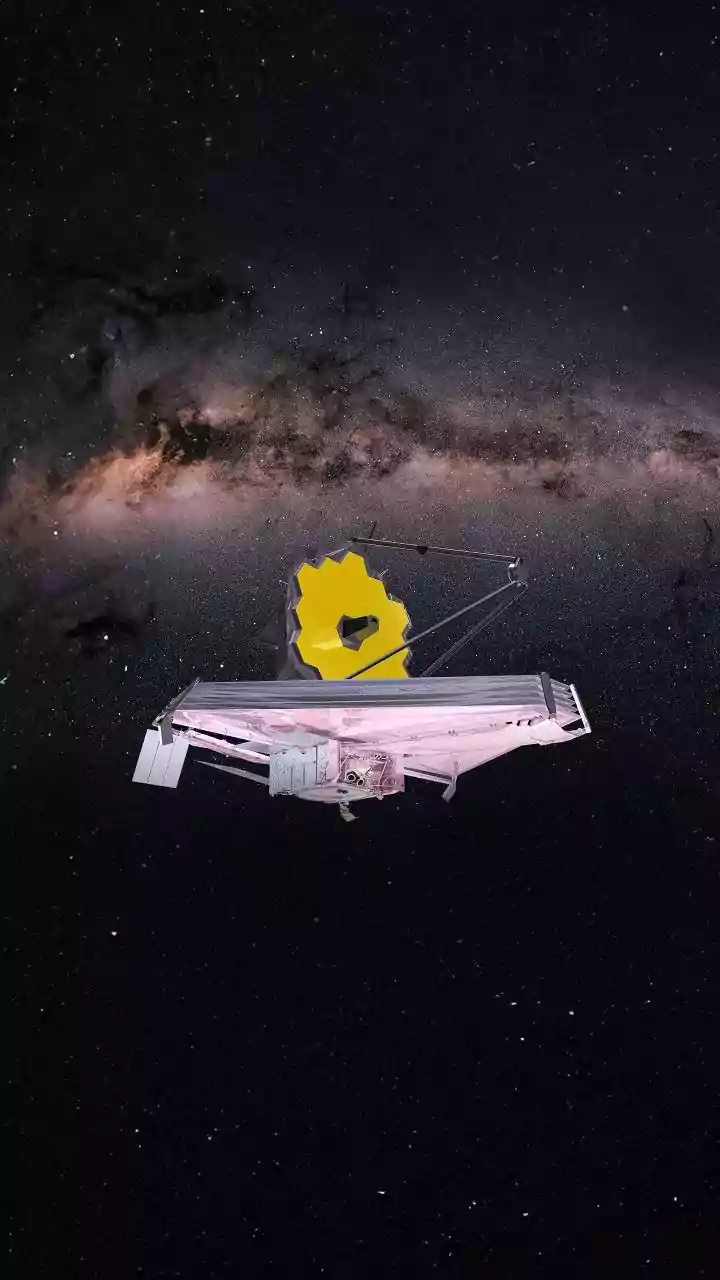
The James Webb Space Telescope is a game-changer because of its exceptional sensitivity to infrared light. Many of the most important molecules for indicating habitability—including water (H₂O), methane (CH₄), and carbon dioxide (CO₂)—have strong absorption features in the infrared part of the spectrum. Instruments like the Near-Infrared Spectrograph (NIRSpec) and the Mid-Infrared Instrument (MIRI) are specifically designed to capture these faint chemical fingerprints with incredible precision. This allows scientists to detect even trace amounts of these gases in the atmospheres of distant worlds, something that was previously impossible.
From Vapor to a Potential Ocean
Detecting water vapor is just the first step. The headline's term, 'ocean saturation profile', refers to understanding the amount of water vapor throughout the different layers of an exoplanet’s atmosphere. On Earth, the lower atmosphere is saturated with moisture evaporated from our oceans. By measuring the concentration and distribution of water vapor on an exoplanet, scientists can infer whether a large, stable reservoir of liquid water—an ocean—is likely present on its surface. A world with a high concentration of water vapor in its lower atmosphere, for example, strongly suggests it has a significant body of water to replenish it.
Building a Digital World
The data from Webb's infrared feeds is not a direct picture of an ocean but a set of clues. Scientists feed this atmospheric composition data into complex computer models. These simulations help them understand the planet's climate and chemistry. For instance, they can model how a planet's temperature and pressure would behave with and without a massive ocean regulating its climate. By comparing these models to the actual data collected by JWST, they can determine which scenario—a dry, rocky world or a water-rich one—is the best fit. This process helps rule out other possibilities and builds a stronger case for the existence of an ocean.
The Hunt for Hycean Worlds
One exciting application of this technique is the search for 'Hycean' planets—hypothetical worlds with deep liquid water oceans under a hydrogen-rich atmosphere. Webb has already studied promising candidates like K2-18 b, detecting key molecules like methane and carbon dioxide while noting a lack of others, a profile consistent with theories about these water worlds. By calculating the saturation profiles for these planets, scientists are not just looking for water; they are assessing whether the conditions could support life as we know it. The presence of a global ocean is considered a critical ingredient for habitability.