




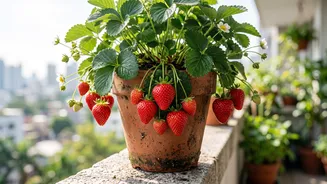
Choose the Right Strawberry Type
Success starts with selecting a variety suited for containers. While any strawberry can technically grow in a pot, everbearing and day-neutral types are ideal for balconies because they produce fruit throughout the season instead of all at once. Look
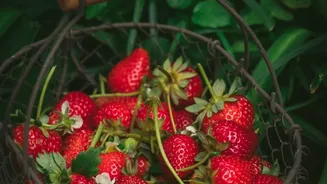
for names like 'Albion', 'Seascape', and 'Tristar', which are known for their continuous harvests and compact growth. 'Albion' is a top choice, producing large, sweet berries from late spring until the first frost. Alpine strawberries, like 'Alexandria', are another excellent option for small spaces as they produce fewer runners and offer delicious, though smaller, fruit.
Select Healthy Plants at the Nursery
When you’re at the garden centre, look for young plants with vibrant, green leaves and a well-developed crown—the short, thick stem at the base where leaves emerge. Avoid plants with yellowing leaves, dark spots, or any signs of pests. A healthy plant should look vigorous and have a strong root system, which you can sometimes see at the drainage holes of its starter pot. Starting with a robust plant gives you a significant head start. Don't be afraid to gently tip the pot to inspect the roots; they should be white or light tan, not dark and mushy.
Find the Perfect Pot and Place
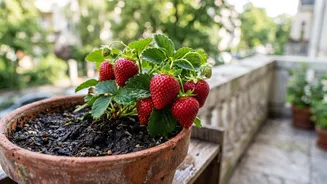
Strawberries have shallow roots, so they don't need a very deep pot, but they do need width. A container that is at least 20-30 cm deep and 25-30 cm wide is a good starting point for one to three plants. Ensure the pot has plenty of drainage holes, as strawberries hate sitting in soggy soil. Terracotta pots breathe well but dry out quickly, while plastic pots retain moisture longer. Once you have your pot, find a spot on your balcony that receives at least six to eight hours of direct sunlight per day; this is crucial for producing sweet, flavourful fruit.
Use the Right Soil and Planting Technique
Never use soil from your garden in pots, as it compacts easily and drains poorly. Instead, use a high-quality potting mix, ideally one formulated for edible plants or berries. A good mix often contains peat moss, perlite, and compost to provide drainage, aeration, and nutrients. When planting, the most critical step is to set the crown at the correct height. The crown must sit right at the soil level—not buried beneath it (which causes rot) and not raised above it (which causes it to dry out). Dig a hole, place the plant so the crown is level with the soil surface, and gently firm the mix around it.
Master Watering and Feeding
Pots dry out much faster than garden beds, so consistent watering is key. Check the soil daily by sticking your finger about an inch deep; if it feels dry, it's time to water. Water thoroughly until it runs out of the drainage holes, and try to water the soil at the base of the plant rather than the leaves to prevent fungal diseases. During the growing season, feed your plants every two to four weeks with a balanced liquid fertiliser. Once flowers appear, consider a fertiliser slightly higher in potassium to encourage better fruit production. Avoid fertilisers high in nitrogen, which will give you lush leaves but few berries.