





A Nation's Dream, Built on Caution
The Gaganyaan programme is more than a mission; it's a national statement. The objective is to demonstrate India's capability to send a crew of three astronauts to an orbit of 400 kilometres for a mission lasting up to three days and bring them back safely
to Earth. Success will place India in an elite club of nations—joining the ranks of the United States, Russia, and China—that possess independent human spaceflight capability. However, before the nation's chosen 'Gaganyatris' make that historic journey, ISRO is adopting a meticulous, safety-first approach. This involves a series of complex uncrewed flights designed to validate every single system, ensuring that when humans are on board, the risks are as low as humanly possible.
The Anatomy of a Safe Launch
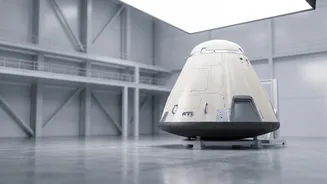
Human spaceflight is inherently dangerous, with the launch phase being one of the most critical. To mitigate these risks, ISRO has developed a sophisticated Crew Escape System (CES). This is essentially a high-powered eject button designed to pull the crew module and its occupants away from the main rocket in case of a catastrophic failure on the launch pad or during ascent. The system uses a series of powerful, quick-acting solid-fuel motors that can yank the capsule to a safe altitude and distance within seconds. ISRO has already conducted several successful trials, including a Pad Abort Test and an in-flight abort test, to prove the system works flawlessly under different failure scenarios. These tests are non-negotiable checkpoints on the road to a human-rated launch vehicle.
The Uncrewed Dress Rehearsals
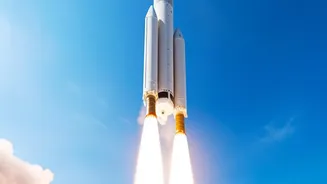
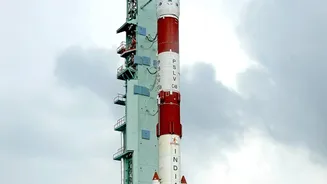
Before the main event, ISRO has planned at least two uncrewed validation flights. The first, designated Gaganyaan-1 or G1, is targeted for launch by the end of 2026. This mission will be a full dress rehearsal, testing the performance of the human-rated LVM3 rocket, the orbital module's systems, and the complex re-entry and recovery operations. A key passenger on this flight will be 'Vyommitra', a humanoid robot developed by ISRO. Vyommitra will simulate human functions, monitoring the crew module's environment, life support systems, and control panels to provide invaluable data on how the spacecraft performs before a human crew ever steps inside. Subsequent uncrewed missions will further refine and validate all systems, with the first crewed flight, H1, currently planned for 2027.
Patience is a Virtue in Spaceflight
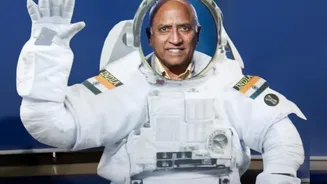
While timelines for the mission have shifted over the years, the sentiment from both ISRO leadership and the astronauts themselves is unified: safety overrides schedule. Group Captain Angad Pratap, one of the four astronaut-designates, recently noted that delays are a natural part of developing a new human spaceflight program and should be taken with a "pinch of salt." This perspective underscores the immense complexity of the task. Building a program from scratch involves not just the flight itself but also extensive ground-based work, from creating the human-machine interface to conducting thousands of component tests. The astronaut team continues their rigorous training, preparing for the mission according to ISRO's deliberate and careful timeline.