







The End of the Double Journey
The traditional path for an international traveller from a non-metro city is a familiar hassle. It often involves booking a separate domestic flight to a major hub like Delhi or Mumbai, navigating a lengthy and often confusing transfer between terminals,
and sometimes enduring overnight stays at airport hotels. This process adds significant time, cost, and stress to any trip. Direct international flights from regional airports eliminate this entirely. A resident of Indore or Pune can soon bypass the congested hubs, completing immigration at their home airport and flying straight to their global destination. This is more than just a convenience; it is a fundamental shift that removes logistical and psychological barriers to travel for a huge population.
Indore’s Global Gateway
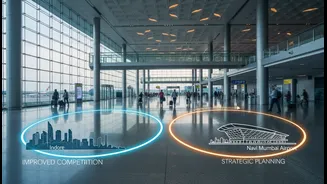
Devi Ahilya Bai Holkar Airport in Indore serves as a prime example of this transformation. Once limited to domestic routes and a single international connection to Sharjah, the airport is expanding its global reach. As of mid-July 2026, Air India Express is launching a direct service to Abu Dhabi. This new route is strategic. While it replaces the previous Sharjah service, it connects Central India to a major global transit hub. From Abu Dhabi, travellers from across Madhya Pradesh can access connecting flights to over 80 cities in Europe, North America, and beyond, without the hassle of a layover in a crowded Indian metro. This development, spurred by rising demand from Tier-2 cities, turns Indore into a true international gateway, boosting business, tourism, and family travel for the entire region.
Navi Mumbai: Decongesting a Metropolis
While Indore represents the rise of a Tier-2 hub, Navi Mumbai International Airport (NMIA) addresses a different but equally critical challenge: easing the pressure on India's most saturated air corridors. Mumbai's Chhatrapati Shivaji Maharaj International Airport (CSMIA) has long operated near full capacity. NMIA, which began domestic operations in late 2025, is set to launch its first international flights on July 15, 2026, starting with an Air India Express service to Abu Dhabi. This is a landmark moment for the Mumbai Metropolitan Region. It offers a vastly more convenient option for millions of people living in Navi Mumbai, Thane, Pune, and surrounding industrial belts. No longer will they need to undertake a long road journey across the city to catch an international flight, fundamentally changing the travel calculus for a massive and economically vibrant population.
The Economic Ripple Effect
The benefits of these new routes extend far beyond passenger convenience. International airports are powerful economic engines that create a virtuous cycle of growth. The launch of international cargo services, happening in tandem at Navi Mumbai, allows local industries to connect directly with global supply chains, boosting exports of everything from pharmaceuticals to agricultural products. Direct connectivity makes a region more attractive for foreign investment and corporate relocation. It also fuels a boom in ancillary sectors like hospitality, logistics, and local transport, creating thousands of direct and indirect jobs. As these regions become easier to access, they attract more tourism, further stimulating the local economy and creating a more balanced national growth model.
A New Blueprint for Indian Aviation
The developments in Indore and Navi Mumbai are not isolated events but part of a deliberate national strategy to decentralize India's aviation infrastructure. For years, the sector was heavily concentrated in a few metro hubs. The government's focus on developing and upgrading airports in Tier-2 and Tier-3 cities under schemes like UDAN is changing this. By creating a more distributed 'hub-and-spoke' network, where smaller airports feed traffic into both domestic and new international hubs, India is making air travel more accessible and equitable. This model ensures that the benefits of economic growth and global connectivity are spread more widely across the country, unlocking the potential of regions that were previously held back by their geography.