






The Plan in a Nutshell
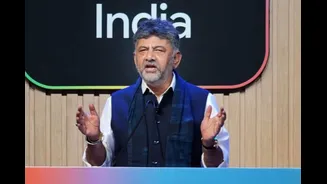
At a recent technology conference in Bengaluru, Karnataka's Chief Minister D.K. Shivakumar announced an ambitious roadmap to position the state as an "AI-native" leader. The centerpiece of this strategy is the establishment of the country's first government-driven
university dedicated entirely to Artificial Intelligence. The plan also includes an AI Innovation Hub to foster collaboration between startups, industry, and academia, as well as the development of next-generation green data centres to provide the necessary infrastructure. The vision is to create a comprehensive ecosystem that not only nurtures world-class AI talent but also drives cutting-edge research and innovation. While specific details about timelines and governance are still emerging, the intent is clear: to create a dedicated institution for specialised AI education and research.
Why Karnataka, Why Now?
The decision for Karnataka to lead this charge is no coincidence. The state, with Bengaluru at its heart, is already India's undisputed technology capital, contributing nearly 40% of the country's software exports and hosting over 17,000 startups. Recent reports rank Bengaluru as the second-best AI-native cluster in Asia and a top 15 global startup ecosystem, attracting the lion's share of India's AI venture funding. The timing is driven by the global race for AI supremacy. As nations and corporations invest billions in AI, the demand for a highly specialised talent pool has skyrocketed. This move signals a recognition that traditional engineering curricula may not be sufficient to create the depth of expertise needed to lead the next wave of technological transformation. The university is a strategic effort to build a dedicated pipeline of AI professionals, researchers, and entrepreneurs on home soil.
The Promise of a Specialised Hub
A dedicated AI university promises several advantages over integrating AI into existing programs. Proponents argue it can foster deeper, more interdisciplinary research that connects computer science with fields like ethics, public policy, and healthcare. The goal is to produce graduates who are not just proficient in using AI tools but can build, question, and responsibly deploy them to solve real-world problems in sectors like agriculture, urban mobility, and medicine. Such an institution could become a magnet for global faculty, top-tier students, and international research collaborations, creating a vibrant ecosystem that spins off new companies and technologies. By focusing exclusively on AI, the university can develop a dynamic curriculum that evolves at the same rapid pace as the technology itself, a challenge for larger, more traditional universities.
The Hurdles Beyond Buildings and Budgets
Despite the ambitious vision, the path forward is lined with significant challenges that plague India's broader higher education system. One of the most critical hurdles will be attracting and retaining world-class AI faculty, a talent pool for which there is intense global competition. Without top-tier educators and researchers, even the best infrastructure will fall short. Another major challenge is ensuring quality and relevance, avoiding the fate of becoming just another institution churning out degrees with little market value—an issue that affects many Indian colleges. There is a significant gap between academic degrees and industry readiness in India, and a specialised university must bridge this from day one. This requires deep and sustained collaboration with the industry not just for placements, but for curriculum design, research projects, and faculty training.
What This Means for India's AI Dream
Karnataka's AI university is a crucial test case for India's national ambitions, outlined in initiatives like the IndiaAI Mission. Its success could create a blueprint for other states to follow, creating a network of specialised institutions that complement the work being done at IITs and private universities. The initiative aligns with the National Education Policy (NEP) 2020, which emphasizes integrating technology and future-ready skills across all levels of education. However, it also highlights a central debate: is it better to build new, specialized institutions or to strengthen and reform existing ones? While a dedicated university can provide focus and agility, the broader challenge remains to infuse AI literacy and computational thinking across the entire education system, from primary schools to liberal arts colleges, to prepare the entire population for an AI-driven future.