

A Rare Path of Darkness
A total solar eclipse happens when the Moon passes directly between the Sun and Earth, completely blocking the Sun's face. This casts a deep shadow, called the umbra, onto our planet. For the August 12, 2026 event, this narrow path of totality will begin
over Greenland, sweep across western Iceland, and then cross over northern Spain before sunset. Cities like Reykjavik, Bilbao, and Palma will experience the brief, awe-inspiring moments of daytime darkness. For millions more across the rest of Europe, northwestern Africa, and even parts of North America, a partial eclipse will be visible, where the Moon only covers a portion of the Sun. However, as eclipse experts will tell you, seeing a 99% partial eclipse is a world away from the 100% total experience.
The All-or-Nothing Experience
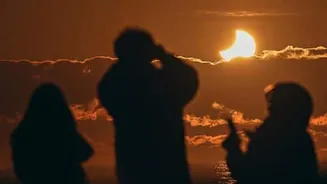
The difference between a partial and a total solar eclipse isn't just a matter of degree; it's a completely different phenomenon. During a partial eclipse, no matter how much of the Sun is covered, its brilliant surface is still exposed. This means the sky remains largely bright, and it is never safe to look at the event without specialized eye protection. You see the Sun as a crescent, but you miss the main event. Totality, however, is a full-body experience. The moment the last sliver of the Sun vanishes, the world changes. The sky darkens to a deep twilight, bright stars and planets can become visible, the temperature can drop noticeably, and animals may grow quiet, thinking night has fallen. This dramatic shift is what makes people travel the globe to stand inside the Moon's shadow for just a few minutes.
Unveiling the Sun's Fiery Crown
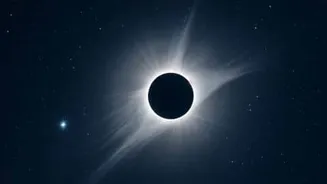
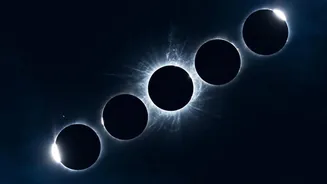
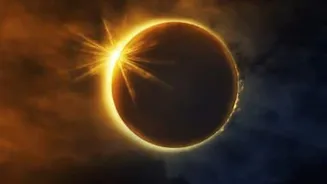
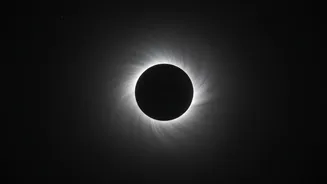
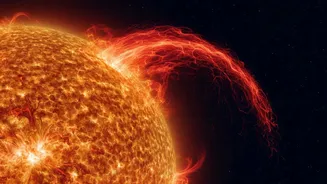
The true prize of totality is the sight of the solar corona—the Sun's ethereal outer atmosphere. Normally invisible, washed out by the Sun's intense brightness, the corona shines forth in intricate, pearly-white streamers during a total eclipse. This is the moment scientists and sky-watchers live for. Two other stunning effects bookend totality: Baily's Beads, which are pinpricks of light shining through the Moon's rugged valleys, and the 'diamond ring effect,' a final, brilliant flash of light just before and after the Sun is completely covered. These sights are exclusive to the path of totality and are the primary reason why NASA and other agencies are investing so much in observing this event.
NASA's High-Flying Science Mission
To get the best possible view, NASA won't just be on the ground. The agency will deploy its WB-57 high-altitude research aircraft to fly along the eclipse path off the coast of Iceland. Flying at 50,000 feet, the jet will soar above most of Earth's atmosphere, allowing its sophisticated cameras to capture incredibly sharp images of the corona. By chasing the Moon's shadow at over 740 kilometres per hour, the aircraft can extend its view of totality from just over two minutes on the ground to nearly three minutes in the air. This extra time is invaluable for scientists studying how the corona is heated to millions of degrees and how it generates the solar wind that flows throughout our solar system.
A Cosmic Double Feature
As if a total solar eclipse weren't enough, the cosmos has arranged a bonus spectacle. The eclipse on August 12 coincides with the peak of the annual Perseid meteor shower. This beloved meteor shower, known for its bright and frequent meteors, will be in full swing. Because the eclipse can only happen during a New Moon, the sky will be perfectly dark for meteor watching in the hours after the Sun sets. Some lucky observers in the path of totality might even spot a bright Perseid meteor streaking through the darkened sky during the eclipse itself—a truly once-in-a-lifetime photo opportunity.
How to Watch From India
While this magnificent eclipse will not be visible from India, you don't have to miss out. Both NASA and the European Space Agency (ESA) will be hosting free live webcasts of the event. You can tune in from anywhere in the world to see live views from telescopes stationed in Iceland and Spain, complete with expert commentary explaining the science as it unfolds. NASA's coverage is scheduled to begin around 1:15 p.m. EDT on August 12, which corresponds to approximately 10:45 p.m. IST. This allows you to experience the magic of totality, from the diamond ring to the glowing corona, right from your home.