






The Obvious Story: A Convenience Revolution
For decades, long-distance train travel in India meant a culinary compromise. Passengers either packed food from home, which would lose its freshness over time, or took their chances with the limited and often criticised pantry car offerings. Then came
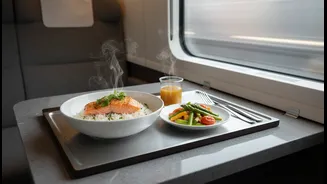
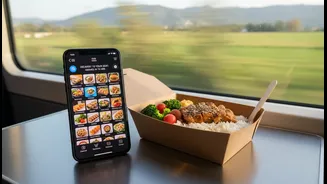
the revolution: e-catering. Indian Railways' decision to partner with food-tech giants like Swiggy and Zomato, alongside other aggregators, changed the game. Suddenly, passengers could use their PNR to order biryani, pizza, or a thali from hundreds of FSSAI-approved restaurants to be delivered to their seat at an upcoming station. The numbers show a dramatic uptake. Swiggy recently reported a threefold year-on-year growth in train food orders for the first quarter of fiscal year 2027, expanding its service to over 180 cities. Passengers are not just ordering once; multi-station orders, where a traveller orders meals for different points in their journey, have surged by over 300%. The old takeaway was simple and powerful: technology had finally solved the problem of bad train food.
The Real Story: Rise of the Railway Cloud Kitchen
But the fresh context that changes the takeaway goes beyond passenger convenience. The rapid growth isn't just being fueled by your favorite local restaurants signing up. A significant, and less visible, part of this ecosystem is the strategic rise of cloud kitchens—also known as ghost kitchens—specifically catering to train routes. These are delivery-only kitchens, often located in nondescript buildings near major railway junctions, built for one purpose: to efficiently prepare and dispatch large volumes of standardized meals. Following years of passenger complaints about the quality and hygiene of its own base kitchens, IRCTC itself is facilitating a massive shift towards this model. In its western zone alone, IRCTC has been working to establish around 200 such professional kitchens, with dozens already operational in and around cities like Mumbai. These are not small-scale operations; the largest can produce thousands of meals a day. This isn't just about adding more restaurants to an app; it's about creating an entirely new, parallel food production infrastructure optimized for the unique demands of railway logistics.
The New Economics of Dining on Rails
This shift to a cloud kitchen-centric model fundamentally alters the economics for everyone involved. For IRCTC, it outsources a decades-old problem, replacing ageing, complaint-ridden base kitchens with a more flexible, scalable, and modern network operated by professional caterers on long-term contracts. Since initiating this shift, IRCTC has noted a significant drop in monthly food complaints. For food platforms, these kitchens provide a reliable supply chain that can handle the sharp, predictable peaks in demand as a train pulls into a station. It’s easier to manage logistics with a few high-volume, professional kitchens than hundreds of small, independent restaurants. For passengers, this means a more consistent, if somewhat standardized, quality of food. The meals come from FSSAI-licensed kitchens under CCTV monitoring, providing a layer of trust that was often missing with the old pantry cars. This model also introduces new digital users into the economy, with platforms reporting significant numbers of first-time app users in smaller, Tier-IV towns placing orders during a brief train halt.
Unseen Ripples and the Future of Train Travel
This new ecosystem also creates complex ripple effects. While passenger choice has exploded, the traditional station vendors and pantry car operators face an existential threat from a system that bypasses them entirely. The quality control, while improved from the base kitchen era, is still a major focus, with IRCTC and aggregators emphasizing their partnerships with only FSSAI-certified kitchens and conducting audits to maintain standards. The model also further entrenches the gig economy in smaller towns, where delivery agents operate on tight schedules to meet trains that stop for only a few minutes. As this model matures, the new challenge will be ensuring consistent quality, fair competition, and sustainable practices across this sprawling new network. The journey of food on trains has moved from a state-run monopoly to a platform-driven, decentralized production system. The next stop will likely involve greater integration, stricter quality enforcement, and even more tailored culinary experiences as data helps platforms predict exactly what a passenger on the Bhopal-Nagpur route wants for dinner.