




The Power of a Statement Piece
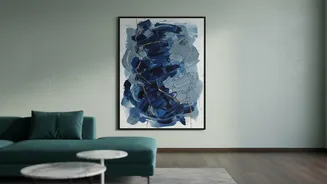
Choosing one large artwork over several smaller ones is a deliberate design decision with significant impact. A single, oversized piece creates an immediate focal point, anchoring the room and providing a clear centre of gravity. This approach reduces
visual clutter, which can make a space feel calmer, more expansive, and more luxurious. Unlike a gallery wall, which tells a story through multiple layered items, a large artwork makes a singular, powerful statement. It’s an efficient way to inject personality and drama into a room, whether it's a living area, bedroom, or even a hallway, making the space feel curated and complete.
Getting the Proportions Right
The key to making large art work is understanding scale and proportion. A common and reliable guideline is the 'two-thirds rule'. When hanging art above furniture like a sofa, bed, or console table, the artwork should be approximately two-thirds (or 60-75%) of the furniture's width. For example, above a sofa that is 80 inches wide, your artwork should be between 48 and 60 inches wide. This ensures the art feels connected to the furniture, creating a balanced and harmonious composition. If you're hanging art on a blank wall without furniture beneath, the art should still be scaled to the wall itself, leaving ample negative space so it doesn't feel cramped.
The Art of Placement
Once you have the right size, proper placement is crucial. A guiding principle used by galleries is to hang art so its centre is at eye level, which is typically 57 to 60 inches from the floor. This creates a comfortable viewing experience. However, if you are hanging the piece above furniture, the rule changes slightly. Aim to leave a gap of 6 to 12 inches between the top of the furniture and the bottom of the frame. This connects the two elements visually without making them feel crowded. When in doubt, always centre the artwork relative to the furniture it hangs above, not necessarily the wall itself.
Test Before You Commit
Choosing a large piece of art is an investment, and it can feel intimidating to get it wrong. A simple, foolproof trick used by designers is to test the size on your wall before you buy anything. Use painter's tape to outline the dimensions of the artwork you're considering directly onto the wall. Live with this taped outline for a day or two. Step back and look at it from different angles and from where you would normally sit or stand in the room. This simple step allows you to see how the scale truly feels in your space and helps you avoid the common mistake of choosing art that is too small for the wall.
Beyond the Canvas
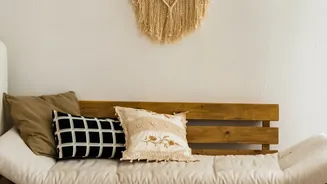
Remember that "large art" doesn't have to be a traditional painting. The principle of a single, large focal point can be achieved with various decor items. Consider a large, beautifully framed mirror, a large-format fine art photograph, or a textile piece like a vintage rug or a modern tapestry. In modern Indian homes, for example, oversized art, textured panels, and 3D wall art are increasingly used to create a strong visual statement that blends tradition with contemporary style. The goal is to find a single piece that commands attention and reflects your personal style.