




The Sun’s Invisible Storms
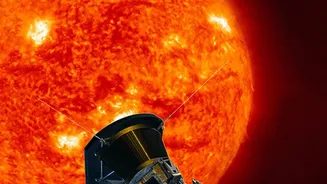
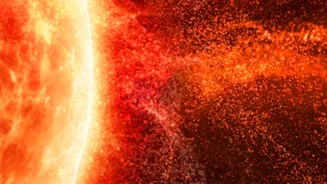
We often think of the Sun as a steady source of light and warmth. But it is also a volatile star that periodically erupts, spewing vast amounts of energy and matter into space. These events, known as space weather, include solar flares and Coronal Mass
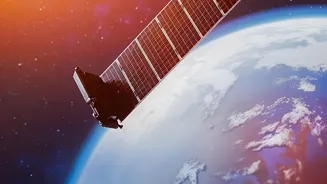
Ejections (CMEs). Solar flares are intense bursts of radiation, while CMEs are massive clouds of magnetised plasma and energetic particles hurled into the solar system. When directed at Earth, these particles can travel at near-light speed. While Earth's magnetic field protects the planet's surface, satellites in orbit are far more exposed. These energetic particles can degrade solar panels, damage sensitive electronics, and even cause complete satellite failure. Over time, this radiation damage shortens a satellite's operational lifespan, a significant concern for the multi-billion dollar communications, navigation, and earth observation industries that depend on them.
Earth's Celestial Watchtowers
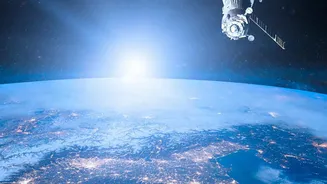
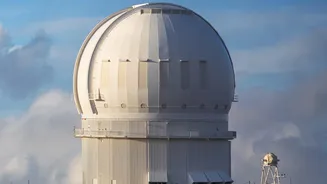
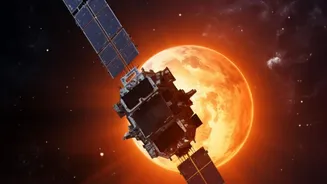
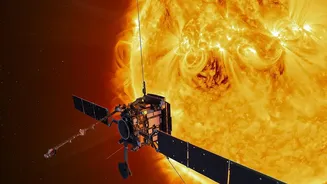
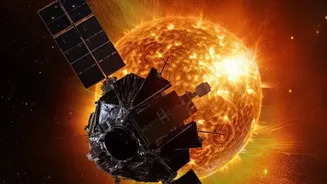
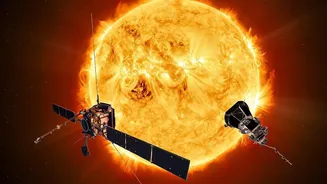
To defend against this threat, a global network of eyes constantly monitors the Sun. This network includes both ground-based telescopes and sophisticated space observatories. Spacecraft like the Solar and Heliospheric Observatory (SOHO) and the Deep Space Climate Observatory (DSCOVR) are positioned at a special point in space called Lagrange Point 1 (L1), about 1.5 million kilometres from Earth. This vantage point gives them an uninterrupted view of the Sun, allowing them to detect solar flares and CMEs as they happen. India has significantly bolstered this effort with its own solar observatory, Aditya-L1, also positioned at the L1 point. Launched by the Indian Space Research Organisation (ISRO), Aditya-L1 uses seven distinct payloads to study the Sun's atmosphere and the solar wind, providing crucial data for understanding and predicting space weather events. Recent findings from Aditya-L1 have already helped scientists identify precursor signs hours before a major solar flare erupts.
From Data to Actionable Alerts
Raw data from these observatories is streamed to space weather prediction centers on the ground. The primary civilian hub in the United States is the Space Weather Prediction Center (SWPC), run by the National Oceanic and Atmospheric Administration (NOAA). In India, ISRO plays a key role in analysing data from Aditya-L1 and other sources to assess space weather risks. Scientists at these centers analyse the data to determine the size, speed, and trajectory of a solar eruption. Using advanced computer models, they forecast whether a storm will impact Earth and how severe it will be. This leads to a system of watches, warnings, and alerts, similar to terrestrial weather forecasting. A 'watch' is issued when conditions are favorable for a storm, sometimes days in advance. A 'warning' indicates a storm is imminent, providing minutes to hours of lead time, while an 'alert' confirms a storm is in progress and has reached a certain intensity threshold.
Battening Down the Digital Hatches
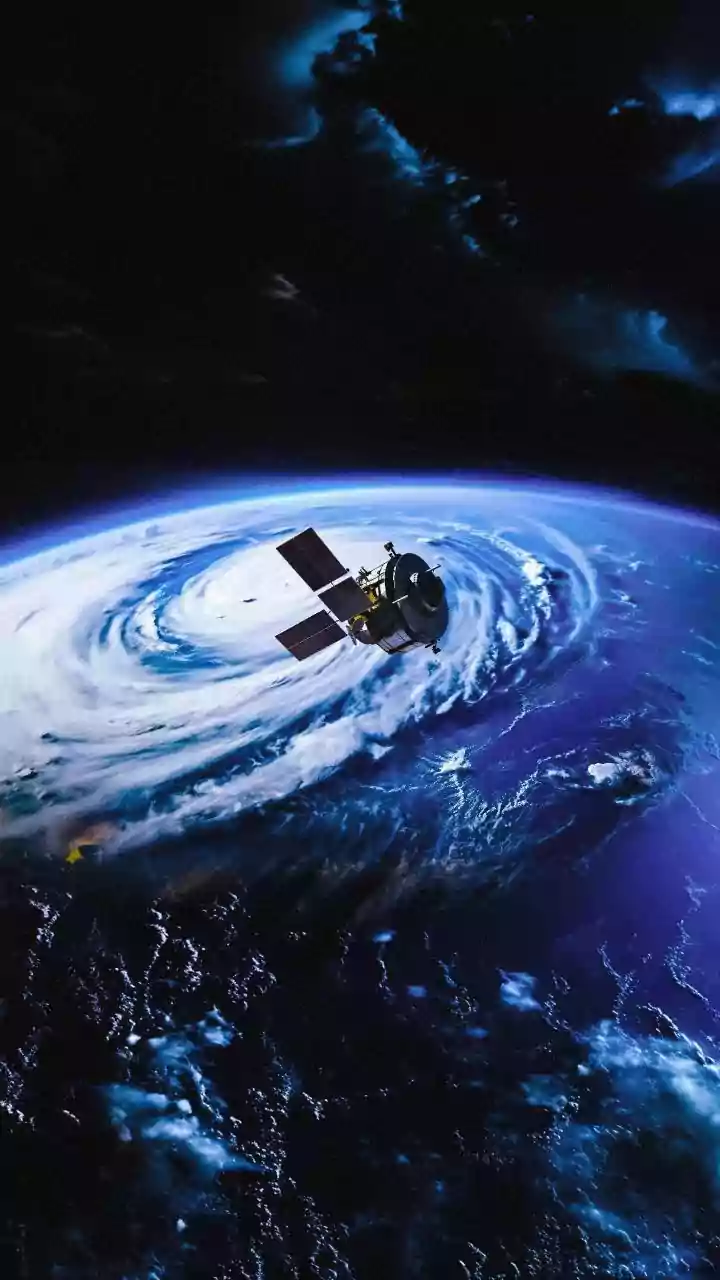
Once an alert is issued, satellite operators scramble to protect their assets. With lead times ranging from a few hours to just minutes, every second counts. The primary goal is to minimize exposure and reduce the risk of electrical damage. One common defensive measure is to command the satellite to enter a 'safe mode'. This involves shutting down non-essential systems and reorienting the spacecraft. Solar panels, which are large and particularly vulnerable to particle impacts, may be rotated to present a smaller profile to the incoming storm, a bit like turning the edge of a shield toward an attack. In some cases, operators of satellites in Low Earth Orbit (LEO) might even perform a pre-emptive orbital boost to raise their altitude. This helps counteract the increased atmospheric drag caused by a geomagnetic storm, which can otherwise cause a satellite's orbit to decay prematurely.
Why This Cosmic Shield Matters
This intricate system of prediction and protection is crucial for modern life. We rely on satellites for GPS navigation that guides our cars and airplanes, for the financial transactions that power our economy, and for the global communications that connect us. A severe geomagnetic storm could disrupt these services, leading to widespread economic and social consequences. The hardware itself is built with protection in mind, using radiation-hardened electronics and shielding materials like aluminum or specialized glass to protect solar cells. However, no shielding is perfect, making early warnings indispensable. The constant vigilance of ground stations and space observatories like Aditya-L1 ensures that our vital infrastructure in the sky has a fighting chance against the Sun's powerful outbursts, safeguarding the technology that underpins our world.