






A Milestone Moment in the Void
On August 18, 2026, Sophie Adenot floated out of the Quest airlock, beginning an extravehicular activity (EVA) that would secure her place in space exploration history. Partnered with NASA astronaut Anil Menon, she spent over six hours working in the vacuum
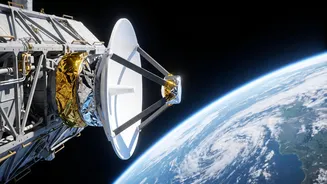
of space. The spacewalk made her the first French woman to perform such a feat, a significant moment for both France and the European Space Agency. Adenot and Menon were tasked with a complex repair job on the station's exterior. Their first spacewalk on August 18 involved removing a faulty Space-to-Ground antenna (SGANT) that had failed months earlier. However, due to stubborn bolts and connectors, they were unable to install the new antenna on the first attempt and had to secure the faulty unit to the station's truss. A second spacewalk on August 25 saw the duo successfully install the replacement antenna, completing the crucial upgrade after a total of 12 hours and 53 minutes of EVA time for Adenot over the two excursions.
From Helicopter Pilot to Spacewalker
Sophie Adenot's journey to this historic moment is one of remarkable skill and dedication. Born in 1982, she is an engineer and a decorated colonel in the French Air and Space Force. Before joining the ESA's 2022 astronaut class, nicknamed "The Hoppers," she had already broken barriers as France's first female helicopter test pilot, accumulating over 3,000 flight hours. Adenot holds engineering degrees from ISAE-SUPAERO in France and a master's degree from the Massachusetts Institute of Technology (MIT), where her research focused on human vestibular system adaptation to artificial gravity—a subject highly relevant to astronaut training. Selected from over 22,500 applicants, she was the first of her class to be assigned a long-duration mission to the ISS, a testament to her extensive experience in high-stakes environments. Her background as a test pilot, accustomed to risk and complex machinery, made her exceptionally well-suited for the intricate and demanding work of a spacewalk.
The Critical Communications Lifeline
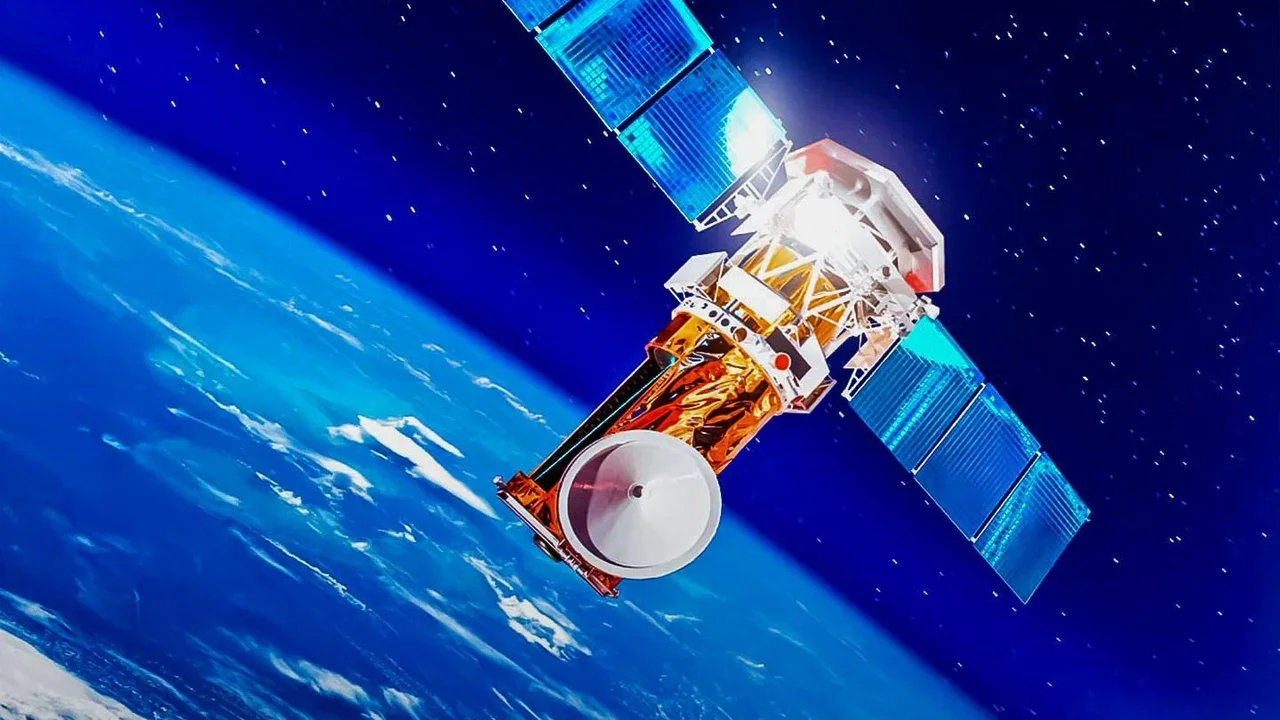
The task at hand was far from routine maintenance; it was essential for the station's function as a premier orbiting laboratory. The failed antenna was part of the system that relays vast amounts of scientific data, video, and voice communications between the ISS and Mission Control in Houston via NASA's Tracking and Data Relay Satellite (TDRS) network. Although a backup antenna kept communications flowing, the failure eliminated crucial redundancy in the system. The work performed by Adenot and Menon on the Z1 truss segment restored this vital backup, ensuring the station's communications infrastructure remains robust. With experiments on the ISS generating ever-increasing volumes of data, these high-speed links are the lifeline for scientists on the ground. The successful installation of the new antenna means that the flow of knowledge from space to Earth can continue unimpeded, supporting discoveries in medicine, materials science, and our understanding of the universe.
A Symbol of Collaboration and Progress
Sophie Adenot's achievement is more than a personal or national first; it highlights the collaborative spirit that defines the International Space Station. A French astronaut, working alongside an American partner, performing maintenance on a global asset underscores the station's role as a beacon of international cooperation. She is only the second European woman to conduct a spacewalk, following Italy's Samantha Cristoforetti in 2022. Her mission, named "Epsilon," is a point of pride for the European Space Agency and a powerful source of inspiration. Achievements like this are crucial for encouraging future generations in India and around the world to pursue careers in science, technology, engineering, and mathematics (STEM). It demonstrates that with perseverance, barriers can be broken, both on Earth and in the stars. The image of Adenot working diligently against the backdrop of our planet serves as a powerful reminder of what humanity can accomplish when we work together towards a common goal.