




The Constant Battle Against Crop Loss
Across the agricultural heartlands of Punjab and Maharashtra, farming is a high-stakes gamble against nature. Unpredictable weather, depleted soil, and water scarcity are persistent challenges. But one of the most significant threats to a farmer's livelihood
is the silent spread of pests and diseases. Annually, it's estimated that Indian farmers can lose anywhere from 15% to 25% of their total crop production to these relentless invaders. For an individual smallholder farmer, a missed or misdiagnosed outbreak can wipe out an entire season's hard work and income. Traditionally, identifying these threats relied on generational knowledge and manual inspections. Farmers would walk their fields, looking for tell-tale signs of trouble. If a problem was spotted, getting expert advice from an agricultural extension officer could take days or even weeks, a critical delay during which an infestation could spread uncontrollably.
A Crop Doctor in Your Pocket
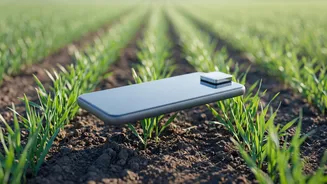
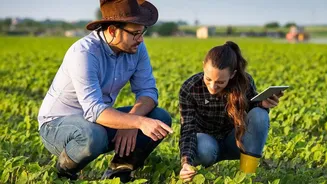
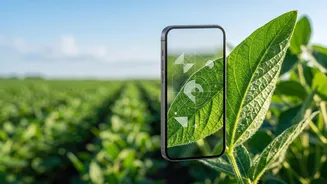
The solution is arriving through a device millions of Indians already own: the smartphone. A new wave of agri-tech innovation is transforming these everyday gadgets into powerful diagnostic tools. Using artificial intelligence, these applications allow a farmer to simply take a photograph of a suspicious-looking leaf or stem. The app's AI, trained on vast databases containing hundreds of thousands of images of plant diseases, then gets to work. Within seconds, it analyzes the visual data—patterns, discolouration, textures, and shapes—to identify the likely disease or pest. It’s like having an agricultural scientist on call 24/7. Companies and platforms like Plantix, DeHaat, and the government-supported National Pest Surveillance System (NPSS) are at the forefront of this movement, making a once-futuristic technology accessible and practical for farmers on the ground.
Impact on the Ground in Punjab and Maharashtra
In Punjab, a state that plays a crucial role in India's food security, the government is collaborating with institutions like IIT Ropar to implement AI technologies aimed at boosting farm productivity. Meanwhile, in Maharashtra, the state government is piloting AI-powered farming projects with thousands of farmers to provide real-time, localized advice. One such initiative, MahaVISTAAR-AI, functions as a generative AI chatbot, helping to bridge the information gap for farmers who need immediate answers in their local language. Startups with a strong presence in these states, such as Pune-based AgroStar, serve millions of farmers by combining digital advisory services for pest management with an online marketplace for agricultural inputs like seeds and pesticides. This approach not only helps in identifying problems but also provides a direct path to acquiring the necessary solutions.
From Diagnosis to Smart Decisions
The true power of this technology lies not just in identification, but in the actionable advice it provides. Once the AI diagnoses the issue, the apps typically offer a set of science-based recommendations for treatment. This empowers farmers to move beyond guesswork and the sometimes-unreliable advice from local input vendors. Instead of applying broad-spectrum pesticides, which can be costly and environmentally damaging, farmers can use targeted treatments. This leads to reduced input costs, lower chemical usage, and ultimately, healthier soil and higher yields. Some advanced systems even integrate weather data and satellite imagery to provide predictive alerts, warning farmers of potential disease outbreaks before they are even visible to the naked eye, allowing for preventive action.
The Future of Farming is Digital
The road to widespread adoption is not without its challenges. Reliable internet connectivity remains a hurdle in many rural areas, and the accuracy of AI models depends on being trained with diverse, high-quality images from local crop varieties and conditions. Furthermore, a formal assessment of the direct impact on crop yields and pesticide reduction is still an ongoing process. However, the momentum is undeniable. These "small AI" tools, designed to work on basic smartphones, are democratizing access to critical agricultural information. They represent a fundamental shift from reactive, traditional farming methods to a proactive, data-driven approach known as precision agriculture.