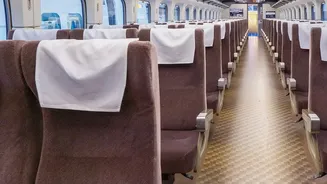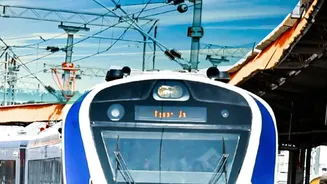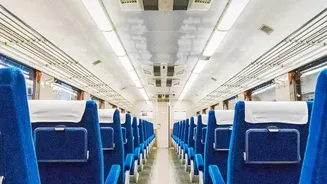







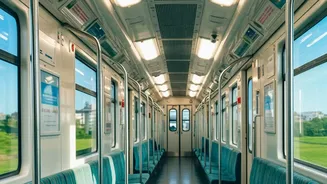
The new Vande Bharat sleeper is generating buzz, but it's the small details that have travellers talking. A viral video has sparked a design debate, comparing its modern layout to the classic Rajdhani Express. But how do they really stack up?
The Detail Sparking Debate
A viral social
media video has put a specific design choice in the new Vande Bharat sleeper trains under the microscope, drawing direct comparisons with the long-serving Rajdhani Express. The feature in question is the layout of the coach entrance area in the AC 3-tier coaches. A travel content creator highlighted that the Vande Bharat sleeper features an automatic sliding door and an additional buffer space that separates the main passenger berths from the coach's primary entrance and exit. This design is a thoughtful response to a common passenger complaint in conventional long-distance trains, where berths located near the main door are often subject to constant disturbances from passenger movement, vendor traffic, and the noise of doors opening and closing throughout the night. By creating this vestibule-like area, the design aims to offer a quieter and more restful experience for those in nearby berths.
The Rajdhani's Enduring Blueprint
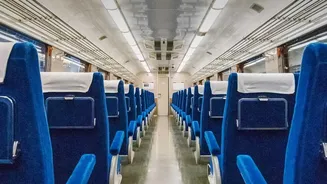
For decades, the Rajdhani Express has been the gold standard for premium long-distance train travel in India. Its fully air-conditioned coaches, available in AC First Class, 2-tier, and 3-tier configurations, set a benchmark for comfort and service. In a conventional Rajdhani 3-tier coach, the layout places berths in close proximity to the main doors at either end. While functional, this design means passengers in those sections often face a trade-off between convenience and quiet. The design has been a fixture of Indian Railways for years, with privacy in 2nd tier coaches provided by curtains and in First Class by lockable cabin doors. The Rajdhani experience has always been defined by its speed, comprehensive meal service included in the fare, and the provision of clean bedrolls, making it a reliable and comfortable choice for millions.
Upgrades Beyond the Entrance
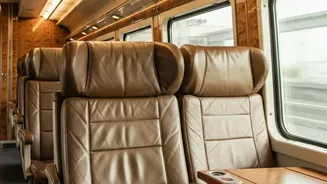
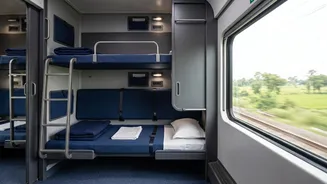
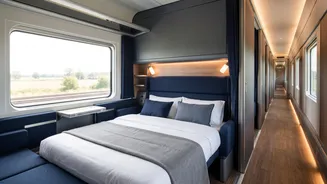
While the entrance layout is a notable change, the Vande Bharat sleeper's design philosophy extends throughout the coach. One of the most talked-about improvements is the ladder for accessing the upper berths. Designers have focused on creating an ergonomically superior ladder that is easier and safer to climb, addressing a common point of difficulty for many passengers, especially the elderly. The berths themselves are reported to have better, thicker cushioning than their Rajdhani counterparts. Furthermore, the trainsets are engineered for smoother, jerk-free rides thanks to improved couplers, and feature better sound insulation to create a quieter cabin environment.
A Leap in Speed and Technology
The fundamental difference between the two lies in their technology. The Rajdhani is a conventional train pulled by a locomotive, with operational speeds generally up to 140 km/h. The Vande Bharat sleeper, however, is a self_propelled trainset, meaning power is distributed under multiple coaches. This allows for much faster acceleration and deceleration, enabling it to operate at speeds up to 160 km/h and potentially reducing overall journey times. The Vande Bharat also boasts modern amenities like sensor_based lighting in common areas, bio_vacuum toilets with touch_free fittings, and advanced safety features like the indigenous Kavach anti_collision system. First AC passengers will even have access to a shower with hot water, a significant upgrade in onboard facilities.
An Evolution, Not Just a Replacement
The introduction of the Vande Bharat sleeper is not just about a new train; it represents an evolution in the passenger experience for overnight journeys. While the Rajdhani defined premium travel for its era, the Vande Bharat builds on that legacy with modern engineering and a focus on solving long_standing passenger pain points. Social media reactions have been largely positive, with many users praising the thoughtful design changes like the entrance buffer zone and improved ladders. The new train features a total capacity of around 823 passengers across its 16 coaches, which include AC First, Second, and Third tier options, similar to the Rajdhani. However, with its wider, sealed gangways for easier movement between coaches and superior ambient lighting, it signals a new chapter for Indian Railways.