


The Sun’s Unseen Fury
Space weather refers to the changing conditions in space, driven primarily by our Sun. The Sun is not a calm, steady star; it's a dynamic ball of superheated plasma that constantly ejects material and energy into space. This includes the continuous stream
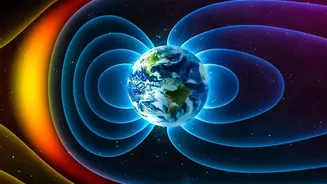
of particles known as the solar wind, as well as more dramatic events like solar flares (intense bursts of radiation) and coronal mass ejections (CMEs), which are massive clouds of plasma and magnetic fields hurtling through space. When these phenomena are directed at Earth, they can interact with our planet's magnetic field and upper atmosphere, creating effects that can be both beautiful, like the aurora, and disruptive.
Satellites in the Firing Line
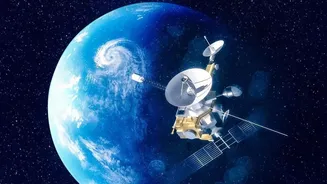
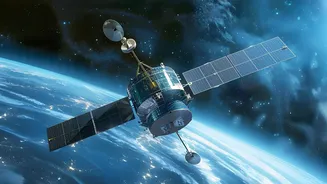
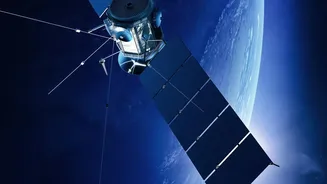
Our orbital technology is particularly vulnerable to these solar outbursts. For satellites in Low Earth Orbit (LEO), a major threat is increased atmospheric drag. Geomagnetic storms heat and expand the Earth's upper atmosphere, increasing the density of gas particles. This creates more friction for satellites, causing them to lose altitude and potentially fall out of orbit prematurely if they can't boost themselves higher. A famous example occurred in February 2022, when a geomagnetic storm caused the loss of up to 40 newly launched Starlink satellites. Satellites in higher orbits face different risks, such as surface charging, where plasma builds up on the spacecraft and can cause electrical discharges that damage sensitive electronics. Furthermore, space weather can disrupt the radio signals used for communication and navigation, degrading the accuracy of GPS and interrupting data transmission.
A New Era of Forecasting
For decades, forecasting space weather has been challenging. Physics-based models, while useful, can be slow and struggle to predict events with the speed and accuracy needed to protect assets in real-time. However, the field is undergoing a revolution thanks to artificial intelligence (AI) and machine learning (ML). Researchers are now developing new models that can sift through vast amounts of data from ground-based and space-based observatories to identify patterns that precede solar events. These AI-driven systems can analyse images of the sun, solar wind parameters, and changes in the Earth's magnetic field to provide more timely and accurate warnings. Projects like NASA and IBM's Surya model and other university-led initiatives are using AI to predict solar flares and the arrival time of CMEs, turning forecasting from a complex scientific challenge into an operational warning tool.
Why Better Models Matter for India
As a nation increasingly reliant on space technology, improving space weather preparedness is critical for India. The Indian Space Research Organisation (ISRO) operates a vast network of satellites for communication, earth observation, and navigation through the NavIC system. These assets are all susceptible to space weather. Better prediction models will allow satellite operators to take protective measures, such as temporarily shutting down sensitive components or adjusting orbits to mitigate drag. This translates into more reliable GPS for transport and logistics, uninterrupted satellite television and mobile communication, and more robust disaster management systems that depend on satellite imagery and data. India has its own initiatives, such as the Aditya-L1 solar observatory and the InSWIM ground network, to better understand and monitor space weather from a regional perspective, which will be crucial for protecting its growing space infrastructure.