







The Vertical Imperative: Why Cats Climb
For our feline friends, the world isn't flat. They are hardwired by millennia of evolution to see their environment in three dimensions. In the wild, height means safety from predators, a superior vantage point to survey their territory, and a clear display
of status. A high perch is a secure throne. When we bring cats into our homes, especially into the compact apartments common in Indian cities, we often forget this fundamental need. We give them floor space, but their instincts crave vertical territory. This lack of elevation can lead to stress, anxiety, and behavioural issues like scratching furniture or clashes in multi-cat households. A cat without a place to climb is like a bird without a high branch to sing from—it’s fundamentally unsettling for them.
Enter the Cat Superhighway
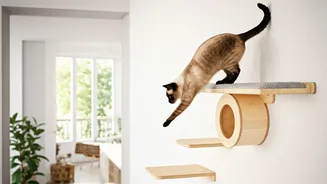
This is where clever vertical wooden wall bridges come in. Think of them not as furniture, but as infrastructure. These are a series of wall-mounted shelves, planks, and bridges that create an elevated 'superhighway' for your cat to patrol, play, and nap on. Typically made from sturdy wood like birch ply, mango, or sheesham, they can be as simple as a few staggered steps leading to a high shelf, or as elaborate as a room-spanning network of walkways and perches. Unlike bulky cat trees that consume valuable floor area, these systems utilise empty wall space, turning a boring vertical surface into an engaging and enriching environment for your pet. They are a design-forward solution that respects both your cat’s needs and your home’s aesthetic.
Planning Your Cat’s Aerial Route
Before you start drilling holes, take a moment to think like a cat. The most successful vertical highways are planned with purpose. Your cat needs clear entry and exit points. A good route might start near a piece of furniture they can already climb, like a sofa or a bookshelf, and ascend from there. The path should lead somewhere desirable, like a comfortable perch with a view of a window or a high, quiet corner for napping. Incorporate different elements: wide shelves for lounging, narrower planks for confident traversing, and perhaps a small enclosed box for security. Observe your cat's current habits. Where do they like to hang out? What windows do they look out of? Use this information to design a route that integrates seamlessly into their daily life, encouraging them to use it naturally.
DIY Project or Store-Bought Kit?
You have two main options for building your cat’s new world. Purchasing a pre-made kit is the fastest and easiest route. Many online retailers offer modular systems that are easy to install and have been tested for safety. The downside can be cost and a lack of customisation. The DIY route offers complete creative freedom and can be more budget-friendly. A trip to a local hardware and timber store can yield all the materials you need: sturdy wooden planks, strong L-brackets, and screws. You can cut the wood to the exact lengths you need and finish it to match your decor. If you choose to DIY, make sure the wood is sanded smooth to prevent splinters and consider wrapping some surfaces in sisal rope or carpet remnants to provide grip and a scratching outlet.
Safety First, Always
An unstable shelf is more dangerous than no shelf at all. Safety is the most critical aspect of this project. Your wall bridges must be securely anchored to the wall. This means using a stud finder to locate the solid wooden beams behind the plasterboard and drilling directly into them. If you have solid brick walls, use appropriate heavy-duty wall plugs and screws. Do not rely on simple drywall anchors, as they will not hold a cat’s weight, especially when they are jumping. Test every single shelf and bridge by applying significant downward pressure before you let your cat explore. Ensure the surfaces are not too slippery—a strip of carpet, cork, or tightly wrapped sisal rope can provide essential traction and prevent falls.