





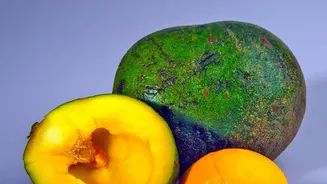
In the kingdom of tropical fruits, mango and papaya are true royalty, especially in India. But the debate rages on: which is healthier? While both are nutritional powerhouses, the answer isn't as simple as one being 'better' than the other.
The Portion Size Problem
We often compare
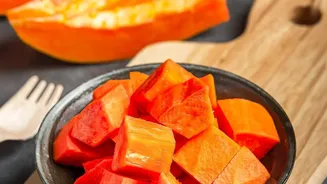
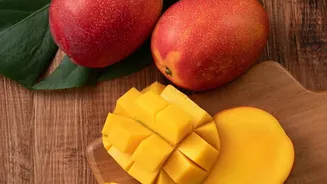
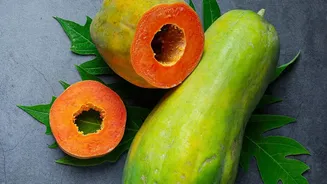
foods gram for gram, but we don't eat them that way. A standard 100-gram comparison is a useful scientific baseline, but it can be misleading in the real world. A 'serving' is what truly matters. According to the UK's NHS, a single portion of large fruit might be one 5cm slice of papaya but two 5cm slices of mango. A typical medium-sized papaya weighs around 275 grams, while a medium mango's edible flesh might be closer to 200 grams. Suddenly, the nutritional figures shift. This is why understanding portion size is the key to making the smartest choice for your health goals.
The 100-Gram Showdown
Before we adjust for portions, let's look at the standard 100-gram data. Papaya is the lighter option, containing around 43 calories and 7.8 grams of sugar. In contrast, mango has about 60 calories and 13.7 grams of sugar for the same amount. If your primary goal is lower calories and sugar, papaya takes an early lead. Both fruits have similar amounts of fibre, with papaya at 1.7g and mango at 1.6g, making them both good for digestive regularity.
The Vitamin C Champion
Both fruits are excellent sources of immune-boosting Vitamin C, but papaya is the clear winner in a direct comparison. Per 100 grams, papaya offers a potent 60.9mg of Vitamin C, which is about 68% of your daily requirement. Mango provides a still-respectable 36.4mg. So, if you're looking to ward off a cold or boost your immune system, a bowl of papaya packs a bigger punch for its weight. A single medium-sized papaya can contain more than 200% of the vitamin C you need for a day.
The Vitamin A Victor
When it comes to Vitamin A, crucial for eye health and skin, the roles are reversed. Mango is the winner, providing 54 micrograms (mcg) per 100 grams, compared to papaya's 47 mcg. This vitamin comes in the form of beta carotene, the antioxidant that gives mango its beautiful golden orange hue. So, for vision and skin support, mango has a slight edge.
Digestion and The Papain Enzyme
This is where papaya has a unique advantage that numbers alone don't reveal. Papaya contains a special digestive enzyme called papain. This enzyme is a protease, meaning it helps break down proteins, which can aid overall digestion and may help reduce symptoms like bloating and constipation. While mango also contains digestive enzymes like amylase that help break down carbohydrates, papain is famously effective and is even extracted for use in digestive supplements. For those with sluggish digestion, papaya is an excellent choice.
The Glycemic Index Factor
The glycemic index (GI) measures how quickly a food raises blood sugar levels. This is an important consideration for diabetics or anyone managing their energy levels. Here, mango has a slight advantage. Most sources place mango's GI in the low to medium range, around $51$. Papaya's GI is typically a bit higher, classified as medium at around $56$-$60$. This means mango may lead to a slower, more gradual rise in blood sugar compared to papaya, making it a slightly better choice for blood sugar stability, provided the portion is controlled.