



The 'Hydrogen for Heritage' Mission
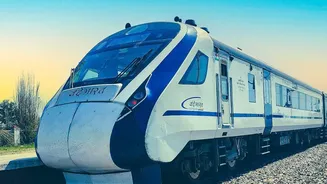
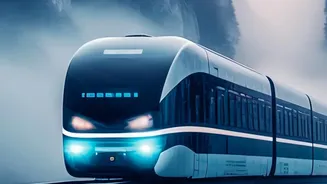
Indian Railways has launched a forward-thinking initiative named 'Hydrogen for Heritage', which aims to retrofit the diesel-powered trains on its historic narrow and meter-gauge routes with clean hydrogen fuel cell systems. The goal is to make these ecologically
sensitive corridors completely green, preserving their natural charm for generations to come. The project involves acquiring 35 hydrogen trains, with the first pilot having already been launched on the Jind-Sonipat section in Haryana in mid-2026. This initial rollout serves as a crucial technology demonstrator for the broader heritage network.
How Do Hydrogen Trains Actually Work?
Think of a hydrogen train not as one with a combustion engine, but as a self-powered electric train. The core of the technology is the fuel cell. Inside this cell, hydrogen stored in onboard tanks reacts with oxygen taken from the air. This electrochemical process generates electricity to power the train's motors, with the only byproduct being water vapour and a little heat. This means no diesel fumes and significantly less noise, offering a serene travel experience. Many designs also use a hybrid system, pairing the fuel cell with a battery to handle peak power needs like acceleration, which improves overall efficiency.
A Symbolic Choice: Our Heritage Routes
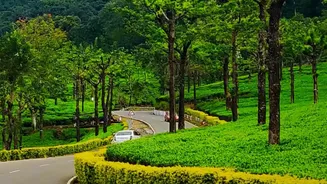
The decision to debut this technology on heritage routes is highly symbolic. These lines, including the Kalka-Shimla Railway, Darjeeling Himalayan Railway, and Nilgiri Mountain Railway, run through some of India’s most stunning and fragile ecosystems. Introducing conventional electric lines with overhead cables and poles would mar the scenic beauty that makes these routes so special. Hydrogen trains offer a solution that eliminates carbon emissions without requiring disruptive infrastructure, thus protecting the aesthetic and environmental integrity of these UNESCO-recognised treasures.
Which Routes Are Part of the Plan?
Indian Railways has identified eight initial heritage routes for this green transformation. These include several of the country's famous 'toy trains' and other scenic lines. The list features the Matheran Hill Railway, the Darjeeling Himalayan Railway, the Kalka-Shimla Railway, the Kangra Valley line, the Bilmora-Waghai route, the Patalpani-Kalakund route, the Nilgiri Mountain Railway, and the Marwar-Goram Ghat line. Each of these routes offers a unique journey through India's diverse landscapes, from Himalayan foothills to the Western Ghats, and will now do so with a minimal environmental footprint.
Challenges on the Path to a Green Future
While the vision is ambitious, the transition to hydrogen power is not without its challenges. The initial cost is significant, with each train estimated to cost around ₹80 crore and the necessary ground infrastructure adding another ₹70 crore per route. Furthermore, the true climate benefit depends on the source of the hydrogen. To be genuinely 'green', the hydrogen must be produced using renewable energy sources like solar or wind, an industry that is still scaling up in India. High costs, storage complexities, and ensuring a steady supply of green hydrogen are hurdles that must be addressed for a widespread and successful rollout.
A Blueprint for a Cleaner National Network
The 'Hydrogen for Heritage' project is more than just a tourism upgrade; it's a vital stepping stone. It serves as a real-world pilot for deploying hydrogen technology across India's vast rail network, especially on routes where electrification is difficult or not cost-effective. Lessons learned from these heritage lines will inform the potential replacement of thousands of diesel locomotives nationwide. This aligns with India's larger climate goals, including achieving net-zero emissions by 2070 and decarbonising Indian Railways by 2030. These quiet, clean trains chugging through historic landscapes are a powerful preview of a more sustainable future for travel across the country.