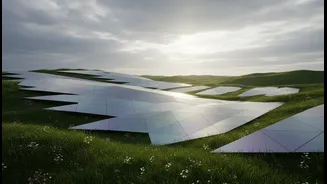


The Challenge of a Cloudy Sky
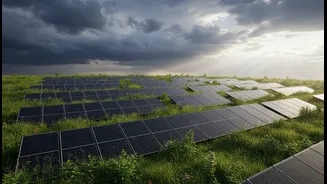
Conventional solar panels, typically made from silicon, are at their best under direct, bright sunlight. They are designed to absorb specific wavelengths of light that are abundant on a clear day. When clouds roll in, the game changes. The sunlight becomes
'diffuse,' meaning it's scattered by water droplets in the atmosphere. This significantly reduces the intensity and changes the light spectrum that reaches the panel's surface. As a result, a standard solar panel's output can plummet, often generating only 10% to 30% of its rated capacity on a heavily overcast day. This intermittency is a major hurdle for grid stability and makes solar a less reliable power source in regions with frequent cloud cover, such as much of India during its vital monsoon months.
Enter Next-Generation Materials
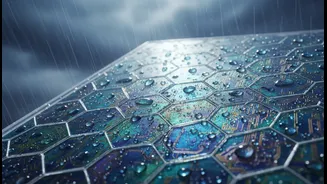
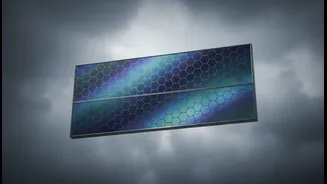
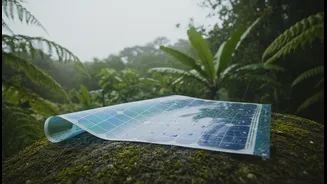
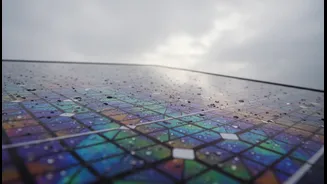
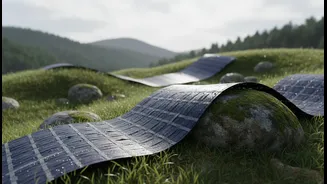
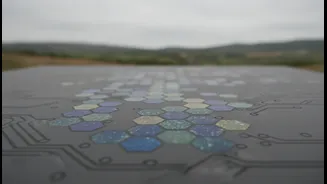
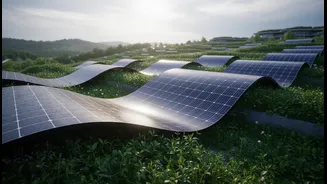
Researchers are tackling this problem with a new class of materials engineered to perform better in low-light conditions. Two key innovations are leading the charge: perovskites and advanced thin films. Perovskite solar cells (PSCs) are made from synthetic crystalline materials that are exceptionally good at absorbing light. When layered on top of traditional silicon in what's called a 'tandem cell,' they can capture a much broader spectrum of light. Another promising area is Luminescent Solar Concentrators (LSCs), which use special dyes or particles in a transparent sheet to absorb diffuse and ultraviolet light, then guide it to small, efficient solar cells at the edges. These technologies are designed not just for efficiency in direct sun, but for resilience when the skies turn grey.
How They Conquer the Clouds
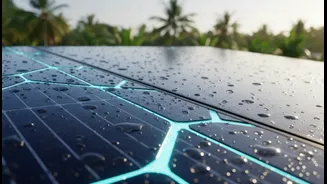
The secret to these new materials lies in their ability to harness diffuse light more effectively. Perovskite tandem cells, for instance, excel because the perovskite layer absorbs high-energy blue and green light, which is more prevalent in overcast conditions, while the silicon layer below captures the lower-energy red and infrared light. This multi-layered approach ensures less of the available light goes to waste. Some advanced technologies, like TOPCon (Tunnel Oxide Passivated Contact), improve on traditional cells by minimizing energy loss and maximizing light absorption across the board, boosting low-light performance. Similarly, LSCs and other thin-film technologies are inherently better at capturing scattered light from all directions, unlike conventional panels that require direct, angled sunlight for peak performance.
A Game-Changer for India's Solar Dream
For India, with its ambitious goal of installing 500 GW of renewable energy capacity by 2030, this innovation is critical. The annual monsoon, which brings months of cloudy weather across the subcontinent, represents a significant challenge to the country's solar infrastructure. Panels that maintain higher output during these periods can drastically improve the reliability of the energy grid. Consistent year-round generation reduces the reliance on backup power from fossil fuels, enhances energy security, and makes solar a more economically viable option for a wider range of applications. From powering remote villages to supporting large-scale industrial parks, all-weather solar technology could help ensure India's clean energy transition stays on track, rain or shine.
The Road to Commercial Viability
While the potential is enormous, these next-generation materials are still on the journey from the lab to the rooftop. Perovskite cells have historically faced challenges with long-term durability and stability, although recent innovations like protective plasma coatings are addressing these issues. The cost of production and the ability to scale up manufacturing to compete with the mature silicon industry are also significant hurdles. However, research is progressing rapidly. Lab efficiencies for tandem cells have already surpassed those of standard panels, and some researchers project these technologies could become mainstream within the next decade. As production methods improve and costs fall, these materials promise to redefine what's possible for solar energy.