



A New Lunar Economy
For decades, going to the Moon was the exclusive domain of national superpowers. The cost was astronomical, with the original Apollo-era lunar rovers costing the equivalent of over $250 million in today's money. But the landscape is changing dramatically.
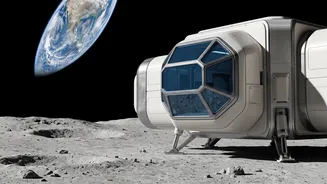
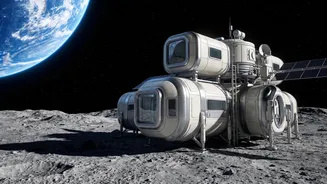
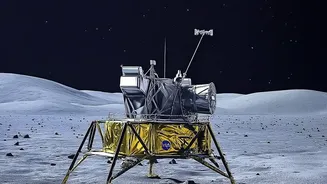
A global ecosystem of private companies is now emerging, driven by the falling costs of launches and the rising demand for lunar access. This has given birth to the concept of the cislunar economy—a sphere of commercial activity between Earth and the Moon. Governments, research institutions, and even private corporations are eager to send instruments, experiments, and technology to the lunar surface. NASA's Commercial Lunar Payload Services (CLPS) program is a prime example, funding private companies to deliver payloads to the Moon, signaling a major shift toward a commercial-first approach.
India's Frugal Innovators Step Up
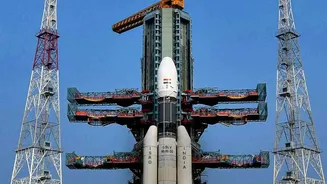
India, already celebrated for its cost-effective space missions, is becoming a hotbed for startups aiming to capitalize on this trend. The country has seen a surge in space-tech ventures, with over 300 startups now active in the sector. While many focus on satellites and launch vehicles, a select few are turning their attention to the final frontier of lunar logistics: rovers. Companies like the US-based OrbitBeyond are establishing major design and manufacturing centers in India, drawing on local engineering talent that contributed to the Chandrayaan missions to build lunar landers and rovers. This leverages India's unique combination of a highly skilled workforce and a proven capability for 'frugal engineering', a philosophy of creating sophisticated technology at a fraction of the traditional cost.
The 'Low-Cost' Rover Advantage
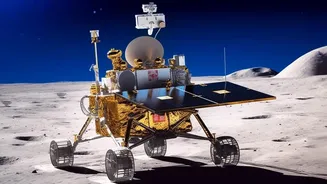
How do these startups make lunar exploration affordable? The strategy is multi-pronged. Instead of designing massive, multi-purpose vehicles like the Apollo rovers, these new-age rovers are often smaller, more specialized, and built using modular designs and off-the-shelf components where possible. Advances in battery technology, autonomous navigation software, and lightweight composite materials allow them to do more with less. Furthermore, by focusing on specific tasks—like deploying a small scientific instrument or capturing high-definition video—they avoid the massive overhead of building a one-size-fits-all solution. The goal is not to reinvent the wheel, but to perfect it for a specific, paying customer, turning what was once a monumental national project into a replicable commercial service.
What Exactly is a Commercial Payload?
The term 'commercial payload' refers to any cargo a client pays to have delivered to the Moon. The market is surprisingly diverse. For example, a university might pay to have a small sensor deployed to study the lunar soil. A pharmaceutical company could fund an experiment on crystal growth in a low-gravity environment. Even marketing and media companies are potential customers, eager to capture unique lunar imagery for branding campaigns. The historic TeamIndus, a participant in the Google Lunar XPrize, planned to carry a 250-gram payload for students, demonstrating the potential for small, crowdfunded scientific and educational missions. As access becomes cheaper and more frequent, the range of possible payloads is expected to expand, creating a steady stream of business for rover delivery services.
The Road Ahead
The path to the Moon is still paved with challenges. Securing funding remains a primary obstacle, as even 'low-cost' space missions require significant capital investment, a hurdle that contributed to TeamIndus's inability to meet the XPrize deadline. Regulatory approvals and finding reliable launch partners are other major steps. However, the Indian government is actively fostering the private space ecosystem through IN-SPACe, an agency designed to facilitate collaboration between startups and ISRO. With India's signing of the Artemis Accords, Indian companies are now better positioned for international collaboration, particularly with NASA's well-funded programs. Startups like Kepler Aerospace, whose founder has experience on a lunar nano-rover project, demonstrate the depth of talent entering the field, even if their current focus is on satellites. Success for these pioneering firms will not only bring commercial returns but also cement India's status as a comprehensive space power, capable of not just reaching for the stars, but doing business there too.