
The Problem with the Soil
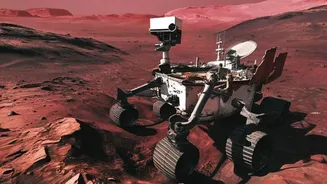
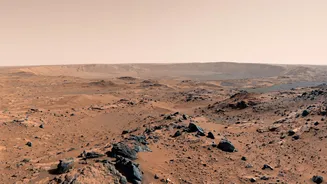
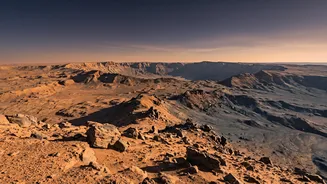
The first challenge lies right under our feet. Mars isn't covered in soil, but in a material called regolith. This is essentially fine, lifeless dust and crushed rock. Unlike Earth's soil, Martian regolith has no organic matter or beneficial microbes,
which are essential for plant life. While experiments have shown some plants can germinate in simulated regolith, the real stuff presents a bigger problem: it's toxic. The Martian surface contains a relatively high concentration of perchlorate salts. At these levels, the chemicals are harmful to plants, hindering growth and, more importantly, they are toxic to humans. So, before Martian regolith can be used for farming, these perchlorates must be removed or neutralized, a significant hurdle in itself. Researchers are currently exploring using specialized bacteria to break down these toxic salts.
An Atmosphere of Issues
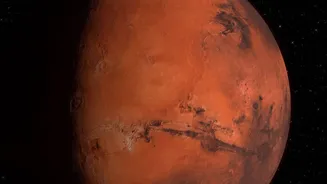
Plants need to breathe, but the Martian atmosphere is fundamentally unsuitable. It's incredibly thin—less than 1% of Earth's atmospheric pressure—and composed of about 95% carbon dioxide. This low pressure makes it impossible for liquid water to remain stable on the surface and is far too low for most plants to survive. Any Martian farm would need to be housed within a pressurized, climate-controlled structure, essentially a sophisticated greenhouse. These structures would have to maintain a delicate balance of temperature, humidity, and atmospheric composition, requiring constant energy and monitoring to create a breathable, plant-friendly bubble in an otherwise hostile world.
Dangerous Rays and Dim Light
Earth is protected by a magnetic field and a thick atmosphere that shield us from the Sun's harsh radiation. Mars has neither. The surface is constantly bombarded by high-energy cosmic rays and solar radiation. Studies simulating these radiation levels show they can damage plant DNA, leading to stunted growth, brown leaves, and smaller harvests. Therefore, any Martian greenhouse would need to be heavily shielded, which poses another challenge. You could build it underground, but that blocks the sunlight. Mars already receives less than half the sunlight of Earth due to its greater distance from the sun. While there is enough light for some crops at the equator, frequent and planet-encompassing dust storms can block out the sun for weeks, making reliance on natural light risky. This means any serious agricultural operation would likely depend on energy-intensive artificial lighting, like LEDs.
Finding and Filtering Water
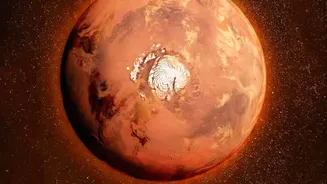
While Mars appears to be a dry desert, there is significant water in the form of ice, primarily at the poles and buried beneath the surface. The challenge isn't the absence of water, but the difficulty of accessing and purifying it. Extracting this buried ice and melting it would be a highly energy-intensive process. Furthermore, this water is not pure. Like the regolith, it is likely contaminated with salts and minerals, including toxic perchlorates, that must be filtered out before it can be used for either drinking or agriculture. Developing robust and efficient systems for water extraction and purification, such as reverse osmosis, is critical for any long-term human presence.
The Gravity of the Situation
One of the most subtle but profound challenges is Mars' low gravity, which is only about 38% of Earth's. Plants on Earth have evolved to use gravity as a guide; roots grow down (gravitropism), and shoots grow up. In microgravity environments, like on the International Space Station, plants can become disoriented, with roots and stems growing in haphazard directions. This can impede their ability to absorb water and nutrients effectively. While the partial gravity on Mars is not the same as zero-g, its long-term effects on plant development, structure, and life cycles are still largely unknown. Scientists are studying how different gravity levels impact everything from cell division to lignin production, the material that gives plants their structural rigidity. It remains a major open question in the quest to turn the Red Planet green.