



From Government Monopoly to a Bustling Marketplace
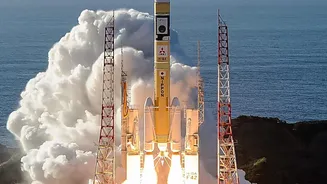
For over fifty years, the Indian Space Research Organisation (ISRO) has been the sole architect of India's journey to the stars, from launching its first satellite to reaching the Moon and Mars. This state-led model made India a global space power. However,
the landscape is now undergoing a monumental shift. Following landmark policy reforms in 2020, the sector was opened up to private enterprise, sparking a boom in innovation. The goal is to move ISRO's focus away from routine operations and towards advanced research and development, such as human spaceflight and deep space exploration. This allows a new breed of agile startups to handle the growing commercial demand for satellite launches, creating a vibrant marketplace where private companies are no longer just suppliers but independent players.
Meet the New Space Pioneers
Leading this charge are several ambitious startups founded by former ISRO scientists and engineers. Hyderabad-based Skyroot Aerospace made history by launching Vikram-1, India's first privately developed orbital-class rocket. This milestone positions India alongside the US and China as countries with private orbital launch capabilities. Another key player, Agnikul Cosmos, is notable for developing the world's first rocket engine that is entirely 3D-printed in a single piece, dramatically reducing manufacturing time. Other prominent companies include Pixxel, which is building a constellation of advanced Earth-observation satellites, and Dhruva Space, which designs and manufactures satellites for a global clientele. These companies are not just building hardware; they are creating a full-stack ecosystem for commercially viable space operations.
The Policy Push and a Helping Hand
This private-sector surge was made possible by deliberate government action. The creation of the Indian National Space Promotion and Authorisation Centre (IN-SPACe) in 2020 was a game-changer. IN-SPACe acts as a single-window agency to promote, authorize, and supervise all private space activities, providing regulatory certainty and a level playing field. The Indian Space Policy 2023 further solidified this new reality, formally allowing private companies to own and operate everything from launch vehicles and satellites to ground stations. Furthermore, a liberalized Foreign Direct Investment (FDI) policy now permits up to 74% foreign investment in satellite manufacturing and up to 49% in launch vehicles, attracting global capital and expertise.
The Small Satellite Revolution
The primary focus for these new companies is the burgeoning global market for small satellites. Historically, small satellite operators had to piggyback on larger ISRO missions, often facing long waits and inflexible schedules. Private launch vehicles like Skyroot's Vikram-1 are specifically designed to carry smaller payloads of up to 350 kg into Low Earth Orbit. This offers a dedicated, on-demand service that is faster and more cost-effective. By catering to this niche, Indian startups can provide tailored launch solutions for everything from communication constellations and Earth observation to academic research and disaster management. This shift is critical as the demand for satellite data in sectors like agriculture, finance, and urban planning continues to explode.
The Economic Takeoff and Future Challenges
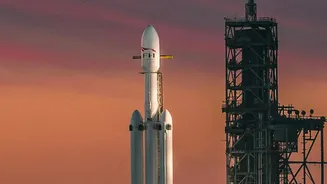
The economic potential is immense. India's space economy, valued at around $8.4 billion, is projected to soar to over $40 billion by 2030. The country aims to capture a much larger share of the global space market, which is expected to exceed a trillion dollars by 2040. The growth of private players is expected to create jobs, encourage 'Make in India', and integrate Indian companies into global supply chains. However, challenges remain. Indian startups face stiff competition from established international players like SpaceX. Securing long-term funding for capital-intensive space projects and navigating the complexities of scaling up production are also significant hurdles. Despite this, the momentum is undeniable, with hundreds of space-tech startups now active in India, turning what was once a government-led program into a thriving commercial industry.