








The Foundation: More Than Just Textbooks
The journey to becoming a propulsion or telemetry expert begins in the lecture halls of India's engineering colleges. A strong grasp of fundamentals is non-negotiable. For aspiring propulsion engineers, this means mastering thermodynamics, fluid dynamics, and
materials science. For telemetry specialists, it's about acing electrical engineering, signal processing, and RF communication principles. However, companies in the fast-paced private space industry are looking for more than just high marks. They are searching for engineers who have pushed beyond theory. The curriculum provides the 'what,' but the 'how' is often learned outside the classroom.
Hands-On Experience: The Real Differentiator
Private space companies, from global giants like SpaceX to India’s own Skyroot Aerospace and Dhruva Space, value practical experience above all else. This is where university projects become critical. Participating in student rocketry clubs, building CubeSats, or joining formula racing teams (like Baja SAE) demonstrates an ability to apply engineering principles to solve real-world problems. These projects serve as a bridge between classroom learning and the demands of the industry, teaching vital skills in design, fabrication, testing, and teamwork. A resume showing a successfully launched model rocket or a functioning satellite prototype often speaks louder than a perfect GPA.
Mastering Propulsion: From CAD to Combustion
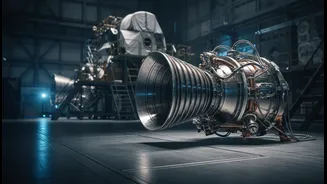
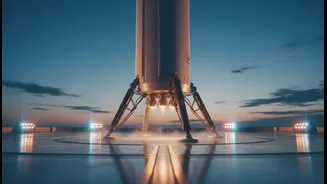
A propulsion engineer is responsible for the heart of the launch vehicle: the engine. Mastering this field requires a diverse skill set. It starts with design, using Computer-Aided Design (CAD) software like SolidWorks or CATIA to model everything from engine components to complex propellant systems. This is followed by intense analysis using Computational Fluid Dynamics (CFD) to simulate fluid flow and Finite Element Analysis (FEA) to assess structural stress. But the work isn't just digital. A deep understanding of manufacturing processes like additive manufacturing (3D printing), welding, and machining is crucial to turn those designs into flight-worthy hardware. The goal is to build systems that are not only powerful but also reliable and increasingly reusable.
Decoding Telemetry: The Language of Launch
If propulsion is the muscle, telemetry is the nervous system of a spacecraft. A telemetry engineer ensures that a constant stream of health and status data is sent from the vehicle back to ground control. This requires expertise in RF (Radio Frequency) systems, data acquisition, and network protocols. They design and manage the entire data chain, from the sensors on the rocket to the displays in mission control. A key part of the job involves troubleshooting real-time data processing environments, often under immense pressure during a launch. Strong programming skills, especially in Python or MATLAB, are essential for data analysis, automation, and developing simulation tools.
The Software Layer: Code is King
In the modern space industry, every engineer is, to some extent, a software engineer. Proficiency in programming languages like Python, C++, and MATLAB is no longer optional. Python is heavily used for data analysis and automating tests, while C++ is often used for flight-critical software where performance is key. Engineers also need to be adept with specialised tools like LabVIEW for testing and control systems, and analysis software like ANSYS for simulations. This fusion of hardware and software skills is what allows private companies to iterate quickly, running thousands of simulations before a single piece of metal is cut.
Learning on the Job: A Culture of Speed
Private space companies are known for their fast-paced environments where young engineers are given significant responsibility early on. New graduates are often paired with experienced mentors and are expected to learn by doing. This might involve working on a subsystem for an upcoming launch, analyzing data from a recent engine test, or troubleshooting an issue on the production floor. Unlike legacy organisations with longer development cycles, startups like Agnikul Cosmos and Skyroot offer the chance to see your work fly in months, not years. This rapid feedback loop of design, build, test, and fail (or fly) is the ultimate accelerator for mastering these advanced engineering disciplines.