


Stiffness in the back and shoulders is a common complaint of modern life. Gentle, controlled chair yoga offers a safe and accessible way to restore spinal mobility, improve flexibility, and ease discomfort without getting on the floor.
Why Your Spine Loves to Move
Our spine is designed
for movement. It can bend forward and backward, twist from side to side, and lean laterally. However, long hours spent sitting at a desk, driving, or looking down at our phones can lead to a stiff, unhappy back. This lack of movement can cause the discs to compress, muscles to tighten, and our overall range of motion to decrease, often resulting in chronic aches and poor posture. Gentle, regular mobilisation helps to hydrate the spinal discs, release muscular tension, and maintain the pathways for your nerves. Think of it as essential maintenance for your body's central pillar, promoting better health from the inside out.
The Gentle Power of Chair Yoga
Not everyone can or wants to get down on a mat for traditional yoga. Chair yoga provides a stable, supportive, and incredibly effective alternative. By using a chair, you eliminate concerns about balance and reduce strain on your knees, hips, and wrists. This makes it an ideal practice for office workers seeking a midday reset, older adults looking to maintain mobility, or anyone recovering from an injury. The chair provides a safe base, allowing you to focus entirely on the quality of your movement and the sensations in your body. It empowers you to explore your range of motion in a controlled, mindful way.
Setting Your Foundation: Posture and Breath
Before you begin any movement, find your proper seat. Sit toward the front edge of a sturdy, armless chair with your feet flat on the floor, hip-width apart. Your knees should be stacked directly over your ankles, forming a 90-degree angle. Lengthen your spine, imagining a string gently pulling the crown of your head toward the ceiling. Let your shoulders relax down and away from your ears. Rest your hands on your thighs. Now, bring your awareness to your breath. Inhale slowly through your nose, feeling your ribcage expand, and exhale slowly through your nose. Coordinating your breath with each movement is the key to a safe and effective practice.
Warm-Up Flow: Seated Cat-Cow
This foundational movement mobilises the spine through flexion and extension. On an inhale, gently arch your back, drawing your chest forward and looking slightly up toward the ceiling. This is the 'Cow' part of the pose; focus on opening the front of your body. As you exhale, round your spine, tucking your chin toward your chest and gently pulling your navel in toward your back. This is the 'Cat' pose. Move slowly and deliberately between these two positions, letting your breath guide the pace. Repeat this flow 8 to 10 times. It's a perfect way to wake up the spine and release tension in the upper back.
Controlled Rotation: Gentle Seated Twist
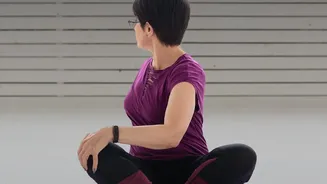
Twists are wonderful for improving rotational mobility and releasing tension. From your tall seated position, place your right hand on the outside of your left thigh and your left hand on the chair behind you for support. On an inhale, lengthen your spine. As you exhale, gently use your core muscles to twist your torso to the left. Only go as far as feels comfortable, keeping both of your hips grounded in the chair. The twist should originate from your mid-back, not your neck. Hold for three to five breaths, then slowly unwind on an exhale. Repeat on the other side. Never force a twist; the goal is a gentle release.
Lateral Bends: Seated Side Stretch
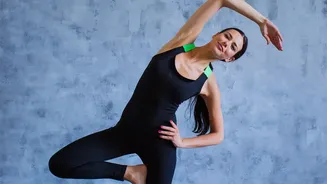
Our spines also need to move side to side. Inhale and reach your right arm straight up toward the ceiling, keeping your shoulder relaxed. As you exhale, gently bend your torso to the left, feeling a stretch along the right side of your body. Keep your right hip anchored in the chair to maintain stability. Imagine you are leaning between two panes of glass, avoiding the temptation to lean forward or backward. Hold for a few breaths, feeling the space you are creating between your ribs. Inhale to come back to the center, and then repeat the stretch on the left side. This movement helps improve flexibility in the muscles that support your posture.