



A New Era for Orbital Real Estate
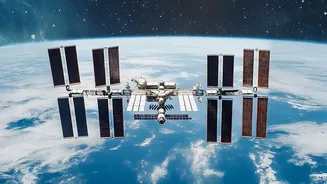
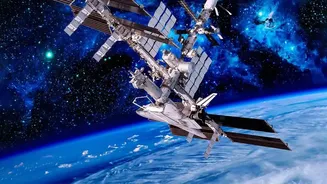
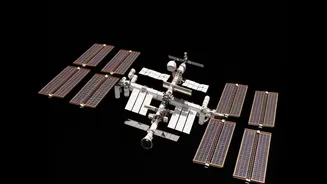
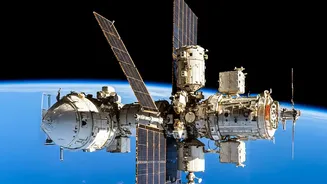
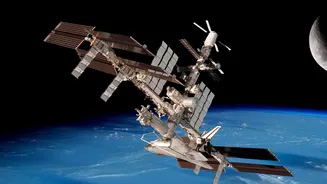
As the International Space Station (ISS) approaches its planned retirement in 2030, a new space race is heating up. This time, it's not between nations, but among private companies vying to build the next generation of orbital outposts. NASA has made
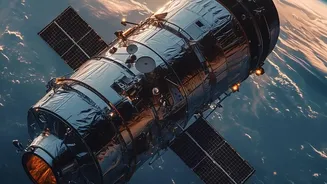
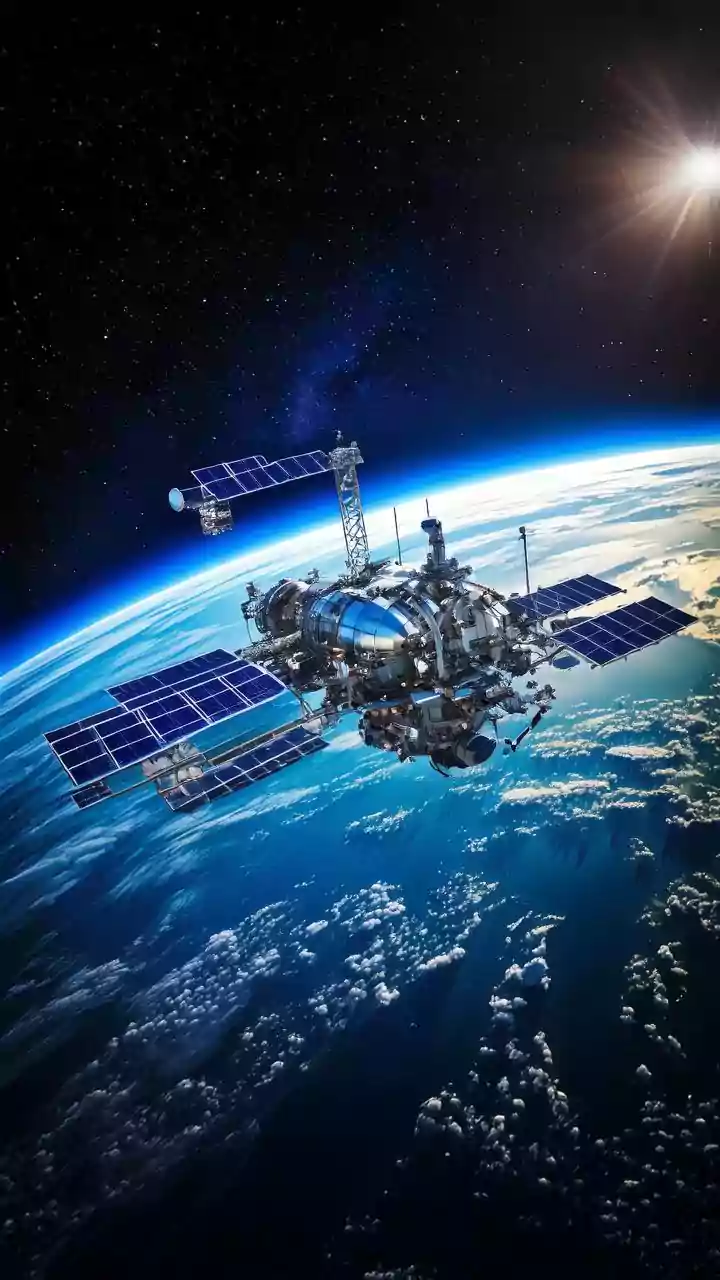
it clear that instead of building another government-owned station, it will become a customer, buying services from commercially owned platforms. This strategic shift has opened the door for a wave of innovation, with companies like Sierra Space, Axiom Space, and Max Space developing plans for private stations that will host everything from scientific research and in-space manufacturing to tourism and astronaut training. Central to many of these ambitious plans is a technology that sounds like science fiction: large, flexible, inflatable modules.
The Inflatable Advantage
Unlike traditional space station modules, which are rigid aluminium cylinders limited by the size of a rocket's fairing, inflatable habitats are a game-changer for orbital construction. These structures are made from advanced, multi-layered flexible materials, including high-strength fabrics like Vectran and Kevlar, which allow them to be launched in a highly compressed and compact state. Once in orbit, the module is inflated, expanding to many times its launch volume to create a spacious, open environment. The primary benefit is efficiency. By packing more usable volume into a single launch, companies can dramatically reduce costs—the single biggest barrier to space-based activities. These soft-goods structures also offer surprisingly robust protection against micrometeoroid impacts and space radiation, sometimes even superior to their metal counterparts.
The Key Players and Their Plans
Several companies are at the forefront of this technology. Sierra Space is developing its Large Integrated Flexible Environment (LIFE) habitat, a key component of the planned Orbital Reef station it's co-developing with Blue Origin. The company has conducted several successful full-scale burst tests, inflating modules to destruction to prove their strength far exceeds safety requirements, and is targeting a standalone 'pathfinder' mission as early as late 2026. Axiom Space, which is already building rigid modules for the ISS that will later form its own independent station, also plans to incorporate inflatable modules to expand its orbital platforms. Meanwhile, newer startups like Max Space are proposing entire stations, such as their 'Thunderbird' concept, that could be established with a single launch. Even India's ISRO has experimented with an analogue inflatable habitat on Earth, signalling global interest in the technology.
A Laboratory in the Stars
The primary purpose of these new commercial stations is to provide a platform for groundbreaking research in a microgravity environment. The unique conditions of space offer unprecedented opportunities for scientific discovery. Inflatable modules, with their vast interior volumes, are ideal for housing state-of-the-art laboratories. Scientists are eager to conduct experiments in areas like bioprinting, where it may be possible to create human organs without the constraints of gravity. Pharmaceutical companies can study protein crystallisation to design more effective drugs. Materials science is another key area, as creating metal alloys and semiconductors in orbit can result in materials with unique and superior properties that are impossible to achieve on Earth. These modules will essentially serve as orbital research parks, accessible to companies, universities, and national space agencies.
Beyond Orbit: A Stepping Stone to the Moon and Mars
While low-Earth orbit is the immediate focus, inflatable habitat technology is seen as a critical stepping stone for humanity's expansion into the solar system. Their lightweight and voluminous nature makes them ideal for long-duration missions to the Moon and Mars, where providing a safe and psychologically comfortable living space for astronauts is paramount. A larger habitat helps alleviate the claustrophobia and stress associated with extended confinement. NASA is actively studying how these modules could be integrated into its Artemis program, potentially for use in lunar surface bases or as part of the transit vehicles that will carry crews on the months-long journey to Mars. By proving their reliability in orbit around Earth, these companies are also building the foundational technology for our interplanetary future.