







The Final Dress Rehearsal
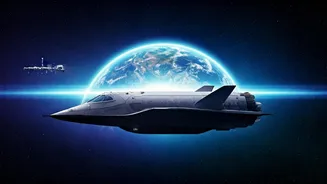
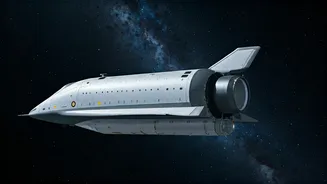
The next major milestone for the Indian Space Research Organisation (ISRO) is the G1 mission, the first uncrewed orbital flight of the Gaganyaan spacecraft. Scheduled for the latter half of 2026, this mission is the full dress rehearsal before any astronaut
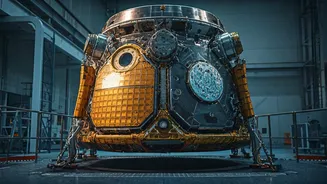
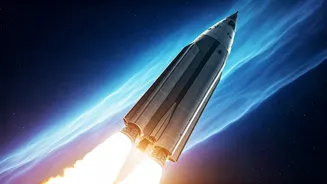
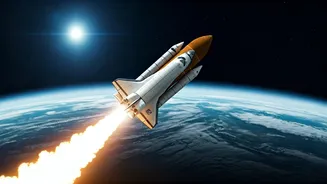
climbs aboard. It will see the human-rated LVM3 rocket launch a complete orbital module—comprising the crew capsule and service module—into a 400 km low Earth orbit. Onboard will be Vyommitra, a sophisticated humanoid robot designed to mimic human functions and test the performance of the life-support systems. The mission's objective is to validate the entire sequence: launch, orbital manoeuvres, atmospheric re-entry, and a safe splashdown and recovery in the Indian Ocean. Every aspect of the spacecraft's performance will be under intense scrutiny.
A Foundation Built on Rigorous Testing
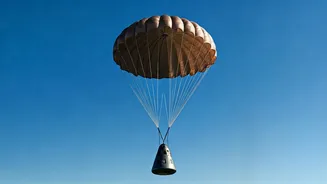
The G1 mission does not happen in isolation. It stands on the shoulders of a long and methodical series of precursor tests designed to ensure crew safety above all else. ISRO has already successfully completed several critical demonstrations. In late 2023, the Test Vehicle Abort Mission-1 (TV-D1) proved the effectiveness of the Crew Escape System, a vital mechanism that can pull the crew capsule away from a malfunctioning rocket in an emergency. More recently, a series of Integrated Air Drop Tests (IADT) in 2025 and 2026 successfully validated the complex parachute system, which is essential for slowing the capsule for a safe landing. These tests systematically eliminate risks, ensuring each component works perfectly before being integrated into the final spacecraft for the G1 flight.
Why This Test Governs the Calendar
The outcome of the G1 mission will have a direct and profound impact on the Gaganyaan timeline. A successful flight, where all systems perform as expected, would be a massive boost of confidence. It would allow ISRO to proceed with subsequent uncrewed test flights with greater assurance, keeping the program on track for a potential first human launch in 2027. However, any significant anomaly or failure during the G1 mission would trigger an unavoidable delay. A setback would necessitate a painstaking investigation to identify the root cause, followed by potential redesigns, manufacturing of new components, and a series of re-qualification tests. In the high-stakes world of human spaceflight, where there is zero margin for error, such a process could push the timeline for the first crewed mission back significantly.
The Path to Putting an Indian in Space
Even with a flawless G1 mission, the journey is not over. Human spaceflight demands redundancy and proven reliability, which can only be achieved through repeated testing. ISRO has planned for a sequence of uncrewed flights after G1 to gather more data and further validate the systems. These flights will test the vehicle under different conditions and build a robust statistical database of its performance. Only after the spacecraft has proven its safety and reliability beyond any doubt across multiple uncrewed missions will ISRO give the green light for the 'H1' mission—the first flight carrying Indian astronauts. This deliberate, step-by-step approach prioritises the lives of the crew, echoing the cautious strategy employed by every spacefaring nation.
A Stepping Stone to Bigger Dreams
Gaganyaan is more than a single mission; it is the cornerstone of India's larger ambitions in space. Successfully demonstrating human spaceflight capability will make India only the fourth country in the world to do so independently, after Russia, the United States, and China. This achievement is a goal in itself, but it also serves as a crucial stepping stone. The technologies and operational experience gained from Gaganyaan are essential for India's plans to establish the Bharatiya Antariksha Station, its own space station, by 2035 and to eventually send an astronaut to the Moon by 2040. The tests being conducted today are laying the foundation for a sustained Indian presence in space for decades to come.