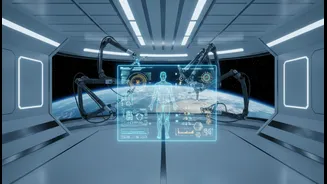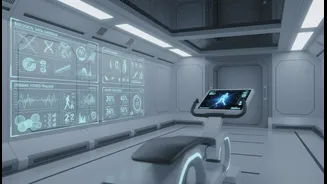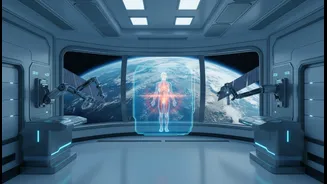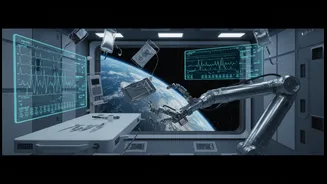






The Doctor Is Heading to Orbit
Anil Menon, a lieutenant colonel in the U.S. Air Force and a seasoned emergency room physician, is not your typical doctor. The son of Indian and Ukrainian immigrants, his career has spanned disaster response at earthquakes in Haiti and Nepal to serving
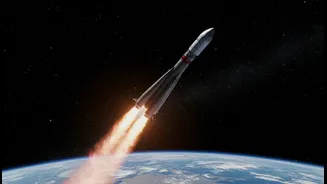
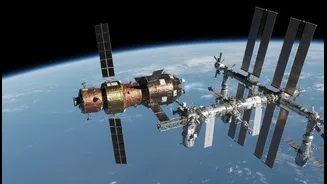
as SpaceX’s very first flight surgeon. In that role, he was on the front lines of commercial spaceflight, helping to launch the first humans on the Crew Dragon spacecraft and building the medical systems to keep them safe. After being selected by NASA in 2021, Menon is now set for his first spaceflight, an eight-month mission to the International Space Station (ISS) launching on July 14, 2026. As a flight engineer, his extensive background in aerospace and wilderness medicine makes him uniquely qualified to handle the extreme challenges of keeping humans healthy 400 kilometres above Earth.
Space: The Ultimate Human Body Stress Test
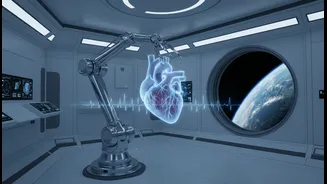
Why does space demand its own branch of medicine? Because without Earth's gravity, the human body starts to change in profound ways. Astronauts can lose up to 20% of their muscle mass in under two weeks. Bone density can decrease at a rate of about 1% per month, a rapid aging process compared to the 3% loss per decade for a healthy adult on Earth. The cardiovascular system gets lazy as the heart doesn't have to pump against gravity, and fluids shift upwards, causing the classic "puffy face" seen in astronauts. This fluid shift can also flatten eyeballs and affect vision, a condition known as Spaceflight-Associated Neuro-ocular Syndrome (SANS). Add in higher radiation exposure, a weakened immune system, and the psychological stress of confinement, and you have a perfect storm of medical challenges. Solving these problems is the core of space medicine.
From the ISS to Your Local Clinic
The solutions developed for these extreme problems have a funny way of becoming indispensable back on the ground. This is where space medicine becomes a daily issue. Telemedicine, for instance, was pioneered by NASA to monitor astronauts' vital signs from Mission Control. That same technology now allows doctors to monitor patients remotely in rural areas or at home. Research into astronaut bone loss has directly led to improved treatments for osteoporosis. The need for compact, powerful imaging led to advancements in ultrasound technology, now common in emergency rooms. Even things like implantable heart pumps were developed using principles from Space Shuttle fuel pumps to help patients awaiting transplants. Other innovations include ingestible thermometer pills for monitoring core body temperature, advanced water purification, and LED light therapies originally created for growing plants in space, now used to treat side effects of cancer therapy.
Menon's Mission and the Next Frontier
Menon's upcoming eight-month stay on the ISS will push this field even further. His mission includes conducting research on how microgravity affects astronaut vein structure and blood flow. He will also test methods for producing intravenous (IV) fluids from the station's drinking water, a critical capability for future long-duration missions to the Moon and Mars where carrying supplies is not feasible. Another experiment involves refining the production of semiconductor crystals in space, which has applications in advanced electronics. By working on these projects, Menon is not just a passenger but a key researcher. His expertise as both a physician and engineer will be vital in pioneering these medical technologies that reduce reliance on Earth. These efforts to make space travel more autonomous are creating the blueprint for more resilient and accessible healthcare in remote and underserved communities on our own planet.