





What Exactly is Changing?
The Government of India has significantly expanded its e-visa program, adding 11 new entry points for international travellers. This recent move by the Ministry of Home Affairs increases the total number of designated e-visa ports to 88 across the country.
The expansion includes two new airports, Bhopal and Tirupati, and nine land-based ports. This means e-visa holders can now enter India through a wider network of 37 airports, 38 seaports, and 13 land ports. The addition of land ports like Attari (Punjab), Agartala (Tripura), and Moreh (Manipur) is particularly crucial for improving connectivity with neighbouring countries.
Addressing the Bottleneck Problem
For years, international arrivals in India have been heavily concentrated at a few major airports, primarily Delhi, Mumbai, Bengaluru, Chennai, and Hyderabad. This concentration often leads to significant congestion, long waits at immigration and baggage claim, and a stressful arrival experience, especially during peak travel seasons. Airlines have even advised passengers to arrive at the airport hours in advance to navigate the queues. By diversifying the entry points, the government aims to distribute passenger traffic more evenly, potentially reducing the strain on these overburdened major hubs.
The E-Visa Advantage
First introduced in 2014 for citizens of 43 countries, the e-visa system was designed to simplify and streamline the visa application process. The program has been a resounding success and is now available to nationals of 172 countries. Instead of complicated paperwork and visits to a consulate, travellers can apply online, with the government reporting that approximately 95% of e-visa applications are processed within 72 hours. Today, around 78% of all visas issued by India are electronic, showcasing the system's efficiency and popularity among global travellers. This digital-first approach significantly cuts down on pre-travel friction and makes India a more attractive and accessible destination.
A Strategic Push for Tourism and Trade
This expansion is more than just an operational tweak; it's part of a broader strategy to boost India's economy. The move is aimed at making travel more convenient for both tourists and business visitors, which in turn can stimulate economic activity. By opening up direct entry to regional destinations like Bhopal and Tirupati, travellers can reach their final destinations faster, avoiding time-consuming layovers in major metro airports. This not only enhances the visitor experience but also encourages the dispersal of tourist spending across a wider geographical area, benefiting regional economies. In the first half of 2026, India saw a modest 3.6% growth in foreign tourist arrivals, and initiatives like this are crucial for sustaining and accelerating that momentum.
Challenges and the Road Ahead
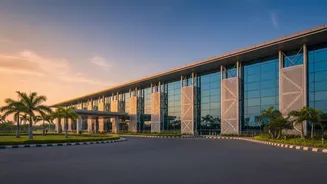
While adding new ports is a significant step, it is only part of the solution. To truly ease bottlenecks, the new entry points must be equipped with adequate infrastructure and trained personnel to handle the influx of international passengers efficiently. This includes state-of-the-art immigration counters, baggage handling systems, and clear signage. The success of this initiative will depend on seamless execution on the ground. Furthermore, as India's aviation market continues its explosive growth—with airlines ordering new aircraft by the hundreds—the need for robust airport infrastructure nationwide has never been more critical. This e-visa expansion is a forward-thinking move, but it must be matched with continued investment in airport capacity and modernization to meet future demand.