


A Revolution in a Breath
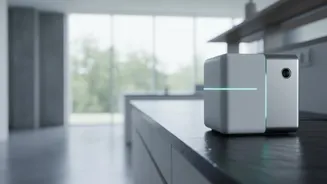
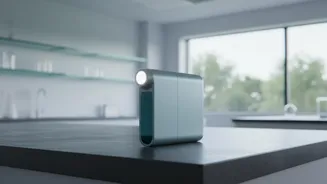
In labs across India, particularly at institutions like the Indian Institute of Science (IISc) and IIT Jodhpur, researchers are perfecting a technology that feels like a leap into the future: an 'electronic nose' that can 'smell' diseases. This AI-powered
breath sensor is a handheld device designed to detect complex health conditions non-invasively. Instead of blood tests or biopsies, a patient simply exhales into the device. The goal is to provide a rapid, inexpensive, and accessible screening tool for some of the country's most pressing health challenges, including diabetes, lung cancer, and other metabolic disorders. Recent showcases, such as at Bengaluru India Nano 2026, have highlighted the immense promise, generating excitement around the potential for early detection that could save countless lives.
The Science of 'Smelling' Disease
The science behind the technology is both elegant and complex. Our breath contains thousands of unique molecules called volatile organic compounds (VOCs). These VOCs are byproducts of our body's metabolic processes, creating a unique 'breathprint'. When a disease like cancer or diabetes is present, it alters these metabolic processes, which in turn changes the composition of VOCs in our breath. The device uses an array of highly sensitive nanosensors, each tuned to detect different chemical compounds. This sensor data is then fed into a powerful AI algorithm. The AI, trained on thousands of breath samples, doesn't just look for one compound; it identifies the subtle, complex patterns across hundreds of VOCs that form the unique signature of a specific disease.
Success Under Controlled Conditions
In the controlled environment of a laboratory, these devices have shown remarkable success. Studies have reported diagnostic accuracies as high as 90-95% for certain conditions. Researchers can calibrate the machines precisely, control the ambient temperature, and ensure subjects follow strict protocols before giving a sample. For example, a TCS Research scientist highlighted a device capable of screening for pre-diabetes by analysing multiple breath biomarkers, a critical tool given the millions of undiagnosed cases in India. These successes, often published in prestigious journals and presented at tech conferences, demonstrate that the core technology is sound and has the potential to outperform traditional diagnostic methods in speed and convenience.
The Messiness of the Real World
The journey from a controlled lab to a bustling, real-world clinic is where the challenges emerge. The very factors that are controlled in a lab are wildly variable in everyday life. A person's 'breathprint' can be temporarily altered by what they ate for lunch, whether they smoked a cigarette, the medications they take, or even poor oral hygiene. Environmental factors like humidity and air pollution can also interfere with the sensitive nanosensors. This 'noise' can confuse the AI, leading to inaccurate readings. Unlike a simple alcohol breathalyzer, which looks for a single molecule (ethanol), these devices must distinguish between thousands of compounds to find a faint disease signal amidst the background noise. This makes real-world validation incredibly difficult.
The Path to Your Doctor's Office
Bridging the gap from lab to clinic requires overcoming several major hurdles. First, the technology needs extensive clinical trials with diverse populations to teach the AI how to account for real-world variability. Second is standardization; different devices and analytical methods make it hard to compare results, a problem that needs to be solved before regulatory bodies can approve them. Finally, there are the practical challenges of manufacturing and cost. While designed to be low-cost, scaling up the production of sophisticated nanosensors and ensuring each device is perfectly calibrated is a significant engineering and business challenge. Without robust data from large-scale trials and a clear path to reliable manufacturing, the focus remains on refining lab results rather than mass deployment.