



The Ultimate Deep Freeze
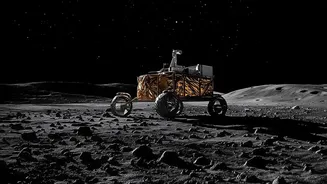
A lunar night is not just darkness; it's a profound, cryogenic cold that lasts for 14 Earth days. With virtually no atmosphere to hold onto heat, the surface temperature can plummet to below minus 200 degrees Celsius. At these temperatures, the sensitive
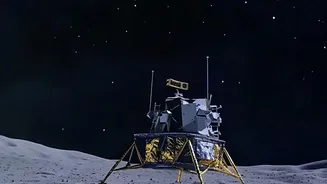
electronics, batteries, and scientific instruments aboard a lander or rover would quickly fail. Solder joints can crack, and batteries lose their ability to hold a charge. This is why many lunar missions, like India's Chandrayaan-3, were designed to operate for a single lunar day, knowing they would not awaken after the long night. Surviving this brutal cold is the single biggest engineering hurdle to establishing a long-term presence on the Moon.
A Tiny, Powerful Solution
The answer to this extreme problem is a surprisingly small and simple-sounding device: the Radioisotope Heater Unit, or RHU. These are not complex power generators but are essentially small, self-contained heat sources. About the size of a C-cell battery, each RHU provides a steady, reliable source of warmth, not through electricity or combustion, but through the natural process of radioactive decay. By strategically placing these units within a rover or lander, engineers can keep critical components at their minimum operational temperatures, using just a few watts of constant heat to fend off the intense cold of space. This allows the spacecraft's main power, often from solar panels, to be conserved for scientific operations rather than being drained by power-hungry electric heaters.
How Plutonium Keeps Things Warm
The magic inside an RHU comes from a ceramic pellet of plutonium-238, about the size of a pencil eraser. This specific isotope of plutonium is chosen for its unique properties. As it naturally decays, it emits alpha particles, which generate a reliable and consistent amount of heat for decades. Crucially, it produces this heat with very little penetrating gamma radiation, which means it doesn't require heavy shielding that would add prohibitive weight to a space mission. The process is entirely passive; there are no moving parts or electronic components to fail. The heat simply radiates from the pellet, warming its surroundings. This makes RHUs an incredibly reliable and long-lasting solution, first used in an experiment left on the Moon by the Apollo 11 crew in 1969.
Powering Modern Moon Missions
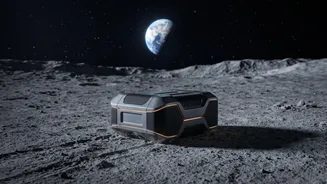
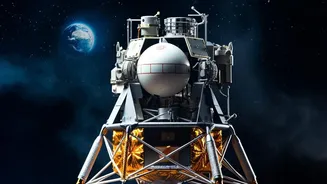
As nations aim to establish a more permanent foothold on the Moon, particularly at the resource-rich South Pole, surviving the lunar night has become essential. NASA's Artemis program, which plans to send astronauts back to the Moon, relies heavily on technologies that can withstand these cycles of extreme hot and cold. Robotic precursors and support missions are being designed with night-survival capabilities. In India, ISRO is actively developing technologies, including artificial heaters potentially powered by radioisotopes in collaboration with the Department of Atomic Energy, to allow future landers to operate for hundreds of days, a massive leap from Chandrayaan-3's 14-day mission. Commercial companies are also developing ultra-compact RHUs to enable smaller rovers to survive and operate through the long lunar night.
Unlocking the Lunar Frontier
The ability to survive the lunar night does more than just extend mission timelines; it fundamentally changes what is possible. It allows for long-term scientific monitoring, such as studying moonquakes or weather patterns over extended periods. It is a critical enabler for the prospect of In-Situ Resource Utilization (ISRU), where resources like water ice, believed to be trapped in permanently shadowed craters at the poles, could be mined and processed. These craters are among the coldest places in the solar system, making RHUs and other thermal technologies indispensable for any machinery operating there. By providing a simple, steady source of warmth, this unassuming piece of technology is a key that will unlock the most challenging and promising regions of the Moon for sustained exploration.