





From Closed Labs to Open Skies
Not long ago, the field of planetary defence—the science of detecting and tracking asteroids that could pose a threat to Earth—was a highly specialised domain. It involved complex calculations and access to data from powerful telescopes, resources largely
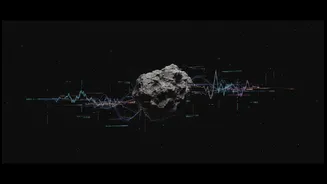
confined to professional astronomers and space agency experts. Data on near-Earth objects (NEOs) was collected and analysed within a small, dedicated community. This vital work, conducted at places like ESA’s Near-Earth Object Coordination Centre (NEOCC), involves monitoring thousands of objects to determine their orbits and assess any potential impact risk. While essential, this expert-driven model created a high barrier to entry for anyone else wanting to explore our cosmic neighbourhood.
Introducing the NEO Toolkit
The European Space Agency has dramatically lowered that barrier with the introduction of its NEO Toolkit. This suite of freely available, web-based applications was designed by the NEOCC to make asteroid data accessible and understandable for professional and amateur astronomers, students, and anyone with a curiosity for space. The toolkit is not a single program but a collection of specialised instruments, each with a distinct purpose. It's a significant step in democratising space science, moving crucial information out of siloed databases and onto the screens of aspiring scientists and hobbyists around the world. These tools represent a shift in philosophy, empowering a wider community to participate in planetary defence.
What's Inside the Toolkit?
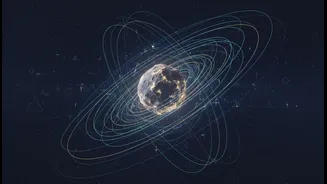
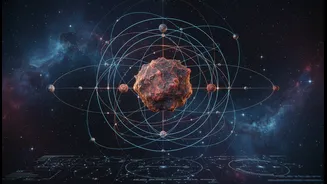
The NEO Toolkit is comprised of several powerful components. The Orbit Visualisation Tool lets users see the paths of individual or groups of asteroids in a 3D model of the Solar System. The Flyby Visualisation Tool creates high-precision simulations of NEOs as they make close approaches to Earth. For those with their own telescopes, the Observation Planning Tool helps determine when and where an asteroid will be visible from any location on the planet. The Sky Chart Display Tool then maps that object's path across the night sky. A more recent addition, the Synodic Orbit Visualisation Tool, offers an intuitive way to understand an NEO's observability from our perspective here on Earth.
Powering the Next Generation of Astronomers
The most significant impact of these tools may be in the classroom. By making professional-grade data interactive and visual, ESA is providing an invaluable resource for education. Students can now move beyond textbook diagrams and engage directly with the dynamics of the Solar System. They can track the infamous asteroid Apophis as it prepares for its close flyby in 2029, or check ESA's official Risk List to see which objects are being most closely monitored. This hands-on experience is crucial for inspiring future scientists and engineers. It transforms asteroid tracking from an abstract concept into an interactive investigation, allowing students to ask their own questions and use real data to find the answers.
More Eyes on the Sky
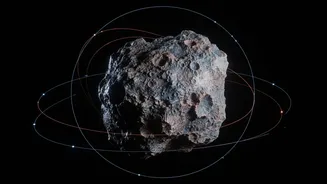
Opening up access to this data isn't just an educational exercise; it's a strategic move in planetary defence. With over 36,000 known near-Earth objects and counting, the task of monitoring the sky is immense. By providing tools for amateurs and students, ESA is effectively crowdsourcing the effort. More observers mean more data, which leads to more accurate orbit calculations. Other platforms, like the ADAM (Asteroid Discovery, Analysis & Mapping) system, are also pushing this open-source approach, developing algorithms to find previously unnoticed asteroids in archival data. This collaborative ecosystem, where data and tools are shared openly between agencies like ESA and NASA and the public, is making our planet safer. Every new observation, whether from a professional observatory or a backyard telescope guided by the NEO Toolkit, helps refine our understanding of potential threats and ensures we are better prepared for what the cosmos might send our way.