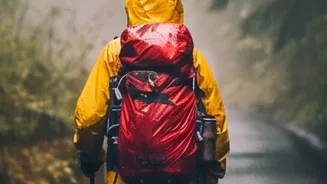







Tackling the Monsoon Downpour
The Indian monsoon offers lush greenery and cool relief, but it also brings humidity, slippery paths, and sudden showers. To keep walking, focus on grip and quick-drying gear. Opt for footwear with deep-patterned rubber outsoles to prevent slipping on wet
surfaces. Trail walking shoes, waterproof sandals, or even clogs can be excellent choices as they provide good traction and don't get ruined by water. For clothing, choose lightweight, synthetic, quick-dry fabrics over cotton, which absorbs moisture and becomes heavy. A breathable, waterproof jacket is essential. Instead of relying on a large hood that can block your vision, try wearing a baseball cap underneath it to keep the rain off your face while maintaining visibility. Finally, always protect your electronics in a waterproof bag or case.
Managing the Summer Heat
Walking during India's intense summers requires careful planning to avoid heat exhaustion and dehydration. The most critical factor is timing. Schedule your walks for the early morning or late evening when temperatures are cooler and UV radiation is less intense. If you must walk during the day, stick to shaded paths as much as possible. Your clothing should be light-coloured, loose-fitting, and made of breathable fabrics like cotton or linen that allow air to circulate and help sweat evaporate. Dark colours absorb more heat and should be avoided. A wide-brimmed hat and sunglasses are non-negotiable for protecting your face and eyes.
The Importance of Hydration
Regardless of the season, but especially in the heat, hydration is paramount. Don't wait until you feel thirsty, as thirst is an early sign of dehydration. Drink water before, during, and after your walk. A good guideline is to drink about two glasses of water an hour or two before you head out, and then sip every 15-20 minutes during your walk. For longer walks where you're sweating a lot, consider an electrolyte drink to replenish lost minerals like sodium and potassium. You can also supplement your water intake by eating hydrating fruits and vegetables such as watermelon and cucumber. Always be aware of the signs of dehydration, which include dizziness, headache, fatigue, and a dry mouth. If you experience these, stop immediately, find a cool place, and drink water.
Embracing the Winter Chill
In many parts of India, particularly the north, winters can be surprisingly cold. The key to comfortable winter walking is layering. Layering allows you to adjust your clothing as your body warms up during the walk. Start with a moisture-wicking base layer to pull sweat away from your skin, add a fleece or wool mid-layer for insulation, and top it off with a windproof or waterproof outer shell. Protecting your extremities is also crucial, as they lose heat the fastest. Wear warm socks, gloves, and a hat or beanie. Footwear should be insulated and have non-slip soles, especially if you're walking in areas with frost or potential ice. While it may be tempting to bundle up in heavy woollens, multiple light layers provide better insulation and flexibility.