





You’re Not Using Nearly Enough
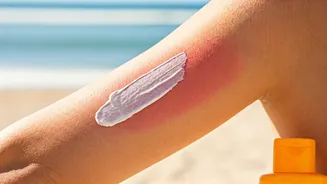
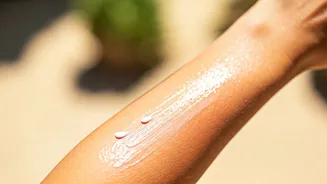
This is perhaps the most common mistake. To get the Sun Protection Factor (SPF) promised on the bottle, you need to apply a surprisingly generous amount. For your entire body, dermatologists recommend about one ounce, which is enough to fill a shot glass.
For the face and neck alone, a common guideline is the “two-finger rule”: squeeze a line of lotion onto your index and middle fingers, and that's the amount you should use for that area. Applying only a thin layer can dramatically reduce your protection, meaning your SPF 50 might only be performing like an SPF 20.
You Forget to Reapply
One application in the morning is not enough for all-day protection. Sunscreen breaks down with sun exposure and wears off. The golden rule is to reapply every two hours you're in the sun. This rule applies regardless of the SPF number; a higher SPF doesn't mean it lasts longer. If you’re swimming, sweating, or even just toweling off, you need to reapply more frequently, often as soon as you dry off, because water and friction can wash away your protection. Setting a two-hour alarm on your phone can be a simple and effective reminder.
You Only Wear It on Sunny Days
Harmful UV rays don't take a day off just because it's cloudy. Up to 80% of the sun's UV radiation can penetrate through clouds, meaning you can still get a sunburn on an overcast day. UV rays are also a threat in winter, as snow can reflect up to 80% of them, increasing your exposure. Furthermore, UVA rays, which are responsible for premature aging, can pass through window glass, so you're still exposed while driving or sitting near a window indoors. Making sunscreen a part of your daily routine, regardless of the weather or your plans, is crucial for long-term skin health.
You're Missing Crucial Spots
It's easy to quickly slather sunscreen on your arms and face and call it a day, but certain areas are frequently missed and highly susceptible to sun damage. Commonly overlooked spots include the tops of your ears, the back of your neck, your scalp (especially along your part), the tops of your feet, and your eyelids. These are areas where dermatologists often find skin cancers. To ensure full coverage, be methodical in your application. Use a lip balm with SPF 30 or higher to protect your lips and consider a spray or powder sunscreen for your scalp and hairline.
You Rely on Your Makeup’s SPF
While it's great that many foundations and moisturisers now include SPF, they are not a substitute for a dedicated sunscreen. The problem is one of quantity. To achieve the stated SPF, you would need to apply about half a teaspoon of foundation to your face, which is far more than most people use. Applying a normal, thin layer of makeup provides significantly less protection than the label suggests. The best practice is to apply a true sunscreen as the last step of your skincare routine, let it absorb for a few minutes, and then apply your makeup on top.
You’re Using Last Year's Bottle
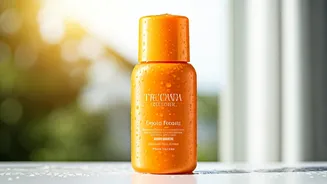
Sunscreen does expire, and using it past its expiration date can leave you unprotected. The active ingredients that shield your skin from UV rays break down and lose their effectiveness over time. The US Food and Drug Administration (FDA) requires sunscreen to remain effective for at least three years. If there's no expiration date printed, you can assume it's good for three years from the purchase date, but it’s wise to write the date you bought it on the bottle. Any changes in the sunscreen's colour, smell, or consistency are signs it has gone bad and should be thrown away.