

The Sun’s Hidden Crown
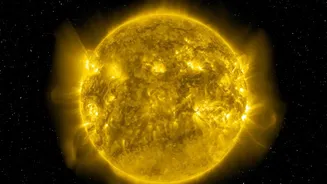
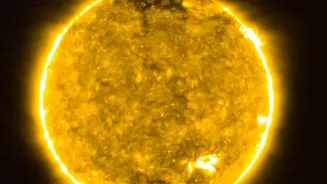
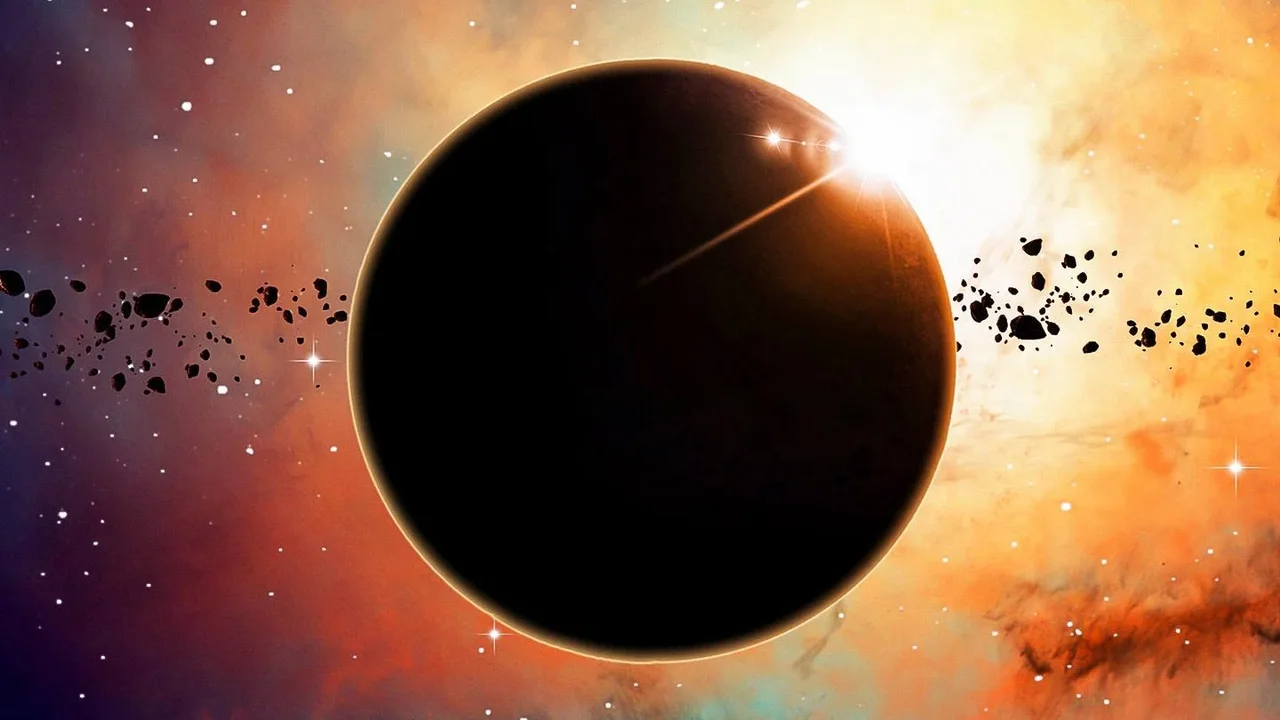
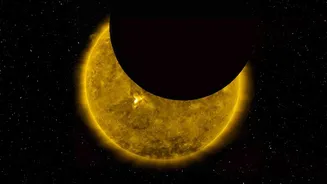
The solar corona is a sprawling halo of plasma that extends millions of kilometres into space. It is usually invisible, completely washed out by the brilliant light of the sun's main surface, the photosphere. In fact, the corona is about 10 million times
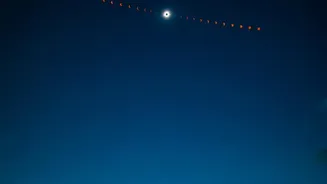
less dense than the sun's surface, which contributes to its dimness. Only during a total solar eclipse, when the moon perfectly blocks the sun's bright face, does this ethereal crown make its stunning appearance. This brief window is critical for science, as even specialized instruments on the ground and in space struggle to view the innermost parts of the corona as clearly as an eclipse allows.
A Fiery Paradox
One of the most baffling puzzles in astrophysics is the coronal heating problem. Logically, as you move away from a heat source, the temperature should drop. Yet, the sun defies this. Its surface is a scorching 5,500 degrees Celsius, but the corona blazes at over a million degrees—hundreds of times hotter. Scientists are still working to understand the exact mechanism behind this incredible temperature inversion. Theories suggest that energy is transferred from the sun's interior through complex magnetic field interactions, perhaps through countless tiny explosions called 'nanoflares' or via magnetic waves that deposit their energy in the tenuous atmosphere, superheating it. Solving this puzzle is fundamental to understanding how stars work.
A Race Against Time and Shadow
Because total eclipses are rare and last only a few minutes in any given location, scientists must make every second count. For the total solar eclipse on August 12, 2026, over parts of Europe, NASA deployed high-altitude research aircraft and scientific balloons. A WB-57 jet, flying at 50,000 feet, chased the moon's shadow to extend its observation time. This high-flying observatory, equipped with specialized cameras, captured high-resolution images of the corona to study its structure and the violent eruptions that shape it. These airborne missions fly above any clouds and atmospheric distortion, providing a crystal-clear view that is impossible to get from the ground.
Predicting Space Weather on Earth
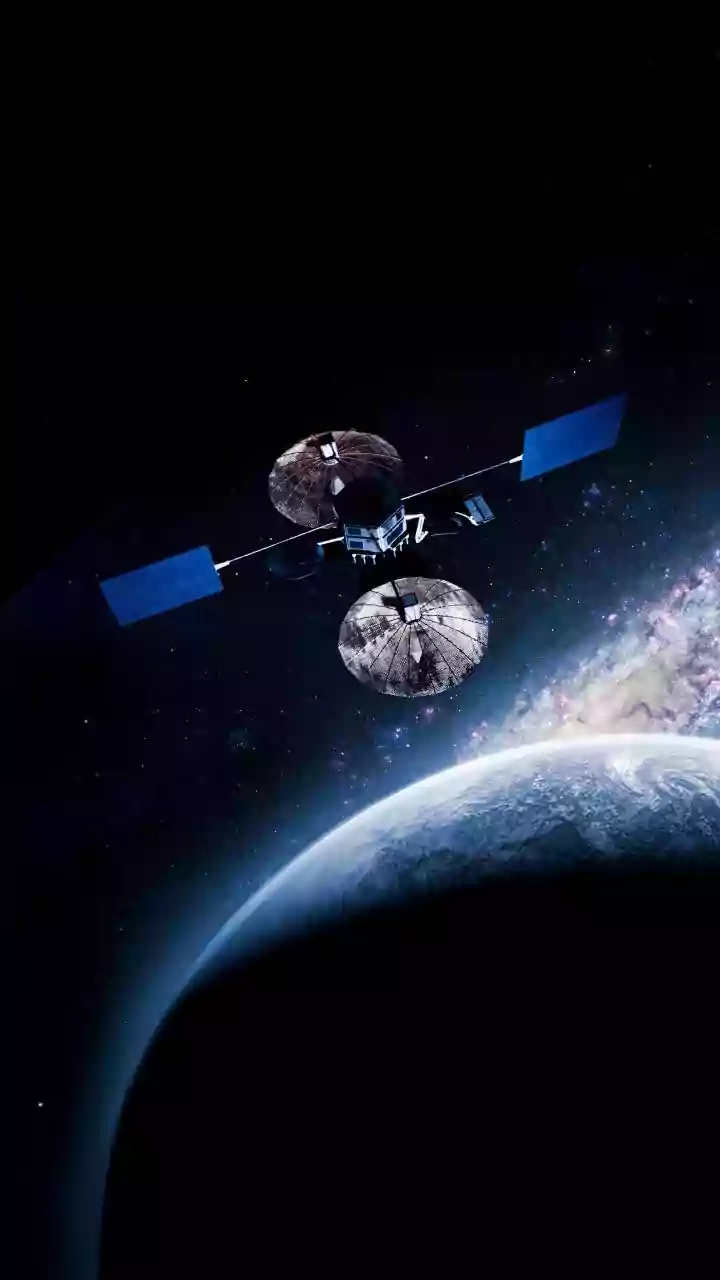
The corona isn't just a scientific curiosity; it's the source of the solar wind, a constant stream of charged particles flowing from the sun. It is also where huge eruptions of plasma, known as coronal mass ejections (CMEs), originate. When aimed at Earth, these solar storms can have serious consequences. They can disrupt and damage satellites, interfere with GPS and radio communications, and even trigger widespread power outages by overloading electrical grids. By studying the corona's magnetic fields and behaviour, scientists hope to improve their ability to predict this 'space weather', giving us more time to protect the technology that underpins modern society.
Unlocking the Secrets of Stars
Ultimately, studying our sun's corona provides a unique laboratory for understanding processes that occur across the universe. The sun is the only star we can observe in such detail. The lessons learned about its magnetic fields, plasma behaviour, and atmospheric heating provide a crucial baseline for studying other, more distant stars. Each eclipse, therefore, doesn't just reveal more about our own sun; it adds another piece to the grand puzzle of how stars live, breathe, and influence the cosmos around them. The brief moments of darkness during an eclipse illuminate our understanding of the entire universe.