







A Two-Stage Process
At its core, the appointment of the UN's chief diplomat is a two-step procedure defined by Article 97 of the UN Charter. First, the Security Council must recommend a single candidate. Following that recommendation, the General Assembly formally appoints
them. This division of labour creates a critical power dynamic: the Security Council acts as the primary gatekeeper, while the General Assembly provides the ultimate seal of approval. For a candidate to even be considered by the wider membership, they must first secure the backing of the Council. Historically, this has meant the General Assembly has never rejected a candidate put forward by the Security Council.
The Security Council's Decisive Role
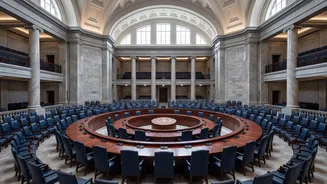
The Security Council's selection process is where the real political contest takes place. The Council, comprising 15 members, holds its deliberations in private. To be recommended, a candidate must receive at least nine affirmative votes, and crucially, no vetoes from any of the five permanent members (P5): China, France, Russia, the United Kingdom, and the United States. This veto power gives the P5 immense influence over the outcome. To gauge support, the Council conducts a series of informal secret ballots known as 'straw polls'. In some of these polls, ballots are color-coded to distinguish votes from permanent and non-permanent members, revealing whether a candidate faces a potential veto. This behind-the-scenes process continues until a consensus candidate emerges who can command sufficient support and avoid a P5 veto.
A Push for Greater Transparency
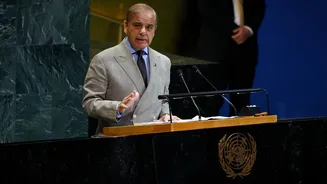
For much of the UN's history, the selection process was shrouded in secrecy. However, starting in 2015, the General Assembly passed landmark resolutions to make the procedure more open and inclusive. This reformed process invites member states to nominate candidates and requires nominees to submit vision statements. A major innovation is the introduction of informal dialogues, where candidates appear before the General Assembly to answer questions from member states and, to some extent, civil society. While these changes have increased transparency and given the broader membership a voice, they have not altered the fundamental power structure; the final decision to recommend still rests solely with the Security Council.
The General Assembly's Formal Appointment
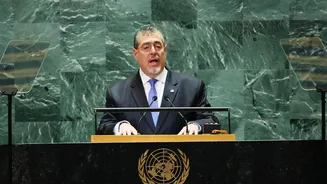
Once the Security Council has passed a resolution recommending a single candidate, the name is formally transmitted to the President of the General Assembly. The Assembly, which includes all 193 UN member states, then holds a vote to appoint the candidate. Although the vote can be a secret ballot, it is often done by acclamation, signifying unanimous consent. While the General Assembly theoretically has the power to reject the Council's choice, this has never happened in practice. An exception occurred in 1950 when the Council was deadlocked and the Assembly voted to extend the term of the incumbent, Trygve Lie, without a formal recommendation, a move that was legally contentious.
The 2026 Selection Heats Up
As of late November 2026, the process to select a successor to Secretary-General António Guterres, whose second term ends on December 31, 2026, is well underway but has not yet produced a consensus candidate. The Security Council has conducted nine straw polls, but as of the latest vote on November 20, no single candidate has managed to secure the necessary support without receiving 'discourage' votes from permanent members, which act as potential vetoes. With the deadline approaching, the lack of agreement among the P5 highlights the geopolitical tensions that define the selection process and raises questions about whether a decision will be reached before Guterres's term expires.