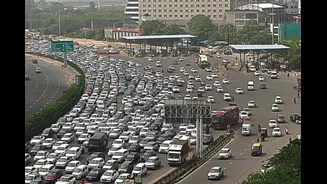







As Delhi braces for its annual battle with winter air pollution, a new set of rules targeting vehicular emissions will kick in from November 1. These directives will impact hundreds of thousands of commuters, especially from NCR towns.
The Core Directive Explained
To combat the yearly
spike in air pollution during winter, the Delhi government is implementing its Winter Action Plan. A key part of this strategy is restricting the entry of vehicles registered outside of Delhi that do not comply with Bharat Stage VI (BS-VI) emission norms. This ban will be in effect from November 1, 2026, through January 31, 2027. The move is expected to affect over a million vehicles from neighbouring NCR cities like Gurugram, Faridabad, Noida, and Ghaziabad that travel to the capital daily. This directive is separate from, but complementary to, the Graded Response Action Plan (GRAP), which imposes its own set of restrictions based on real-time air quality levels.
Which Vehicles Are Banned?
The primary focus of the November 1 rule is on petrol and diesel vehicles registered outside Delhi that are not BS-VI compliant. This includes all older petrol and diesel cars, such as those meeting BS-III and BS-IV standards. For commercial vehicles, the rules are even stricter. Commercial goods vehicles like trucks and light commercial vehicles that are BS-IV or older have been barred from entering Delhi since November 1, except for those running on CNG or electricity. Enforcement will be strict, with authorities using AI-powered Automatic Number Plate Recognition (ANPR) cameras at border checkpoints to identify and flag non-compliant vehicles.
Are There Any Exemptions?
Yes, several categories of vehicles are exempt from this specific entry ban. The restriction does not apply to any vehicles registered in Delhi, although other pollution and age-related rules still apply to them. For vehicles registered outside Delhi, the main exemptions are for all-electric vehicles (EVs) and vehicles that run on Compressed Natural Gas (CNG). Additionally, emergency and essential service vehicles, such as ambulances, fire services, and those involved in government work, will be permitted to enter the city regardless of their emission standard. Inter-state buses with an All India Tourist Permit may also be exempt.
The GRAP Factor: Additional Restrictions
It is crucial for commuters to understand that the November 1 ban is a baseline measure. The Graded Response Action Plan (GRAP) can impose further, more stringent restrictions if the air quality deteriorates to 'Severe' or 'Severe+' levels. If GRAP Stage III is invoked, a blanket ban on plying BS III petrol and BS IV diesel four wheelers is enforced across Delhi and several NCR districts, including Gurugram, Faridabad, Ghaziabad, and Noida. This rule applies to all vehicles, regardless of where they are registered. The penalty for violating a GRAP related driving ban can be a hefty fine of ₹20,000 under the Motor Vehicles Act.
Don't Forget Your PUC Certificate
Separate from the entry ban, another critical rule is the 'No PUC, No Fuel' policy. Effective from November 1, all fuel stations in Delhi are directed to refuse petrol, diesel, or CNG to any vehicle that does not have a valid Pollution Under Control (PUC) certificate. This applies to all vehicles, including those that are BS VI compliant and those registered in Delhi. Driving without a valid PUC certificate can already result in a fine of up to ₹10,000. This two pronged approach ensures that even compliant vehicles are well maintained and not contributing excess emissions.
What Should Commuters Do?
If you regularly commute into Delhi from an NCR city, the first step is to check your vehicle's Registration Certificate (RC) to confirm its emission standard. If you own a non BS VI petrol or diesel vehicle registered outside Delhi, you will need to find alternative transport from November 1 to January 31. Options include using public transport like the Delhi Metro, city buses, carpooling with a compliant vehicle, or exploring work from home arrangements. The government is also encouraging a $50%$ work from home policy for government and private offices to reduce traffic congestion. Doubled parking fees are another measure aimed at discouraging the use of private vehicles.