




India's First Dark Sky Reserve
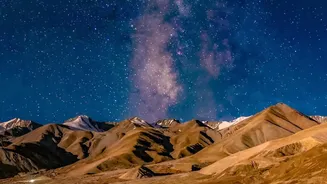
In December 2022, a 22-kilometre radius around the village of Hanle was officially designated as India's first Dark Sky Reserve. Located within the Changthang Wildlife Sanctuary, this high-altitude area is now a protected zone where measures are actively
being taken to minimise artificial light pollution. This isn't just a place that happens to be dark; it's a concerted effort involving the UT Ladakh administration, local councils, and scientists to keep it that way. A Dark Sky Reserve is an area recognised for its exceptional starry nights, where policies are enacted to protect the darkness for scientific, educational, and cultural value. Hanle’s designation is the first of its kind in South Asia, setting a new benchmark for conservation.
Why Hanle is a Celestial Paradise
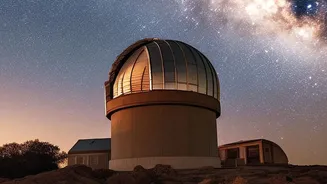
Hanle's qualification as a celestial haven is no accident. Situated at an altitude of 4,500 metres (nearly 14,800 feet), the air is thin, cold, and dry, leading to over 250 clear nights a year. This combination of high altitude and minimal atmospheric moisture means there is less distortion, providing crystal-clear views of the cosmos. These pristine conditions are why the Indian Institute of Astrophysics (IIA) established its Indian Astronomical Observatory (IAO) here back in 2001, which houses some of the world's highest telescopes. The area's remoteness means it has exceptionally low natural light pollution, earning it a 'Bortle 1' classification — the darkest possible rating on a nine-point scale, a distinction held by only a few places on Earth.
The Battle Against Artificial Light
Even in a remote place like Hanle, the creep of artificial light poses a significant threat. Unshielded streetlights, vehicle headlights, and household lighting can create 'skyglow,' a dome of brightness that obscures faint stars and galaxies, hindering both scientific research and naked-eye stargazing. To combat this, the Hanle Dark Sky Reserve operates under a strict light management plan. This includes community-wide adoption of downward-facing streetlights, distributing special curtains to prevent light from leaking out of homes, and providing warm-coloured bulbs that are less disruptive to the night sky. Even visitors' vehicle headlights are regulated within the reserve to maintain the integrity of the darkness.
A Community's Role in Saving the Stars
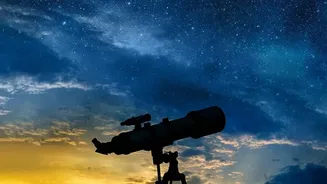
The success of the Hanle Dark Sky Reserve is built on a unique collaboration between scientists, government, and the local community. Rather than imposing rules, the initiative has focused on empowering residents. The Indian Institute of Astrophysics and local authorities have trained dozens of villagers, many of them women, to become 'Astronomy Ambassadors'. These local guides are equipped with telescopes and trained to lead stargazing sessions for tourists, explaining constellations and celestial events. This approach ensures that the economic benefits of tourism flow directly into the community, creating a sustainable model where preserving the night sky becomes a source of livelihood and local pride.
The Dawn of Astro-Tourism
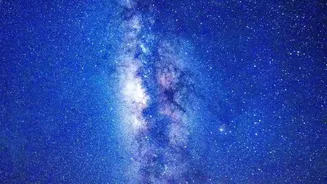
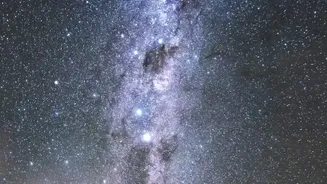
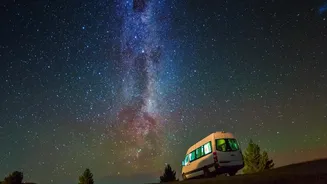
The establishment of the reserve has catalysed the growth of astro-tourism, a niche but growing travel trend focused on celestial experiences. Tourists are increasingly travelling to Hanle not just for the stunning mountain landscapes but for the unparalleled opportunity to see the Milky Way in all its glory. Local homestays, now part of the dark sky initiative, offer an authentic experience, allowing visitors to stay with families who are active participants in this conservation effort. This symbiotic relationship boosts the local economy while ensuring that development remains eco-friendly. It positions Hanle as a pioneering model for how tourism can support, rather than spoil, a fragile natural environment.