


The Allure of a Second Earth
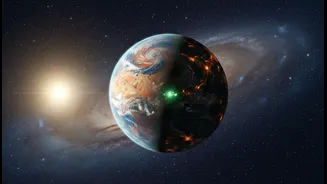
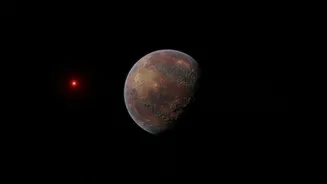
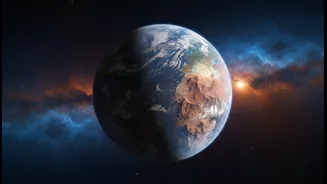
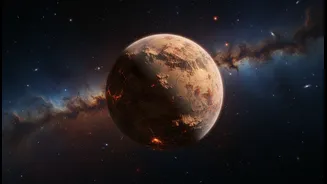
The announcement of a new 'super-Earth' often sends a ripple of excitement across the globe. These are planets larger and more massive than our own, but still thought to be rocky worlds, unlike gas giants such as Jupiter. When one is found 'nearby' —
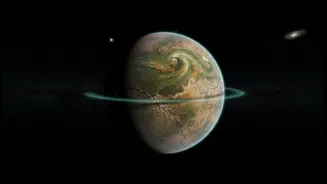
like the recently confirmed GJ 3378b, just 25 light-years away, or the well-studied Wolf 1069 b at 31 light-years — the imagination ignites. The term itself evokes images of a bigger, better version of our own home. These discoveries are genuinely monumental achievements in astronomy, pushing the boundaries of what we can detect across interstellar distances. They represent key steps in answering one of humanity's oldest questions: are we alone? The thrill is real and justified, but it is also where the story often takes a premature leap from science to science fiction.
What We Actually Know for Sure
When scientists announce a planet like GJ 3378b, what have they actually seen? In most cases, they haven't seen the planet at all. Instead, they use ingenious indirect methods. One of the most common is the 'radial velocity' technique, which was used to confirm both Wolf 1069 b and GJ 3378b. This involves watching the planet’s star for a tiny, rhythmic wobble. This wobble is caused by the gravitational tug of the orbiting planet. By measuring it, astronomers can calculate the planet’s minimum mass and how long it takes to complete one orbit. From there, they can estimate its size and density. What these measurements don't tell us, however, is what the planet is truly like. They don’t reveal if it has an atmosphere, oceans, or continents. They give us the outline of a world, but the details remain almost entirely in the dark.
The 'Habitable Zone' Misconception
The term that generates the most hype is the 'habitable zone', often called the 'Goldilocks zone'. This refers to the orbital band around a star where temperatures are theoretically right for liquid water to exist on a planet's surface — not too hot that it boils away, and not too cold that it freezes solid. This sounds promising, and both GJ 3378b and Wolf 1069 b are located within this zone for their respective stars. But being in the zone is not a golden ticket for life. Our own solar system provides the perfect cautionary tale. Venus, a runaway greenhouse inferno with surface temperatures hot enough to melt lead, is on the inner edge of our sun's habitable zone. Mars, a frigid, barren desert with a whisper-thin atmosphere, is on the outer edge. Both are within the 'just right' region, yet neither is habitable. The habitable zone is a helpful first step for narrowing down targets, but it guarantees nothing.
The Great Atmospheric 'If'
Ultimately, almost everything we speculate about a super-Earth's habitability hangs on one giant, unanswered question: does it have an atmosphere? And if so, what is it made of? An atmosphere is crucial. It provides air pressure needed for liquid water, shields the surface from harmful radiation, and traps heat to regulate temperature. For a planet like Wolf 1069 b, models show that without an atmosphere, its average temperature would be a bleak minus 23 degrees Celsius. However, with an Earth-like atmosphere, the same planet could enjoy a pleasant average of 13 degrees. Furthermore, many of these promising planets orbit red dwarf stars, which are notorious for unleashing powerful stellar flares that could strip a planet of its atmosphere entirely. Many are also 'tidally locked', with one side in perpetual daylight and the other in eternal night, creating extreme temperature differences that only a thick atmosphere could hope to balance.
Celebrating Possibility Without Faking Certainty
The search for life is one of the most profound and exciting endeavours in modern science. Discoveries of nearby, rocky worlds in temperate orbits are worthy of celebration. But the media and the public must learn to embrace the beauty of uncertainty. Every time a 'potentially habitable' world is presented as a confirmed 'second Earth', we risk undermining public trust in science when the inevitable, more complicated reality emerges. The painstaking work of astronomers — calculating wobbles, analysing faint light, and building complex models — is amazing in its own right. We don't need to dress it up with premature conclusions. The possibility that a world like GJ 3378b has oceans and clouds is tantalising enough. It drives scientists to build bigger and better telescopes to one day find out for sure. That journey, full of maybes and what-ifs, is the real story.