

Makhan Mishri: The Essential Offering
No Janmashtami bhog is complete without Makhan Mishri. Lord Krishna's childhood tales are filled with his love for fresh, white butter, earning him the name 'Makhan Chor' or the butter thief. This offering is the simplest to prepare and the most symbolic.
It requires just two ingredients: fresh white butter (makhan) and rock sugar (mishri). To prepare, simply take fresh, unsalted white butter in a bowl and gently mix in a few tablespoons of mishri. Some families also add a few strands of saffron for fragrance and colour. Its purity and sweetness are a perfect representation of devotion.
Dhaniya Panjiri: A Fragrant Prasad
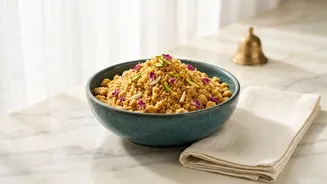
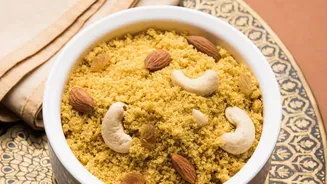
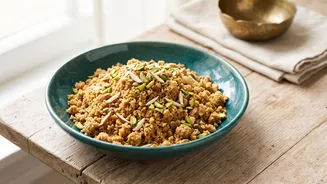
Dhaniya Panjiri is a unique and traditional prasad prepared especially for Janmashtami, particularly in North India. Unlike the more common atta or sooji panjiri, this version uses roasted coriander seed powder as its base, making it suitable for those observing a fast. To make it, coriander seed powder is slowly roasted in ghee until it becomes aromatic and changes colour. To this, you can add roasted and chopped nuts like almonds and cashews, grated coconut, and makhana (fox nuts). The mixture is sweetened with powdered sugar or jaggery after it has cooled down slightly and finished with a pinch of cardamom powder.
Panchamrit: The Sacred Five Nectars
Panchamrit, which translates to 'five nectars', is a holy concoction used in Hindu worship rituals. It is essential for the puja and is later distributed as prasad. This sacred mixture is made by combining five key ingredients: raw cow's milk, curd (yoghurt), honey, ghee (clarified butter), and sugar. Each ingredient holds symbolic meaning, representing purity, strength, and happiness. To prepare it, simply mix the five core ingredients in a clean bowl, traditionally one made of silver. Many families also add chopped nuts, makhana, and a few holy basil (tulsi) leaves, which are considered dear to Krishna.
Gopalkala: Krishna's Savoury Snack
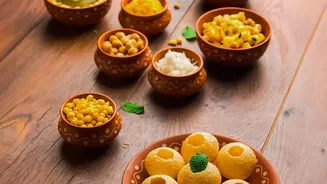
Also known as Dahi Poha, Gopalkala is a savoury dish that is believed to be a favourite of Lord Krishna. The recipe is said to evoke the spirit of what Krishna and his friends, the gopalas, would eat while herding their cows. It's a simple, refreshing, and no-cook recipe perfect for a quick offering. It is made with flattened rice (poha), which is rinsed and mixed with yoghurt, finely chopped cucumber, grated coconut, and salt. A simple tempering of ghee, cumin seeds, and finely chopped green chillies or ginger is often poured over the mixture to add another layer of flavour.
Makhana Kheer: A Creamy, Fast-Friendly Pudding
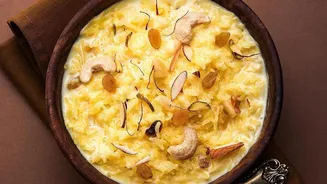
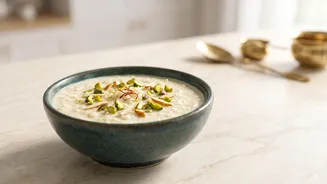
Kheer is a staple dessert for most Indian festivals, and the Janmashtami version often uses makhana (fox nuts) instead of rice. This makes the dish light, nutritious, and suitable for those observing a fast. To prepare Makhana Kheer, the fox nuts are first lightly roasted in a little ghee until they become crisp. They are then added to simmering full-cream milk and cooked until they soften and the milk thickens. The kheer is sweetened with sugar and flavoured with cardamom powder and a few strands of saffron. Chopped nuts like almonds and pistachios are added for a rich texture and garnish.
Coconut Ladoo: A Quick and Simple Sweet
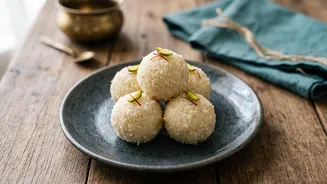
For those short on time, Coconut Ladoos are an incredibly easy and delicious sweet to prepare for bhog. These bite-sized treats require minimal cooking and are a favourite across India. The simplest versions involve mixing freshly grated coconut with condensed milk in a pan over low heat. The mixture is stirred continuously until it thickens and starts to leave the sides of the pan. After adding a pinch of cardamom powder for aroma, the mixture is allowed to cool just enough to be handled. It is then rolled into small, round ladoos. For extra texture, you can roll the finished ladoos in dry desiccated coconut.