




What is 'Swicy,' Anyway?
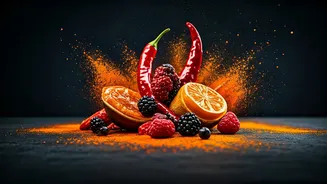
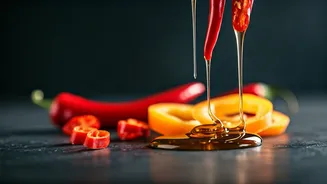
Swicy, a portmanteau of sweet and spicy, is the flavour trend that has taken global menus by storm. It’s the delightful sensation when a familiar sweetness is followed by a kick of heat, creating a more complex and satisfying taste experience. Major food
publications and restaurant associations named it a top trend in recent years, with social media platforms like TikTok helping to give the age-old combination a catchy new name. This trend has been embraced by younger consumers, particularly Gen Z and Millennials, who crave flavours that are not one-dimensional. While products like hot honey on pizza have been cited as a recent catalyst for its popularity in the West, the concept is far from new and has deep roots in many global cuisines, including those from Korea, Thailand, and Mexico. But perhaps nowhere is this philosophy more deeply embedded than in the culinary tapestry of India.
The Indian Philosophy of Flavour
Indian cooking is fundamentally about balance. It's an art form that masterfully combines the primary tastes—sweet, sour, salty, bitter, and spicy—to create harmonious dishes. Spices are the heart of Indian cuisine, providing not just heat but also depth, warmth, and complexity. Ingredients like tamarind provide sourness, jaggery offers sweetness, and a variety of chillies bring the heat. This balance isn't accidental; it's a deliberate technique passed down through generations. The goal is to ensure no single flavour overpowers another, resulting in a layered taste experience. The 'swicy' trend is essentially a celebration of one of the core tenets that Indian cooks have practiced for centuries.
The Undisputed Champion: Chaat
Nowhere is the swicy concept more alive than in the world of Indian chaat. Bhelpuri, a beloved street food originating from Mumbai, is a perfect example. It’s a masterful mix of puffed rice, crunchy sev, diced onions, and potatoes, all brought together by a trio of chutneys: a sweet and sour tamarind chutney, a spicy red chilli and garlic chutney, and a fresh green coriander-mint chutney. This combination creates an explosion of textures and flavours in every single bite—it is the very definition of swicy. From Pani Puri with its spicy water and sweet chutney to Papdi Chaat with its layers of crisp dough, tangy yoghurt, and sweet and spicy sauces, chaat is a masterclass in flavour complexity.
Gujarati Farsan: A Symphony of Sweet and Savoury
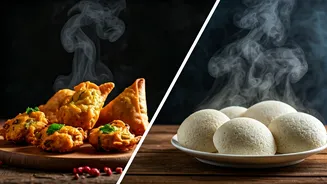
Gujarati cuisine is particularly famous for its unique blend of sweet and spicy flavours, especially in its wide array of snacks known as 'farsan'. Dishes like Patra feature colocasia leaves smeared with a spiced, sweet, and tangy gram flour paste, which are then steamed and rolled. The famous Dhokla, a soft, spongy steamed cake, is often garnished with a tempering of mustard seeds and chillies, and sometimes served with a sweet chutney that perfectly complements its savoury base. Other snacks like Khandvi, a delicate roll of gram flour and yoghurt, and spicy Ghughra, a deep-fried dumpling, showcase this inherent balance. The region’s food is a testament to how sweetness isn't just for dessert, but a crucial element in creating savoury depth.
Don't Forget the Pickles and Chutneys
Beyond specific dishes, the heart of swicy in Indian food often lies in its condiments. Aam ka Achar (mango pickle) is a household staple that combines the sourness of raw mango with the fiery heat of chilli powder and the subtle sweetness of spices like fennel. Similarly, tamarind chutney, a key component in many chaat dishes, is made from tangy tamarind pulp, jaggery (a traditional unrefined sugar), and a blend of spices. These accompaniments are not mere afterthoughts; they are integral to the meal, designed to add that perfect finishing touch of layered flavour that can turn a simple dish into something extraordinary. They prove that the interplay of sweet and heat is a foundational element, not a fleeting trend.