






The Old Guard: ISRO’s End-to-End Dominance
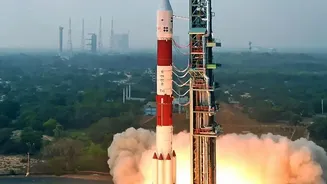
Since its formation in 1969, the Indian Space Research Organisation (ISRO) has been the sole custodian of India's space aspirations. From designing and building rockets like the reliable Polar Satellite Launch Vehicle (PSLV) to launching satellites for communication,
weather forecasting, and national security, ISRO did it all. It was a self-reliant, government-led model that delivered remarkable achievements, including missions to Mars and the Moon, establishing India as a formidable spacefaring nation. For over 50 years, ISRO was not just a participant but the entire ecosystem, responsible for everything from research and development to manufacturing and launch services. This approach served India well, building a strong foundation of technological prowess and a reputation for frugal engineering.
A Policy Shift Opens the Skies
The game-changer arrived with the Indian Space Policy of 2023. This landmark reform was designed to unlock the sector's commercial potential by formally inviting private companies to participate in end-to-end space activities. The policy clarified the roles of various bodies, positioning ISRO to focus on advanced research, scientific missions, and technology development. To facilitate this transition, the government established the Indian National Space Promotion and Authorisation Centre (IN-SPACe). Acting as a single-window agency, IN-SPACe is responsible for authorising, promoting, and supervising the activities of non-governmental entities, bridging the gap between private players and ISRO's extensive infrastructure and expertise. The goal is to move from an ISRO-centric model to a collaborative ecosystem where private innovation can flourish.
The Rise of Private Pioneers
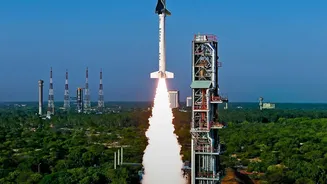
The policy shift has ignited a startup boom. From just one space startup in 2014, India is now home to over 400. Companies like Skyroot Aerospace, Agnikul Cosmos, Pixxel, and Dhruva Space are leading the charge. In July 2026, Skyroot Aerospace made history by successfully launching its Vikram-1 rocket, making India only the third country, after the US and China, to have a privately developed rocket reach orbit. Agnikul Cosmos is developing 3D-printed rocket engines to lower launch costs, while Pixxel is deploying a constellation of hyperspectral imaging satellites to provide valuable data for agriculture, energy, and climate research. These startups are not just building components; they are developing launch vehicles, manufacturing satellites, and creating downstream applications for data analytics, attracting significant venture capital.
Economic Ambitions on a Global Scale
The primary driver behind this privatisation push is economic. India's space economy was valued at approximately $8.4 billion, representing just 2% of the global market. The government's vision is to dramatically increase this share. Projections suggest India's space economy could surge to $44 billion by 2033, capturing around 8% of the global total. By opening the sector, India aims to attract private investment, create high-tech jobs, and become a global hub for cost-effective satellite launches and space-based services. The focus is shifting from simply building space assets to commercialising them, particularly in the downstream market of satellite-enabled services like communication, earth observation, and navigation. This commercial drive is seen as essential for achieving the country's ambitious growth targets.
ISRO’s New Role: From Player to Coach
Instead of being sidelined, ISRO is embracing a new, crucial role as a mentor and enabler. The agency is transitioning away from the routine manufacturing of operational systems to focus its resources on strategic and futuristic projects, such as the Gaganyaan human spaceflight mission, establishing an Indian space station, and landing an astronaut on the Moon by 2040. ISRO is actively supporting private firms by transferring mature technologies, opening up its world-class testing facilities, and providing mentorship. This symbiotic relationship allows startups to reduce development costs and timelines, while freeing up ISRO to push the boundaries of science and exploration. It's a strategic pivot from being the sole provider to becoming the technological backbone of a much larger, collaborative national effort.