







Another Election, Another Deadlock
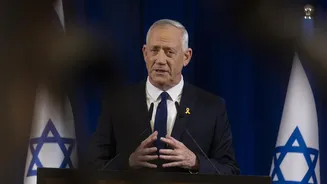
Israel's recent election on October 27, 2026, has, like several before it, ended without a clear winner. Neither Prime Minister Benjamin Netanyahu's right-wing Likud party and its allies nor the opposition bloc led by former military chief Gadi Eisenkot
secured the 61 seats needed for a majority in the 120-seat Knesset. This has plunged the country into a familiar state of uncertainty, forcing a frantic period of high-stakes negotiations as both sides try to build a workable coalition. The President, Isaac Herzog, has formally given Gadi Eisenkot the mandate to try and form a government first. However, with Netanyahu still in office, the country is being run by a transitional or 'caretaker' government.
What is a Caretaker Government?
Under Israeli law, when a government is dissolved for elections or if a prime minister resigns, the outgoing administration continues to govern until a new one is sworn in. This is known as a caretaker or interim government. The main purpose is to ensure the continuous functioning of the state and prevent a power vacuum. While the term 'caretaker' isn't explicitly in the law, the principle of 'government continuity' is fundamental. This means Benjamin Netanyahu and his ministers remain in their posts, but they are expected to operate with a degree of restraint, a convention that has been tested and defined by Israel's Supreme Court over time.
The Limits of Power
A caretaker government legally holds the same authority as a regular government, but in practice, its powers are curtailed. The Supreme Court has ruled that it must exercise restraint and avoid making far-reaching decisions unless there is a pressing national necessity. This primarily restricts major new policy initiatives, long-term financial commitments, and significant public appointments. However, when it comes to national security, the lines are blurrier. A caretaker government retains significant authority in security and foreign relations. While a prime minister cannot unilaterally declare war, the cabinet can, and the premier's role in framing intelligence and presenting options to security bodies remains powerful.
The High-Stakes Coalition Game
The current political maneuvering is intense. Gadi Eisenkot's bloc is attempting to form a government, but faces the difficult task of uniting disparate parties. Key players include Avigdor Liberman's right-wing secular party and, potentially, ultra-Orthodox parties or Arab-majority parties, who have emerged as potential kingmakers with a record 19 seats. Talks are ongoing, with Eisenkot's and Netanyahu's parties holding 'businesslike' meetings about a possible unity government. However, deep divisions remain. Eisenkot's allies have publicly warned against trusting Netanyahu, citing past broken coalition promises, while also moving to take control of key parliamentary committees to assert their new majority in the Knesset.
What Happens Next?
Gadi Eisenkot has an initial 28-day period, with a possible 14-day extension, to form a government. If he fails, the president could then give Netanyahu a chance. If no one can form a government, Israel could be forced into yet another round of elections, a scenario Netanyahu might prefer. During this limbo, Netanyahu remains caretaker prime minister. His opponents are trying to use their new Knesset majority to pass legislation, even without forming a government, showcasing how the legislative and executive branches can be at odds during these transitional periods. The stalemate highlights a core challenge in Israeli politics: forming a stable government often requires breaking campaign promises and forging alliances between ideological opposites.