



The Science of a Hearty Soup
The magic of stale bread as a thickener lies in its high starch content. Bread is made from flour, which is full of starch molecules. When fresh, these starches are locked within a soft, moist structure. As bread becomes stale, it doesn't just lose water;
its starches crystallise and harden. When these dry, hardened bread chunks are added to a hot, simmering soup, the process reverses. The starch granules absorb the liquid, swell up, and burst, releasing their thickening power into the broth. This process, known as gelatinisation, is the same principle behind using flour or cornstarch to thicken sauces. The bread breaks down, some pieces dissolving completely to create a creamy, velvety consistency without any cream, while other bits might remain for a rustic, satisfying texture.
Italy’s Humble Ribollita
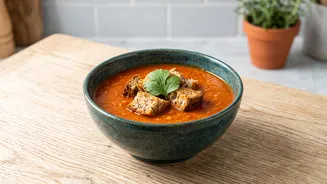
Perhaps the most famous bread-thickened soup is Italy's Ribollita, a classic of Tuscan "cucina povera" or peasant cooking. Its name means "re-boiled," pointing to its origins as a way to stretch leftover minestrone or vegetable soup. Day-old, unsalted Tuscan bread is torn into chunks and added to a pot of cannellini beans, kale, cabbage, and other vegetables. As the soup simmers, the bread melts into the broth, giving the final dish a thick, porridge-like quality that is incredibly hearty and flavourful. It’s a perfect example of how a simple, frugal ingredient can create a dish celebrated for its comforting richness.
Spain’s Garlicky Sopa de Ajo
In Spain, Sopa de Ajo (garlic soup) is a beloved comfort food born from humble pantry staples. Thinly sliced garlic is sautéed in generous amounts of olive oil, followed by smoked paprika, which gives the soup its signature colour and flavour. Cubes of stale bread are then tossed in the pot to soak up the flavourful oil before chicken or vegetable broth is added. The soup simmers until the bread softens and thickens the broth beautifully. Often, an egg is poached directly in the simmering soup just before serving, its runny yolk adding another layer of richness to this rustic, satisfying meal.
Portugal’s Comforting Açorda
Portugal's answer to bread soup is Açorda, a dish with roots in the Alentejo region. The most traditional version, Açorda à Alentejana, is a testament to sublime simplicity. Stale bread is soaked in a fragrant broth made from water, pounded garlic, olive oil, and lots of fresh coriander. The bread absorbs the vibrant, herby liquid, swelling into a dense, comforting porridge. Like its Spanish cousin, it's often crowned with a perfectly poached egg. Other variations, like Açorda de Camarão, use a flavourful shrimp stock, showcasing how stale bread can be a canvas for a wide range of flavours.
France's Iconic Onion Soup
While French onion soup is famous for the toasted, cheese-covered crouton on top, bread has historically played a role within the soup as well. The tradition involves using stale baguette slices not just as a topping, but sometimes placed in the bottom of the bowl to soak up the rich, beefy broth. The purpose of using stale or toasted bread is crucial; its dry structure prevents it from immediately turning to mush, allowing it to absorb the savoury liquid while retaining some texture. This ensures every spoonful is a perfect combination of flavour-soaked bread, sweet caramelized onions, and savoury broth.
From Frugality to Modern Philosophy
What began as a necessity for peasant households—using every last crumb of food—has become a celebrated culinary principle in the modern era. The zero-waste movement champions these age-old techniques, encouraging home cooks to see stale bread not as a failure but as an opportunity. These global soup recipes show that sustainable cooking doesn't require fancy ingredients or complicated methods. Instead, it relies on the ingenuity of making something delicious out of what you already have. By embracing this philosophy, a simple bowl of soup can be a powerful connection to culinary history and a more sustainable future.